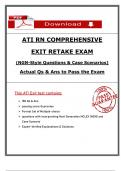
ATI RN COMPREHENSIVE
EXIT RETAKE EXAM
(NGN-Style Questions & Case Scenarios)
Actual Qs & Ans to Pass the Exam
This ATI Exit test contains:
➢ 180 Qs & Ans
➢ passing score Guarantee
➢ Format Set of Multiple-choice
➢ questions with incorporating Next Generation NCLEX (NGN) and
Case Scenario
➢ Expert-Verified Explanations & Solutions
,1. A nurse is caring for a client whose vented NG tube is set to low
intermittent suction. The client has just vomited. Which of the following
actions should the nurse perform first?
A. Administer an antiemetic medication
B. Evaluate the functioning of the suction device
C. Provide oral hygiene
D. Replace the NG tube
Correct Answer: B. Evaluate the functioning of the suction device
Rationale: Priority is to ensure the NG tube and suction are working properly
to reduce vomiting and risk of aspiration.
───────────────────────────────────────────────────────
─
2. A nurse notices fraying on the electrical cord of a client’s continuous
passive motion (CPM) device during a routine assessment. Which action
should the nurse take first?
A. Initiate a requisition for a replacement CPM device
B. Report the defect to equipment maintenance staff
C. Remove the device from the client’s room
D. Verify the device’s inspection sticker is current
Correct Answer: C. Remove the device from the client’s room
Rationale: The nurse must immediately remove faulty equipment from use
to prevent electrical injury or fire hazards.
───────────────────────────────────────────────────────
─
,3. A nurse is setting up a sterile field to irrigate a client’s wound. Which of
the following actions indicates correct technique when pouring sterile
solution?
A. Remove the cap and place it sterile-side up on a clean surface
B. Cover spilled solution with sterile gauze
C. Hold the bottle over the center of the sterile field while pouring
D. Hold the solution bottle with the label facing away from the palm
Correct Answer: A. Remove the cap and place it sterile-side up on a clean
surface
Rationale: Placing the cap sterile-side up prevents contamination, allowing it
to be reapplied without breaching sterility.
───────────────────────────────────────────────────────
─
4. A nurse is creating a plan of care for a female client who has recurrent
urinary tract infections (UTIs). Which intervention should the nurse include?
A. Take a bubble bath immediately after intercourse
B. Wear loose-fitting underwear
C. Limit fluid intake to about 4 cups (32 oz) per day
D. Void every 5 to 6 hours during the day
Correct Answer: B. Wear loose-fitting underwear
Rationale: Cotton or loose-fitting underwear promotes ventilation and
reduces moisture, helping prevent bacterial growth that leads to recurrent
UTIs.
5. A home health nurse is caring for a child who has Lyme disease. Which of
the following actions should the nurse take first?
A. Administer antitoxin
, B. Ensure the state health department has been notified
C. Educate the family to avoid sharing personal belongings
D. Assess the child’s skin for necrosis
Correct Answer: B. Ensure the state health department has been notified
Rationale: Lyme disease is a reportable disease, and notifying public health
authorities is a primary responsibility.
───────────────────────────────────────────────────────
─
6. (NGN-Style) A nurse is caring for a hospitalized client who reports fatigue
and mild confusion. Lab work reveals low hemoglobin. Which action should
the nurse anticipate implementing first?
A. Restrict the client’s sodium intake
B. Provide frequent rest periods
C. Advise the client to avoid soap and alcohol-based lotions
D. Instruct the client not to blow the nose forcefully
Correct Answer: B. Provide frequent rest periods
Rationale: Fatigue and confusion associated with low hemoglobin (possible
anemia) indicate that rest can help decrease metabolic demand and improve
oxygenation before other steps.
───────────────────────────────────────────────────────
─
───────────────────────────────────────────────────────
─
EXIT RETAKE EXAM
(NGN-Style Questions & Case Scenarios)
Actual Qs & Ans to Pass the Exam
This ATI Exit test contains:
➢ 180 Qs & Ans
➢ passing score Guarantee
➢ Format Set of Multiple-choice
➢ questions with incorporating Next Generation NCLEX (NGN) and
Case Scenario
➢ Expert-Verified Explanations & Solutions
,1. A nurse is caring for a client whose vented NG tube is set to low
intermittent suction. The client has just vomited. Which of the following
actions should the nurse perform first?
A. Administer an antiemetic medication
B. Evaluate the functioning of the suction device
C. Provide oral hygiene
D. Replace the NG tube
Correct Answer: B. Evaluate the functioning of the suction device
Rationale: Priority is to ensure the NG tube and suction are working properly
to reduce vomiting and risk of aspiration.
───────────────────────────────────────────────────────
─
2. A nurse notices fraying on the electrical cord of a client’s continuous
passive motion (CPM) device during a routine assessment. Which action
should the nurse take first?
A. Initiate a requisition for a replacement CPM device
B. Report the defect to equipment maintenance staff
C. Remove the device from the client’s room
D. Verify the device’s inspection sticker is current
Correct Answer: C. Remove the device from the client’s room
Rationale: The nurse must immediately remove faulty equipment from use
to prevent electrical injury or fire hazards.
───────────────────────────────────────────────────────
─
,3. A nurse is setting up a sterile field to irrigate a client’s wound. Which of
the following actions indicates correct technique when pouring sterile
solution?
A. Remove the cap and place it sterile-side up on a clean surface
B. Cover spilled solution with sterile gauze
C. Hold the bottle over the center of the sterile field while pouring
D. Hold the solution bottle with the label facing away from the palm
Correct Answer: A. Remove the cap and place it sterile-side up on a clean
surface
Rationale: Placing the cap sterile-side up prevents contamination, allowing it
to be reapplied without breaching sterility.
───────────────────────────────────────────────────────
─
4. A nurse is creating a plan of care for a female client who has recurrent
urinary tract infections (UTIs). Which intervention should the nurse include?
A. Take a bubble bath immediately after intercourse
B. Wear loose-fitting underwear
C. Limit fluid intake to about 4 cups (32 oz) per day
D. Void every 5 to 6 hours during the day
Correct Answer: B. Wear loose-fitting underwear
Rationale: Cotton or loose-fitting underwear promotes ventilation and
reduces moisture, helping prevent bacterial growth that leads to recurrent
UTIs.
5. A home health nurse is caring for a child who has Lyme disease. Which of
the following actions should the nurse take first?
A. Administer antitoxin
, B. Ensure the state health department has been notified
C. Educate the family to avoid sharing personal belongings
D. Assess the child’s skin for necrosis
Correct Answer: B. Ensure the state health department has been notified
Rationale: Lyme disease is a reportable disease, and notifying public health
authorities is a primary responsibility.
───────────────────────────────────────────────────────
─
6. (NGN-Style) A nurse is caring for a hospitalized client who reports fatigue
and mild confusion. Lab work reveals low hemoglobin. Which action should
the nurse anticipate implementing first?
A. Restrict the client’s sodium intake
B. Provide frequent rest periods
C. Advise the client to avoid soap and alcohol-based lotions
D. Instruct the client not to blow the nose forcefully
Correct Answer: B. Provide frequent rest periods
Rationale: Fatigue and confusion associated with low hemoglobin (possible
anemia) indicate that rest can help decrease metabolic demand and improve
oxygenation before other steps.
───────────────────────────────────────────────────────
─
───────────────────────────────────────────────────────
─