

MEIOSIS b) Crossing over (variation): occur between nonsister
▪ Production of gametes cells (sperm and egg cell). chromatids at the chiasmata. Part of nonsister
▪ A single cell (parent cell) divides into four daughter cells. (Daughter cells have half of chromatids break and reattach to the other chromatid.
the chromosomes of parent cells.) ▪ Results in a new combination of alleles
Why meiosis needs to happen? Chiasmata (chiasma) are the sites of crossing over.
✓ For Reproduction- It produces gametes cells or sex cells (sperm and egg cells) for o Spindle fiber catch the chromosomes.
reproduction (producing offspring). ✓ Metaphase I
o Tetrads align on middle of the cell.
Since the meiosis produces two different types of gametes—sperm for males and ovum or Due to independent assortment the alignment is random
egg cells for females. They also have different name of process, which are: that adds genetic diversity. (More possibilities for
Oogenesis- process of ovum or egg cell production. how the offspring would appear)
Spermatogenesis- process of sperm production. 3. Anaphase I
Meiosis also occurs in the sex organs of other animals, plants, fungi and etc. o chromosomes separate and move towards the poles.
✓ Telophase 1
Meiosis has two division the: o Spindle fibers disappear
• meiosis I o Two nuclei will form
• meiosis II o Chromosomes uncoil
Meiosis I have 4 subphases: Prophase I, Metaphase I, Anaphase I, Telophase I And then there will be cytokinesis after telophase 1. In this case, two daugh
Meiosis II have 4 subphases: Prophase II, Metaphase II, Anaphase II, Telophase II formed.
So, there are total of 8 subphases/stages happen in meiosis. Another cell division is needed because the number of chromosomes has no
MEIOSIS II
MEIOSIS 1 ❖ Is basically just like mitosis
✓ Prophase I ✓ Prophase II
-Longest and most complex phase o Chromosomes condensed
o Chromosomes condense. o Nuclear envelop disappear
o Formation of spindle fibers o Spindle fibers begin to form and catch the chromosomes.
o 2 events occur: synapsis and crossing over Metaphase II
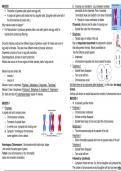
a) Synapsis: homologous chromosomes o The chromosomes align at the equator of the cell.
come together to form a tetrad. Anaphase II
o Sister chromatids separate and move to opposite sides of the cell
Homologous Chromosome- 2 chromosome with similar size, shape, Telophase II
and carried the same types of genes. o Spindle fibers disappear
Tetrad- is two chromosomes or four chromatids o Two nuclei will form
(sister and nonsister chromatids). Followed by cytokinesis
• Cytoplasm divides into two. So, the two daughter cells produced fou
The number of chromosomes in each daughter cell has now been reduc
▪ Production of gametes cells (sperm and egg cell). chromatids at the chiasmata. Part of nonsister
▪ A single cell (parent cell) divides into four daughter cells. (Daughter cells have half of chromatids break and reattach to the other chromatid.
the chromosomes of parent cells.) ▪ Results in a new combination of alleles
Why meiosis needs to happen? Chiasmata (chiasma) are the sites of crossing over.
✓ For Reproduction- It produces gametes cells or sex cells (sperm and egg cells) for o Spindle fiber catch the chromosomes.
reproduction (producing offspring). ✓ Metaphase I
o Tetrads align on middle of the cell.
Since the meiosis produces two different types of gametes—sperm for males and ovum or Due to independent assortment the alignment is random
egg cells for females. They also have different name of process, which are: that adds genetic diversity. (More possibilities for
Oogenesis- process of ovum or egg cell production. how the offspring would appear)
Spermatogenesis- process of sperm production. 3. Anaphase I
Meiosis also occurs in the sex organs of other animals, plants, fungi and etc. o chromosomes separate and move towards the poles.
✓ Telophase 1
Meiosis has two division the: o Spindle fibers disappear
• meiosis I o Two nuclei will form
• meiosis II o Chromosomes uncoil
Meiosis I have 4 subphases: Prophase I, Metaphase I, Anaphase I, Telophase I And then there will be cytokinesis after telophase 1. In this case, two daugh
Meiosis II have 4 subphases: Prophase II, Metaphase II, Anaphase II, Telophase II formed.
So, there are total of 8 subphases/stages happen in meiosis. Another cell division is needed because the number of chromosomes has no
MEIOSIS II
MEIOSIS 1 ❖ Is basically just like mitosis
✓ Prophase I ✓ Prophase II
-Longest and most complex phase o Chromosomes condensed
o Chromosomes condense. o Nuclear envelop disappear
o Formation of spindle fibers o Spindle fibers begin to form and catch the chromosomes.
o 2 events occur: synapsis and crossing over Metaphase II
a) Synapsis: homologous chromosomes o The chromosomes align at the equator of the cell.
come together to form a tetrad. Anaphase II
o Sister chromatids separate and move to opposite sides of the cell
Homologous Chromosome- 2 chromosome with similar size, shape, Telophase II
and carried the same types of genes. o Spindle fibers disappear
Tetrad- is two chromosomes or four chromatids o Two nuclei will form
(sister and nonsister chromatids). Followed by cytokinesis
• Cytoplasm divides into two. So, the two daughter cells produced fou
The number of chromosomes in each daughter cell has now been reduc


