
Peace or Conflict
Lecture 1
2015 peace keeping mission of Haiti → scandalised (accused of transactional sex; sexual violence was
rampant among peace missions itself)
Conflict consists of 3 main factors:
1. Actors/parties
2. Incompatibility: severe disagreement between at least 2 sides, where their demands cannot be
met by the same resources at the same time
3. Action
As Peter Wallensteen (2019, 18) defines it: a conflict is ‘a social situation in which a minimum of two
actors (parties) strive to acquire at the same moment in time an available set of scarce resources’
● A conflict does exist even if there are no actions taken or demands formulated → the conflict
is internal to the system
● When the parties adjust their demands so that there is no longer scarcity, the conflict
disappears
○ Latent conflict: conflict lays low, and often no violent actions occurs
○ Manifest conflict: there is an action, and often violent actions
‘By conflict we mean the pursuit of incompatible goals by different groups (...) we intend our usage
here to apply to any political conflict, whether it is pursued by peaceful means or by the use of force’
Eamabotham, Miall & Woodhouse, 2011
‘An armed conflict is a contested incompatibility that concerns government and/or territory where the
use of armed force between two parties, of which at least one is the government of a state, results in at
least 25 battle-related deaths in one calendar year’
Uppsala Conflict Data Programme
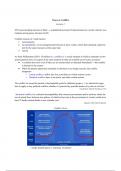
Conflict Curve
→ under durable peace is ‘harmony of interest’
,(1) Types of Conflict
4 types of conflict:
1. Interstate conflict: conflict between two states (eg Russia & Ukraine)
2. Intrastate conflict: conflict that happens within the boundaries of one state (eg Yemen) which
includes a governmental party and a non-governmental party
3. Substrate conflict: conflict between two non-state actors/non-governmental parties (eg
Mexican cartels, Congo)
4. Proxy war (internationalised/trans-nationalised war): war fought between a non-state and state
actors within a state, and each represent the interests of larger nations (eg Syrian civil war)
Note: it is debatable that a conflict is interstate or intrastate: whether one state claims they are
independent while the other claims they are not → eg Palestine-Israel Conflict
1.1 Old and New Wars
Argument: generally, before 1990s, war was fought differently than after 1990s
Old Wars → before 1990s
● Typically understood as linear disputes
● Interstate conflicts
● Military action/battles; as a result, 90% of victims were soldiers (Paris, 2004)
New Wars → after 1990s
● Highly increased number of intrastate conflicts/proxy wars
● Conflicts increasingly spill across national borders or become fully transnational
● Complexity of conflicts increased, and different conflict actors become more difficult to
recognise
● Conflict tactics changed, and conflict actors no longer follow international standards
● Not ideology (eg the Third Reich), but identity politics (eg religious identity, state identity)
● 90% of victims are civilians
Ideological Conflict Identity Politics
● Universal belief system ● Group identity (ethnicity, religion etc)
● Global or regional ● Localised or group-specific
● Systemic change ● Seeks recognition, rights or autonomy
● Eg Nazism, Communism ● Eg sectarianism, nationalism
● State-led or movement based ● Community or group-led
Kaldor (2012) explains that new wars involve “a blurring of the distinctions between war (usually
defined as violence between states or organised political groups for political motives), organised
crime (violence undertaken by privately organised groups for private purposes, usually financial gain)
and large-scale violations of human rights (violence undertaken by states or politically organised
groups against individuals)”.
,Swanstrom & Weissman, 2008 conflict curve
Notice, a lot of conflict now is fought between non-state actors (past 2010 the trend increases, before
1990 it wasn’t even recognised as such/focused on at all)
Conflict changed, but did the world become a safer place?
Although it may seem that the world has become a safer place in reference to ‘physical safety’,
perception of safety has degraded a lot → unpredictability of conflict rising (eg conflict which might
spread to other places)
Consider, for people who believe that the world is a safer place, they are in a position of privilege
, Armed Conflicts and Peace Agreements
Wallensteen, P
2.1 Identifying Armed Conflict
A common question is whether conflict and war are more frequent today → often assumed that
conflicts are easily comparable, which leads to questions about understanding where the world is
headed, as a whole or by region
● However, each conflict is unique and has its own characteristics, making frequency
comparisons less useful to those involved
A key question in peace research is understanding why conflicts occur and how they can be
terminated → answers are often tied to by-products of other ambitions and deeper level questions
There are patterns in conflict that suggest factors for why wars begin
→ Various potential causes for conflict are identified, including changes in international systems or
domestic policies, and other possible candidates for causation
● International System Changes: shifts in the international system can lead to conflict
● Domestic Policies: changes within a state's domestic policies can also incite conflict → could
include political repression, economic inequality, or discriminatory laws
● Bipolarity: a system dominated by two major powers (eg Cold War era)
● Nuclear Weapons: the presence and proliferation of nuclear weapons and the threat of their
use
● International Organisations: the role and influence of international bodies
● Democratisation: the process of transitioning to democracy
● Access to Media: the impact of media and communication technologies
● Human Rights: violations or protection of human rights
● Economic factors: eg the trading of specific conflict goods, greed, grievance and natural
resources
● Social factors: eg the treatment of minority populations and cultural identity
2.2 Conflict Data Projects
The Correlates of War (COW) Project:
● Key source of quantitative studies in international relations, led by J. David Singer
● COW focuses on understanding inter-state conflict and questions realist thinking
● Uses data to correlate the causes of conflict to determine how the world actually functions
The Uppsala Conflict Data Program (UCDP):
● Focusing more on conflict resolution
● UCDP collects data on armed conflict and is considered a useful guide
● Also researches whether armed conflict is on the decline
Lecture 1
2015 peace keeping mission of Haiti → scandalised (accused of transactional sex; sexual violence was
rampant among peace missions itself)
Conflict consists of 3 main factors:
1. Actors/parties
2. Incompatibility: severe disagreement between at least 2 sides, where their demands cannot be
met by the same resources at the same time
3. Action
As Peter Wallensteen (2019, 18) defines it: a conflict is ‘a social situation in which a minimum of two
actors (parties) strive to acquire at the same moment in time an available set of scarce resources’
● A conflict does exist even if there are no actions taken or demands formulated → the conflict
is internal to the system
● When the parties adjust their demands so that there is no longer scarcity, the conflict
disappears
○ Latent conflict: conflict lays low, and often no violent actions occurs
○ Manifest conflict: there is an action, and often violent actions
‘By conflict we mean the pursuit of incompatible goals by different groups (...) we intend our usage
here to apply to any political conflict, whether it is pursued by peaceful means or by the use of force’
Eamabotham, Miall & Woodhouse, 2011
‘An armed conflict is a contested incompatibility that concerns government and/or territory where the
use of armed force between two parties, of which at least one is the government of a state, results in at
least 25 battle-related deaths in one calendar year’
Uppsala Conflict Data Programme
Conflict Curve
→ under durable peace is ‘harmony of interest’
,(1) Types of Conflict
4 types of conflict:
1. Interstate conflict: conflict between two states (eg Russia & Ukraine)
2. Intrastate conflict: conflict that happens within the boundaries of one state (eg Yemen) which
includes a governmental party and a non-governmental party
3. Substrate conflict: conflict between two non-state actors/non-governmental parties (eg
Mexican cartels, Congo)
4. Proxy war (internationalised/trans-nationalised war): war fought between a non-state and state
actors within a state, and each represent the interests of larger nations (eg Syrian civil war)
Note: it is debatable that a conflict is interstate or intrastate: whether one state claims they are
independent while the other claims they are not → eg Palestine-Israel Conflict
1.1 Old and New Wars
Argument: generally, before 1990s, war was fought differently than after 1990s
Old Wars → before 1990s
● Typically understood as linear disputes
● Interstate conflicts
● Military action/battles; as a result, 90% of victims were soldiers (Paris, 2004)
New Wars → after 1990s
● Highly increased number of intrastate conflicts/proxy wars
● Conflicts increasingly spill across national borders or become fully transnational
● Complexity of conflicts increased, and different conflict actors become more difficult to
recognise
● Conflict tactics changed, and conflict actors no longer follow international standards
● Not ideology (eg the Third Reich), but identity politics (eg religious identity, state identity)
● 90% of victims are civilians
Ideological Conflict Identity Politics
● Universal belief system ● Group identity (ethnicity, religion etc)
● Global or regional ● Localised or group-specific
● Systemic change ● Seeks recognition, rights or autonomy
● Eg Nazism, Communism ● Eg sectarianism, nationalism
● State-led or movement based ● Community or group-led
Kaldor (2012) explains that new wars involve “a blurring of the distinctions between war (usually
defined as violence between states or organised political groups for political motives), organised
crime (violence undertaken by privately organised groups for private purposes, usually financial gain)
and large-scale violations of human rights (violence undertaken by states or politically organised
groups against individuals)”.
,Swanstrom & Weissman, 2008 conflict curve
Notice, a lot of conflict now is fought between non-state actors (past 2010 the trend increases, before
1990 it wasn’t even recognised as such/focused on at all)
Conflict changed, but did the world become a safer place?
Although it may seem that the world has become a safer place in reference to ‘physical safety’,
perception of safety has degraded a lot → unpredictability of conflict rising (eg conflict which might
spread to other places)
Consider, for people who believe that the world is a safer place, they are in a position of privilege
, Armed Conflicts and Peace Agreements
Wallensteen, P
2.1 Identifying Armed Conflict
A common question is whether conflict and war are more frequent today → often assumed that
conflicts are easily comparable, which leads to questions about understanding where the world is
headed, as a whole or by region
● However, each conflict is unique and has its own characteristics, making frequency
comparisons less useful to those involved
A key question in peace research is understanding why conflicts occur and how they can be
terminated → answers are often tied to by-products of other ambitions and deeper level questions
There are patterns in conflict that suggest factors for why wars begin
→ Various potential causes for conflict are identified, including changes in international systems or
domestic policies, and other possible candidates for causation
● International System Changes: shifts in the international system can lead to conflict
● Domestic Policies: changes within a state's domestic policies can also incite conflict → could
include political repression, economic inequality, or discriminatory laws
● Bipolarity: a system dominated by two major powers (eg Cold War era)
● Nuclear Weapons: the presence and proliferation of nuclear weapons and the threat of their
use
● International Organisations: the role and influence of international bodies
● Democratisation: the process of transitioning to democracy
● Access to Media: the impact of media and communication technologies
● Human Rights: violations or protection of human rights
● Economic factors: eg the trading of specific conflict goods, greed, grievance and natural
resources
● Social factors: eg the treatment of minority populations and cultural identity
2.2 Conflict Data Projects
The Correlates of War (COW) Project:
● Key source of quantitative studies in international relations, led by J. David Singer
● COW focuses on understanding inter-state conflict and questions realist thinking
● Uses data to correlate the causes of conflict to determine how the world actually functions
The Uppsala Conflict Data Program (UCDP):
● Focusing more on conflict resolution
● UCDP collects data on armed conflict and is considered a useful guide
● Also researches whether armed conflict is on the decline


