Types of Mergers -
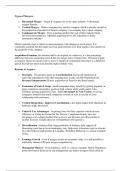
1. Horizontal Merger - Target & Acquirer are in the same industry. Volkswagen
acquire Porsche
2. Vertical Merger - When a company buy another company which is already needed in
the production of products of former company. Car company buys wheel company.
3. Conglomerate Merger - Firm acquiring another firm out of their industry/field.
Diversification purposes. Alphabet acquiring Nest Labs (operation in home
automation industry)
Market typically react to takeover announcements with changes in stock prices. It is
commonly assumed that the target has been paid premium over their market value mostly for
the goodwill of the company.
Acquisition Premium, the amount paid by an acquirer in a takeover, it is the percentage
difference between acquisition price & the pre merger price of target firm. Premium is paid,
as acquirer shows its interest it gives news to market & competition feels there is a benefit to
gain & the bids are taken in & possibly highest bidder wins.
Reasons to Acquire -
1. Synergies - The primary goals are Cost Reduction (laying off employees &
removing redundancies like after merging there is only one HR Department) &
Revenue Enhancement (Disney acquisition of Pixar for the Brand name).
2. Economies of Scale & Scope- Small companies enjoy benefit by getting acquired, as
large companies can produce goods in high volume while small cannot. Like
Fitchbury getting acquired by Zara. Cost Advantages & Vast Variety. Even big
companies benefit from small companies network or trust in society or close
relationship with customers.
3. Vertical Integration - Improves Coordination. Like Apple makes both Hardware &
Software unlike Microsoft.
4. Talent & Tax Advantages - Acquiring firms for their expertise which increase
efficiency or if they are located in Tax Havens. Conglomerate may have tax
advantage over a single product firm as loss in one division can offset profits in
another division. Google takeover of DeepMind (AI Expertise).
5. Diversification - Reduces Risk (large portfolio) & Enhance debt capacity &
Borrowing costs due to lower bankruptcy risk. Help asset Allocation (easy to relocate
for a diversified conglomerate) & Liquidity. Berkshire Hathaway is a classic example
of this.
6. Earnings Growth - Even if merger creates no economic value, it is still possible to
artificially enhance EPS post merger comparatively.
7. Managerial Motives - Overconfidence. AOL is a classic example. Hubris Hypothesis
posits this kind of behavior by top management can lead to mergers which often do
1. Horizontal Merger - Target & Acquirer are in the same industry. Volkswagen
acquire Porsche
2. Vertical Merger - When a company buy another company which is already needed in
the production of products of former company. Car company buys wheel company.
3. Conglomerate Merger - Firm acquiring another firm out of their industry/field.
Diversification purposes. Alphabet acquiring Nest Labs (operation in home
automation industry)
Market typically react to takeover announcements with changes in stock prices. It is
commonly assumed that the target has been paid premium over their market value mostly for
the goodwill of the company.
Acquisition Premium, the amount paid by an acquirer in a takeover, it is the percentage
difference between acquisition price & the pre merger price of target firm. Premium is paid,
as acquirer shows its interest it gives news to market & competition feels there is a benefit to
gain & the bids are taken in & possibly highest bidder wins.
Reasons to Acquire -
1. Synergies - The primary goals are Cost Reduction (laying off employees &
removing redundancies like after merging there is only one HR Department) &
Revenue Enhancement (Disney acquisition of Pixar for the Brand name).
2. Economies of Scale & Scope- Small companies enjoy benefit by getting acquired, as
large companies can produce goods in high volume while small cannot. Like
Fitchbury getting acquired by Zara. Cost Advantages & Vast Variety. Even big
companies benefit from small companies network or trust in society or close
relationship with customers.
3. Vertical Integration - Improves Coordination. Like Apple makes both Hardware &
Software unlike Microsoft.
4. Talent & Tax Advantages - Acquiring firms for their expertise which increase
efficiency or if they are located in Tax Havens. Conglomerate may have tax
advantage over a single product firm as loss in one division can offset profits in
another division. Google takeover of DeepMind (AI Expertise).
5. Diversification - Reduces Risk (large portfolio) & Enhance debt capacity &
Borrowing costs due to lower bankruptcy risk. Help asset Allocation (easy to relocate
for a diversified conglomerate) & Liquidity. Berkshire Hathaway is a classic example
of this.
6. Earnings Growth - Even if merger creates no economic value, it is still possible to
artificially enhance EPS post merger comparatively.
7. Managerial Motives - Overconfidence. AOL is a classic example. Hubris Hypothesis
posits this kind of behavior by top management can lead to mergers which often do