Core Study APFCE
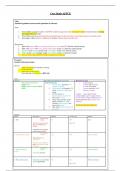
Aims
(include hypotheses and research questions if relevant)
Aims:
1. Test whether a group of adults with HFA would be impaired on the revised eyes task [revised version of reading
the mind in the eyes task].
2. Test if there was an association between performance on the revised eyes task and measures of autistic traits
3. Investigate if there were sex differences in those without autism on this task
Hypotheses:
1. Ppts with autism will score significantly lower scores on RET than the control groups
2. Ppts with autism will score significantly higher on the AQ than the control groups
3. Females in the normal groups will score higher on the RET than the males
4. Males in the normal groups would score higher on the AQ than the females
5. Scores on the AQ and RET would be negatively correlated
Procedure
(include method and sample)
Method:
- Quasi experiment [IV naturally occurring]
- LAB experiment
- Independent groups design
- Data collected via self-report on RET/AQ
Tests:
AQ test Reading the mind in the eyes task Revised eyes task
- Self-report questionnaire Criticised because: - 36 sets of eyes
- Scores 0-50 1. Forced choice questions => 2 - 18 male and 18 female
- Higher score => more autistic opposite responses - 4 words of emotion
traits 2. Small number of examples [25] - 1 target word and 3 foils
led to ceiling effect in normal - Glossary of terms
group
3. 25 sets of eyes => 8 judges – 4 male and 4 female
basic/complex emotions => 5 judges had to agree on target word
basic ones too easy No more than 2 judges could select foil
4. Some of the emotions in the Criteria had to be met or words were
photos could be solved by replaced
checking which direction the
person was gazing INTER-RATER RELIABILITY
5. Ppts might not have understood
the words
Sample:
Group Description Number Average age Gender
- Self-selecting
1: HFA sample 15 29.7 Male
Adverts in Autistic Society IQ = 115
Magazine and Support
Groups
All diagnosed in specialist
centres using DSM/ICD
- No diagnosis
2: adult comparison group of HFA 122 46.5 Male and female
Selected from adult
community
Education classes in Exeter
and public library users in
Cambridge
- No diagnosis
3: student comparison of HFA 103 20.8 Male and female
group
Cambridge university
4: IQ matched group Randomly selected from 14 28 Male and female
general population
IQ = 116
Aims
(include hypotheses and research questions if relevant)
Aims:
1. Test whether a group of adults with HFA would be impaired on the revised eyes task [revised version of reading
the mind in the eyes task].
2. Test if there was an association between performance on the revised eyes task and measures of autistic traits
3. Investigate if there were sex differences in those without autism on this task
Hypotheses:
1. Ppts with autism will score significantly lower scores on RET than the control groups
2. Ppts with autism will score significantly higher on the AQ than the control groups
3. Females in the normal groups will score higher on the RET than the males
4. Males in the normal groups would score higher on the AQ than the females
5. Scores on the AQ and RET would be negatively correlated
Procedure
(include method and sample)
Method:
- Quasi experiment [IV naturally occurring]
- LAB experiment
- Independent groups design
- Data collected via self-report on RET/AQ
Tests:
AQ test Reading the mind in the eyes task Revised eyes task
- Self-report questionnaire Criticised because: - 36 sets of eyes
- Scores 0-50 1. Forced choice questions => 2 - 18 male and 18 female
- Higher score => more autistic opposite responses - 4 words of emotion
traits 2. Small number of examples [25] - 1 target word and 3 foils
led to ceiling effect in normal - Glossary of terms
group
3. 25 sets of eyes => 8 judges – 4 male and 4 female
basic/complex emotions => 5 judges had to agree on target word
basic ones too easy No more than 2 judges could select foil
4. Some of the emotions in the Criteria had to be met or words were
photos could be solved by replaced
checking which direction the
person was gazing INTER-RATER RELIABILITY
5. Ppts might not have understood
the words
Sample:
Group Description Number Average age Gender
- Self-selecting
1: HFA sample 15 29.7 Male
Adverts in Autistic Society IQ = 115
Magazine and Support
Groups
All diagnosed in specialist
centres using DSM/ICD
- No diagnosis
2: adult comparison group of HFA 122 46.5 Male and female
Selected from adult
community
Education classes in Exeter
and public library users in
Cambridge
- No diagnosis
3: student comparison of HFA 103 20.8 Male and female
group
Cambridge university
4: IQ matched group Randomly selected from 14 28 Male and female
general population
IQ = 116