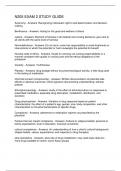
N205 EXAM 2 STUDY GUIDE
Autonomy - Answers :Recognizing individual's right to self-determination and decision-
making
Benificence - Answers :Acting for the good and welfare of others
Justice - Answers :Element of fairness in all medical and nursing decisions; give care to
all clients with the same level of fairness
Nonmaleficience - Answers :Do no harm; nurse has responsibility to avoid treatments or
interventions in which the potential for harm outweighs the potential for benefit
Nursing code of ethics - Answers :Guide for carrying out nursing responsibilities in a
manner consistent with quality in nursing care and the ethical obligations of the
profession
Veracity - Answers :Truthfulness
Placebo - Answers :drug dosage without any pharmacological activity; a fake drug used
in the testing of medication
Informed consent (components) - Answers :Written documentation of potential side-
effects or adverse outcomes; Client signature documenting understanding; witness
present
Ethnopharmacology - Answers :study of the effect of ethnicity/culture on responses to
prescribed medication, especially drug absorption, metabolism, distribution, and
excretion
Drug polymorphism - Answers :Variation in drug response based on patient
characteristics; the effect of a patient's age, gender, size, body composition, and other
characteristics on the pharmacokinetics of specific drugs
Compliance - Answers :adherence to medication regimen as prescribed by the
physician
Factors that can impact compliance - Answers :Cultural or religious beliefs, personal or
family expectations, level of education, financial constraints
cultural competence - Answers :An understanding of how a client's cultural background
shapes beliefs, values, expectations, and response to drug therapies
slow acetylators - Answers :slow rate of drug metabolism; may need lower dose b/c
more drug available for action; some Asian groups
, Fast acetylators - Answers :Fast rate of drug metabolism; need higher dose
HIPAA - Answers :Health Insurance Portability and Accountability Act; requirements
around patient confidentiality and privacy
FDA (Food and Drug Administration) Purpose - Answers :Protect patient (safety) and
ensure drug effectiveness
Dietary Supplement Health and Education Act - Answers :Oversight of safety of
vitamins, herbal supplements and homeopathic drugs; does NOT cover effectiveness
Clinical Trial Phase 1 - Answers :Small # of healthy subjects to determine optimal
dosage range and pharmacokinetics
Clinical Trial Phase 2 - Answers :Small # of people who have the specific disease
condition; to determine effectiveness, monitor for adverse reactions, refine dosing
Clinical Trial Phase 3 - Answers :Large # of patients with the disease condition; to
identify infrequent or rare side effects; may include experimental design with placebo
Experimental design - Answers :Randomized design used in Phase 3 clinical trials in
which there is an experimental (receiving drug) and control group (receiving placebo)
Clinical Trial Phase 4 - Answers :Post-marketing studies; after FDA approval
Class 1 Recall - Answers :Reasonable probability of severe reaction or death
Class 2 Recall - Answers :less severe, temporary or reversible health effects
Class 3 Recall - Answers :least severe, not likely to cause a problem
Nursing process and cultural considerations related to drug admin for each phase -
Answers :Assessment; Planning; Implementation; Evaluation
Medical error - Answers :any error in any phase of clinical patient care
Medication error - Answers :Any preventable adverse drug event involving inappropriate
medication use (e.g., wrong dose, administering again too soon); it may or may not
cause the patient harm.
Adverse Drug Event (ADE) - Answers :Undesirable occurrence related to administering
or failing to administer a prescribed drug
Adverse Drug Reaction - Answers :unexpected, unintended, undesired, or excessive
response to a drug
Autonomy - Answers :Recognizing individual's right to self-determination and decision-
making
Benificence - Answers :Acting for the good and welfare of others
Justice - Answers :Element of fairness in all medical and nursing decisions; give care to
all clients with the same level of fairness
Nonmaleficience - Answers :Do no harm; nurse has responsibility to avoid treatments or
interventions in which the potential for harm outweighs the potential for benefit
Nursing code of ethics - Answers :Guide for carrying out nursing responsibilities in a
manner consistent with quality in nursing care and the ethical obligations of the
profession
Veracity - Answers :Truthfulness
Placebo - Answers :drug dosage without any pharmacological activity; a fake drug used
in the testing of medication
Informed consent (components) - Answers :Written documentation of potential side-
effects or adverse outcomes; Client signature documenting understanding; witness
present
Ethnopharmacology - Answers :study of the effect of ethnicity/culture on responses to
prescribed medication, especially drug absorption, metabolism, distribution, and
excretion
Drug polymorphism - Answers :Variation in drug response based on patient
characteristics; the effect of a patient's age, gender, size, body composition, and other
characteristics on the pharmacokinetics of specific drugs
Compliance - Answers :adherence to medication regimen as prescribed by the
physician
Factors that can impact compliance - Answers :Cultural or religious beliefs, personal or
family expectations, level of education, financial constraints
cultural competence - Answers :An understanding of how a client's cultural background
shapes beliefs, values, expectations, and response to drug therapies
slow acetylators - Answers :slow rate of drug metabolism; may need lower dose b/c
more drug available for action; some Asian groups
, Fast acetylators - Answers :Fast rate of drug metabolism; need higher dose
HIPAA - Answers :Health Insurance Portability and Accountability Act; requirements
around patient confidentiality and privacy
FDA (Food and Drug Administration) Purpose - Answers :Protect patient (safety) and
ensure drug effectiveness
Dietary Supplement Health and Education Act - Answers :Oversight of safety of
vitamins, herbal supplements and homeopathic drugs; does NOT cover effectiveness
Clinical Trial Phase 1 - Answers :Small # of healthy subjects to determine optimal
dosage range and pharmacokinetics
Clinical Trial Phase 2 - Answers :Small # of people who have the specific disease
condition; to determine effectiveness, monitor for adverse reactions, refine dosing
Clinical Trial Phase 3 - Answers :Large # of patients with the disease condition; to
identify infrequent or rare side effects; may include experimental design with placebo
Experimental design - Answers :Randomized design used in Phase 3 clinical trials in
which there is an experimental (receiving drug) and control group (receiving placebo)
Clinical Trial Phase 4 - Answers :Post-marketing studies; after FDA approval
Class 1 Recall - Answers :Reasonable probability of severe reaction or death
Class 2 Recall - Answers :less severe, temporary or reversible health effects
Class 3 Recall - Answers :least severe, not likely to cause a problem
Nursing process and cultural considerations related to drug admin for each phase -
Answers :Assessment; Planning; Implementation; Evaluation
Medical error - Answers :any error in any phase of clinical patient care
Medication error - Answers :Any preventable adverse drug event involving inappropriate
medication use (e.g., wrong dose, administering again too soon); it may or may not
cause the patient harm.
Adverse Drug Event (ADE) - Answers :Undesirable occurrence related to administering
or failing to administer a prescribed drug
Adverse Drug Reaction - Answers :unexpected, unintended, undesired, or excessive
response to a drug