Immunology Exam 1 – BIOL 5500
Functions of Key Immune Cells
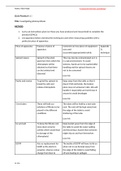
Eosinophils: These cells play a crucial role in combating multicellular parasites,
particularly helminths. Additionally, they contribute to immune responses associated
with allergies.
Basophils: Their primary function is to serve as major mediators in carrying out allergic
reactions, releasing histamine and other inflammatory substances.
Mast Cells: Like basophils, mast cells are involved in allergic responses and
inflammation, helping to trigger immune reactions upon encountering allergens.
Granulocytes and Their Roles
Similarities Between Granulocytes: Among the granulocytes, basophils and mast cells
share the most similarities in function, both contributing to allergic and inflammatory
responses.
Neutrophils: These are the most abundant granulocytes in circulation and play essential
roles in:
Migration to infection sites
Phagocytosis (engulfing pathogens)
Initiating the respiratory burst to kill microbes
Functions of Key Immune Cells
Eosinophils: These cells play a crucial role in combating multicellular parasites,
particularly helminths. Additionally, they contribute to immune responses associated
with allergies.
Basophils: Their primary function is to serve as major mediators in carrying out allergic
reactions, releasing histamine and other inflammatory substances.
Mast Cells: Like basophils, mast cells are involved in allergic responses and
inflammation, helping to trigger immune reactions upon encountering allergens.
Granulocytes and Their Roles
Similarities Between Granulocytes: Among the granulocytes, basophils and mast cells
share the most similarities in function, both contributing to allergic and inflammatory
responses.
Neutrophils: These are the most abundant granulocytes in circulation and play essential
roles in:
Migration to infection sites
Phagocytosis (engulfing pathogens)
Initiating the respiratory burst to kill microbes