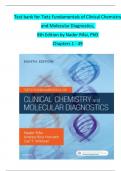
Test bank for Tietz Fundamentals of Clinical Chemistry
and Molecular Diagnostics,
8th Edition by Nader Rifai, PhD
Chapters 1 - 49
,Tietz Fundamentals of Clinical Chemistry and Molecular Diagnostics 8th Edition Test Bank
Table of contents:
I. Principles Of Laboratory Medicine
Chapter 1. Clinical Chemistry, Molecular Diagnostics, and Laboratory Medicine
Chapter 2. Selection and Analytical Evaluation of Methods — With Statistical Techniques
Chapter 3. Clinical Evaluation of Methods
Chapter 4. Evidence-Based Laboratory Medicine
Chapter 5. Establishment and Use of Reference Values
Chapter 6. Specimen Collection, Processing, and Other Preanalytical Variables
Chapter 7. Quality Management
II. Analytical Techniques And Instrumentation
Chapter 8. Principles of Basic Techniques and Laboratory Safety
Chapter 9. Optical Techniques
Chapter 10. Electrochemistry and Chemical Sensors
Chapter 11. Electrophoresis
Chapter 12. Chromatography
Chapter 13. Mass Spectrometry
Chapter 14. Enzyme and Rate Analyses
Chapter 15. Immunochemical Techniques
Chapter 16 Automation
Chapter 17. Point-of-Care Instrumentation
III. Analytes
Chapter 18. Amino Acids, Peptides, and Proteins
Chapter 19. Serum Enzymes
Chapter 20. Tumor Markers and Cancer Genes
Chapter 21. Kidney Function Tests — Creatinine, GFR, Urea, and Uric Acid
Chapter 22. Carbohydrates
Chapter 23. Lipids, Lipoproteins, Apolipoproteins, and Other Cardiac Risk Factors
Chapter 24. Electrolytes and Blood Gases
Chapter 25. Hormones
Chapter 26. Catecholamines and Serotonin
Chapter 27. Vitamins, Trace Elements, Nutritional Assessment
Chapter 28. Hemoglobin, Iron, and Bilirubin
Chapter 29. Porphyrins and Porphyrias
Chapter 30. Therapeutic Drugs and Their Management
Chapter 31. Clinical Toxicology
Chapter 32. Toxic Metals
IV. Pathophysiology
Chapter 33. Diabetes
,Chapter 34. Cardiovascular Disease
Chapter 35. Kidney Disease
Chapter 36. Physiology and Disorders of Water, Electrolyte, and Acid-Base Metabolism
Chapter 37. Liver Disease
Chapter 38. Gastrointestinal and Pancreatic Diseases
Chapter 39. Disorders of Bone and Mineral Metabolism
Chapter 40. Disorders of the Pituitary Gland
Chapter 41. Disorders of the Adrenal Cortex
Chapter 42. Thyroid Disorders
Chapter 43. Reproduction-Related Disorders
Chapter 44. Pregnancy and Prenatal Testing
Chapter 45. Newborn Screening and Inborn Errors of Metabolism
Chapter 46. Pharmacogenetics
V. Molecular Diagnostics
Chapter 47. Principles of Molecular Biology
Chapter 48. Nucleic Acid Techniques and Applications
Chapter 49. Genomes and Nucleic Acid Alterations
, Chapter 01: Clinical Chemistry, Molecular Diagnostics, and Laboratory Medicine Test
Bank
MULTIPLE CHOICE
1. An individual working in a clinical chemistry laboratory is married to a sales representative
who works for a company that sells chemistry laboratory supplies. When the laboratory
manager requests a list of needed supplies, cost of supplies, and vendors, this individual
onlyrecommends the spouse’s company as the vendor. This is considered to be a(n):
a. accounting issue.
b. possible conflict of interest.
c. maintenance of confidentiality issue.
d. problem with resource allocation.
ANS: B
Concern has been raised over the interrelationships between practitioners in the medical
fieldand commercial suppliers of drugs, devices, equipment, etc., to the medical profession.
Similarly, relationships have been scrutinized between clinical laboratorians and
manufacturers and providers of diagnostic equipment and supplies. These concerns led the
National Institutes of Health (NIH) in 1995 to require official institutional review of financial
disclosure by researchers and management of situations in which disclosure indicates
potentialconflicts of interest.
DIF: 1 REF: Page 4-5 OBJ: 6 | 7
2. A patient visits her physician stating that her prescribed painkiller is not working to
reduce the pain following her recent surgery. A friend of the patient claims that the same
painkiller“worked wonders” to reduce her pain after the same surgery. The physician
states that the difference in the effect of the drug might be caused by , which is studied
in pharmacogenetics.
a. epidemiology
b. an inherited disease
c. a conflict of interest
d. a genetic variation in drug-metabolizing enzymes
ANS: D
Pharmacogenetics is the study of the genetic variation of drug metabolism
betweenindividuals.
DIF: 1 REF: Page 3 OBJ: 1
3. John works in a molecular diagnostics laboratory and receives a blood sample that has
the name of a close friend printed on the bar-coded label. The genetic test that is ordered
on thefriend’s sample would provide diagnostic information about a disorder that has a
poor prognosis, and the test is usually performed by John. He asks a fellow employee to
analyzethe sample for him and not divulge the results. This ethical issue concerns:
a. confidentiality of patient genetic and medical information.
b. a conflict of interest.
c. resource allocation.
d. diagnostic accuracy.
and Molecular Diagnostics,
8th Edition by Nader Rifai, PhD
Chapters 1 - 49
,Tietz Fundamentals of Clinical Chemistry and Molecular Diagnostics 8th Edition Test Bank
Table of contents:
I. Principles Of Laboratory Medicine
Chapter 1. Clinical Chemistry, Molecular Diagnostics, and Laboratory Medicine
Chapter 2. Selection and Analytical Evaluation of Methods — With Statistical Techniques
Chapter 3. Clinical Evaluation of Methods
Chapter 4. Evidence-Based Laboratory Medicine
Chapter 5. Establishment and Use of Reference Values
Chapter 6. Specimen Collection, Processing, and Other Preanalytical Variables
Chapter 7. Quality Management
II. Analytical Techniques And Instrumentation
Chapter 8. Principles of Basic Techniques and Laboratory Safety
Chapter 9. Optical Techniques
Chapter 10. Electrochemistry and Chemical Sensors
Chapter 11. Electrophoresis
Chapter 12. Chromatography
Chapter 13. Mass Spectrometry
Chapter 14. Enzyme and Rate Analyses
Chapter 15. Immunochemical Techniques
Chapter 16 Automation
Chapter 17. Point-of-Care Instrumentation
III. Analytes
Chapter 18. Amino Acids, Peptides, and Proteins
Chapter 19. Serum Enzymes
Chapter 20. Tumor Markers and Cancer Genes
Chapter 21. Kidney Function Tests — Creatinine, GFR, Urea, and Uric Acid
Chapter 22. Carbohydrates
Chapter 23. Lipids, Lipoproteins, Apolipoproteins, and Other Cardiac Risk Factors
Chapter 24. Electrolytes and Blood Gases
Chapter 25. Hormones
Chapter 26. Catecholamines and Serotonin
Chapter 27. Vitamins, Trace Elements, Nutritional Assessment
Chapter 28. Hemoglobin, Iron, and Bilirubin
Chapter 29. Porphyrins and Porphyrias
Chapter 30. Therapeutic Drugs and Their Management
Chapter 31. Clinical Toxicology
Chapter 32. Toxic Metals
IV. Pathophysiology
Chapter 33. Diabetes
,Chapter 34. Cardiovascular Disease
Chapter 35. Kidney Disease
Chapter 36. Physiology and Disorders of Water, Electrolyte, and Acid-Base Metabolism
Chapter 37. Liver Disease
Chapter 38. Gastrointestinal and Pancreatic Diseases
Chapter 39. Disorders of Bone and Mineral Metabolism
Chapter 40. Disorders of the Pituitary Gland
Chapter 41. Disorders of the Adrenal Cortex
Chapter 42. Thyroid Disorders
Chapter 43. Reproduction-Related Disorders
Chapter 44. Pregnancy and Prenatal Testing
Chapter 45. Newborn Screening and Inborn Errors of Metabolism
Chapter 46. Pharmacogenetics
V. Molecular Diagnostics
Chapter 47. Principles of Molecular Biology
Chapter 48. Nucleic Acid Techniques and Applications
Chapter 49. Genomes and Nucleic Acid Alterations
, Chapter 01: Clinical Chemistry, Molecular Diagnostics, and Laboratory Medicine Test
Bank
MULTIPLE CHOICE
1. An individual working in a clinical chemistry laboratory is married to a sales representative
who works for a company that sells chemistry laboratory supplies. When the laboratory
manager requests a list of needed supplies, cost of supplies, and vendors, this individual
onlyrecommends the spouse’s company as the vendor. This is considered to be a(n):
a. accounting issue.
b. possible conflict of interest.
c. maintenance of confidentiality issue.
d. problem with resource allocation.
ANS: B
Concern has been raised over the interrelationships between practitioners in the medical
fieldand commercial suppliers of drugs, devices, equipment, etc., to the medical profession.
Similarly, relationships have been scrutinized between clinical laboratorians and
manufacturers and providers of diagnostic equipment and supplies. These concerns led the
National Institutes of Health (NIH) in 1995 to require official institutional review of financial
disclosure by researchers and management of situations in which disclosure indicates
potentialconflicts of interest.
DIF: 1 REF: Page 4-5 OBJ: 6 | 7
2. A patient visits her physician stating that her prescribed painkiller is not working to
reduce the pain following her recent surgery. A friend of the patient claims that the same
painkiller“worked wonders” to reduce her pain after the same surgery. The physician
states that the difference in the effect of the drug might be caused by , which is studied
in pharmacogenetics.
a. epidemiology
b. an inherited disease
c. a conflict of interest
d. a genetic variation in drug-metabolizing enzymes
ANS: D
Pharmacogenetics is the study of the genetic variation of drug metabolism
betweenindividuals.
DIF: 1 REF: Page 3 OBJ: 1
3. John works in a molecular diagnostics laboratory and receives a blood sample that has
the name of a close friend printed on the bar-coded label. The genetic test that is ordered
on thefriend’s sample would provide diagnostic information about a disorder that has a
poor prognosis, and the test is usually performed by John. He asks a fellow employee to
analyzethe sample for him and not divulge the results. This ethical issue concerns:
a. confidentiality of patient genetic and medical information.
b. a conflict of interest.
c. resource allocation.
d. diagnostic accuracy.