https://www.stuvia.com/user/angelinas
Test Bank
,https://www.stuvia.com/user/angelinas
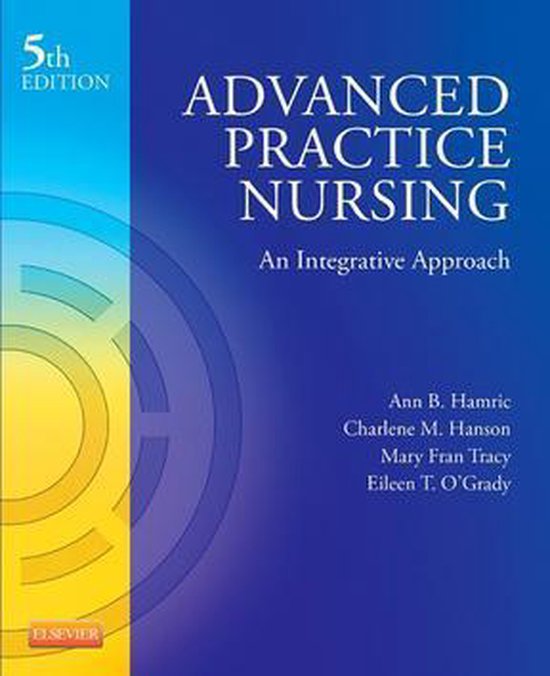
Hamric and Hanson's Advanced Practice Nursing 6th Edition by Mary Fran Tracy, Eileen T. O'Grady
Table of Contents
Part I: Historical and Developmental Aspects of Advanced Practice Nursing
Chapter 1: Highlights from the History of Advanced Practice Nursing in the United States
Chapter 2: Conceptualizations of Advanced Practice Nursing Chapter 3: A Definition of Advanced Practice
Nursing Chapter 4: Role Development of the Advanced Practice Nurse
Chapter 5: Evolving and Innovative Opportunities for Advanced Practice Nursing
Chapter 6: International Development of Advanced Practice Nursing NEW more global focus
Part II: Competencies of Advanced Practice Nursing Chapter 7: Direct Clinical Practice
Chapter 8: Coaching and Guidance Chapter 9: Consultation
Chapter 10: Evidence-Based Practice and Research Chapter 11: Leadership
Chapter 12: Collaboration NEW emphasis on interprofessional collaborative practice
Chapter 13: Ethical Decision Making
Part III: Advanced Practice Roles: The Operational Definitions of Advanced Practice Nursing
Chapter 14: The Clinical Nurse Specialist
Chapter 15: The Primary Care Nurse Practitioner
Chapter 16: The Acute Care Nurse Practitioner Chapter
17: The Certified Nurse-Midwife
Chapter 18: The Certified Registered Nurse Anesthetist
Part IV: Critical Elements in Managing Advanced Nursing Practice Environments Chapter
19: Business Planning and Reimbursement Mechanisms
Chapter 20: Marketing and Negotiation
Chapter 21: Understanding Regulatory, Legal, and Credentialing Requirements Chapter
22: Health Policy Issues in Changing Environments
Multiple Choice
1. In which year did the American Association of College of Nursing (AACN) introduced the
Doctorate of Nursing Practice (DNP)?
a. 2006
b. 2004
c. 2000
d. 2002
,https://www.stuvia.com/user/angelinas
ANS: B
The AACN introduced the DNP degree in 2004 to prepare advanced practice nurses (APRNs) to
meet challenges and standardize practice beyond master’s degree programs.
2. Which of the following is the best explanation for the creation of the Doctorate of Nursing
Practice (DNP) degree?
a. To compete against master’s degree programs
b. To ensure standardized curriculum ensuring independent practice
c. To validate APRN’s for financial reimbursement
d. To address increasing curriculum requirements of master’s degree programs
ANS: D
Although all answers are influenced by the DNP core competencies, the DNP program creation in
2004 by the AACN was designed to address curriculum requirements of master’s degree
programs.
3. Which of the following was the first recognized area of advanced practice nursing?
a. Clinical Nurse Specialist
b. Family nurse practitioner
c. Pediatric nurse practitioner
d. Certified Registered Nurse Anesthetist
ANS: D
In 1931, the National Association of Nurse Anesthetists (NANA), renamed in 1939 to the
American Association of Nurse Anesthetists (AANA) was the first recognized group promoting
advanced nursing practice. Agatha Hodgins founded the AANM at Lakeside Hospital in
Cleveland, Ohio.
, https://www.stuvia.com/user/angelinas
4. Which factor is broadly perceived to solidify and standardize the role of the APNs over the last 25 years ?
a. Lack of access to health care providers
b. Standardized curriculum development
c. Payment for services
d. Societal forces
ANS: B
As the evolution of Advanced Practice Nursing advances specific specialties and needs are
identified. Through the evolution of organization and standardization these roles have solidified
the APN’s role in today’s health care environment.
5. During the formation of early APN roles in anesthesia, which of the following increased
demand for access to health care?
a. Poverty
b. War
c. Rural access to care
d. Availability of training
ANS: B
Earliest demand for nursing-provided anesthesia spiked during periods of war when numbers of
physicians were inadequate. The earliest records date back to the American Civil War with the
administration of chloroform. During World War I in 1917 more than 1000 nurses, some trained
anesthetists, traveled into battle. Other factors such as need for rural health care came later in the
validation and need for APNs.
6. In 1889, Dr. William Worrall Mayo built and opened St. Mary’s hospital in Rochester, NY. He is
known for some of the earliest recruitment and specialized training of nurses in which of the
following roles?
a. Pediatrics
b. Anesthesia
c. Obstetrics
d. Research and statistics
e. Family nursing
ANS: B
In 1889, Dr. William Worrall Mayo began formally training and recognizing nurse anesthetists.
This has been regarded as the earliest training in nurse-provided anesthesia.
7. In 1893, Lillian Wald established the Henry Street Settlement (HSS) House for which purpose
Test Bank
,https://www.stuvia.com/user/angelinas
Hamric and Hanson's Advanced Practice Nursing 6th Edition by Mary Fran Tracy, Eileen T. O'Grady
Table of Contents
Part I: Historical and Developmental Aspects of Advanced Practice Nursing
Chapter 1: Highlights from the History of Advanced Practice Nursing in the United States
Chapter 2: Conceptualizations of Advanced Practice Nursing Chapter 3: A Definition of Advanced Practice
Nursing Chapter 4: Role Development of the Advanced Practice Nurse
Chapter 5: Evolving and Innovative Opportunities for Advanced Practice Nursing
Chapter 6: International Development of Advanced Practice Nursing NEW more global focus
Part II: Competencies of Advanced Practice Nursing Chapter 7: Direct Clinical Practice
Chapter 8: Coaching and Guidance Chapter 9: Consultation
Chapter 10: Evidence-Based Practice and Research Chapter 11: Leadership
Chapter 12: Collaboration NEW emphasis on interprofessional collaborative practice
Chapter 13: Ethical Decision Making
Part III: Advanced Practice Roles: The Operational Definitions of Advanced Practice Nursing
Chapter 14: The Clinical Nurse Specialist
Chapter 15: The Primary Care Nurse Practitioner
Chapter 16: The Acute Care Nurse Practitioner Chapter
17: The Certified Nurse-Midwife
Chapter 18: The Certified Registered Nurse Anesthetist
Part IV: Critical Elements in Managing Advanced Nursing Practice Environments Chapter
19: Business Planning and Reimbursement Mechanisms
Chapter 20: Marketing and Negotiation
Chapter 21: Understanding Regulatory, Legal, and Credentialing Requirements Chapter
22: Health Policy Issues in Changing Environments
Multiple Choice
1. In which year did the American Association of College of Nursing (AACN) introduced the
Doctorate of Nursing Practice (DNP)?
a. 2006
b. 2004
c. 2000
d. 2002
,https://www.stuvia.com/user/angelinas
ANS: B
The AACN introduced the DNP degree in 2004 to prepare advanced practice nurses (APRNs) to
meet challenges and standardize practice beyond master’s degree programs.
2. Which of the following is the best explanation for the creation of the Doctorate of Nursing
Practice (DNP) degree?
a. To compete against master’s degree programs
b. To ensure standardized curriculum ensuring independent practice
c. To validate APRN’s for financial reimbursement
d. To address increasing curriculum requirements of master’s degree programs
ANS: D
Although all answers are influenced by the DNP core competencies, the DNP program creation in
2004 by the AACN was designed to address curriculum requirements of master’s degree
programs.
3. Which of the following was the first recognized area of advanced practice nursing?
a. Clinical Nurse Specialist
b. Family nurse practitioner
c. Pediatric nurse practitioner
d. Certified Registered Nurse Anesthetist
ANS: D
In 1931, the National Association of Nurse Anesthetists (NANA), renamed in 1939 to the
American Association of Nurse Anesthetists (AANA) was the first recognized group promoting
advanced nursing practice. Agatha Hodgins founded the AANM at Lakeside Hospital in
Cleveland, Ohio.
, https://www.stuvia.com/user/angelinas
4. Which factor is broadly perceived to solidify and standardize the role of the APNs over the last 25 years ?
a. Lack of access to health care providers
b. Standardized curriculum development
c. Payment for services
d. Societal forces
ANS: B
As the evolution of Advanced Practice Nursing advances specific specialties and needs are
identified. Through the evolution of organization and standardization these roles have solidified
the APN’s role in today’s health care environment.
5. During the formation of early APN roles in anesthesia, which of the following increased
demand for access to health care?
a. Poverty
b. War
c. Rural access to care
d. Availability of training
ANS: B
Earliest demand for nursing-provided anesthesia spiked during periods of war when numbers of
physicians were inadequate. The earliest records date back to the American Civil War with the
administration of chloroform. During World War I in 1917 more than 1000 nurses, some trained
anesthetists, traveled into battle. Other factors such as need for rural health care came later in the
validation and need for APNs.
6. In 1889, Dr. William Worrall Mayo built and opened St. Mary’s hospital in Rochester, NY. He is
known for some of the earliest recruitment and specialized training of nurses in which of the
following roles?
a. Pediatrics
b. Anesthesia
c. Obstetrics
d. Research and statistics
e. Family nursing
ANS: B
In 1889, Dr. William Worrall Mayo began formally training and recognizing nurse anesthetists.
This has been regarded as the earliest training in nurse-provided anesthesia.
7. In 1893, Lillian Wald established the Henry Street Settlement (HSS) House for which purpose