Reading
- Simmonds, Central Issues in Jurisprudence, ch. 5 (QM+);
- MacCormick, HLA Hart (2nd edn.) ch. 3 (QM+)
- C, 79- 101
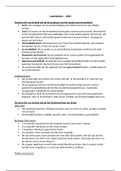
Modern positivism – Hart
Lecture 5
Biographical background
- Lived in England, 1907-1992
- Studied Classics at New College, Oxford.
- Practiced as a barrister and worked for MI5 during WWII.
- Then returned to Oxford, where he taught philosophy and later became the Professor of
Jurisprudence
- His most renowned work, The Concept of Law, is in general jurisprudence. Major contributions to
other areas of legal and political theory: e.g., causation in the law, the moral justification of
punishment, and the limits within which criminal law should try to enforce morality
A comment on Hart’s methodology
- In his work in general jurisprudence, Hart seeks to provide a descriptive account, (his task is to simply
explain what law is) rather than a morally evaluative one.
- He shares this with Austin and Bentham
Hart as a legal positivist: some common denominators with Austin and Bentham
- Legal validity is ultimately determined by social fact (but they disagree about what that fact is)
- The legal validity of a rule does not say anything about its moral merit
- A rule x – is it legally valid? – the answer, for positivists, is ultimately determine by a social fact (e.g.
that it was enacted by an authorised body, etc), not by moral merit, i.e. whether it is morally good or
bad.
- The separation (or separability) thesis? – there is no necessary connection between law and
morality. There is no conceptual connection. There are incorporating rules, but these are contingent –
this doesn’t need to be the case (positivists say this)
Hart’s critique of Austin (Austin’s view - positive law consist of a command set by a sovereign to a member of
his community)
- The varieties of law
The content of laws
Hart: Austin’s model fails to account for power-conferring rules (powers to create
legally binding relationship)2. Not all laws are mandatory (Austin says they are)
There are two types of norms. Do not mix them up
1. Power conferring (in order to make a valid contract, you must do x,y,x)
2. The contract, which is an obligation-imposing norm (the parties will have
the following obligations under this contract.’)
Defence on behalf of Austin: these power conferring rules have nullity as a sanction.
E.g. if the ingredients in the cake are not correct then you do not have the cake you
desired essentially Hart’s replies – nullity isn’t necessarily always an evil. It can be
seen as a good. Or be a desirable outcome for some.
Another possible defence (not made by Austin): power-conferring norms as mere
fragments of law. they don’t constitute a complete law. e.g. bailiffs come if you
don’t pay compensation. Only at the end Hart’s replies – the purpose was to
facilitate our autonomy
Range of application
Hart: Austin’s model is incompatible with the fact that legal rules typically apply to
their own makers consideration of possible defences
Modes of origin
Hart: some laws do not stem from a deliberate law-creating act (e.g., customary
laws – this emerges organically, not a deliberate will by anyone). Customs are
acknowledged by courts as valid law. judge’s area delegate of the sovereign.
- Simmonds, Central Issues in Jurisprudence, ch. 5 (QM+);
- MacCormick, HLA Hart (2nd edn.) ch. 3 (QM+)
- C, 79- 101
Modern positivism – Hart
Lecture 5
Biographical background
- Lived in England, 1907-1992
- Studied Classics at New College, Oxford.
- Practiced as a barrister and worked for MI5 during WWII.
- Then returned to Oxford, where he taught philosophy and later became the Professor of
Jurisprudence
- His most renowned work, The Concept of Law, is in general jurisprudence. Major contributions to
other areas of legal and political theory: e.g., causation in the law, the moral justification of
punishment, and the limits within which criminal law should try to enforce morality
A comment on Hart’s methodology
- In his work in general jurisprudence, Hart seeks to provide a descriptive account, (his task is to simply
explain what law is) rather than a morally evaluative one.
- He shares this with Austin and Bentham
Hart as a legal positivist: some common denominators with Austin and Bentham
- Legal validity is ultimately determined by social fact (but they disagree about what that fact is)
- The legal validity of a rule does not say anything about its moral merit
- A rule x – is it legally valid? – the answer, for positivists, is ultimately determine by a social fact (e.g.
that it was enacted by an authorised body, etc), not by moral merit, i.e. whether it is morally good or
bad.
- The separation (or separability) thesis? – there is no necessary connection between law and
morality. There is no conceptual connection. There are incorporating rules, but these are contingent –
this doesn’t need to be the case (positivists say this)
Hart’s critique of Austin (Austin’s view - positive law consist of a command set by a sovereign to a member of
his community)
- The varieties of law
The content of laws
Hart: Austin’s model fails to account for power-conferring rules (powers to create
legally binding relationship)2. Not all laws are mandatory (Austin says they are)
There are two types of norms. Do not mix them up
1. Power conferring (in order to make a valid contract, you must do x,y,x)
2. The contract, which is an obligation-imposing norm (the parties will have
the following obligations under this contract.’)
Defence on behalf of Austin: these power conferring rules have nullity as a sanction.
E.g. if the ingredients in the cake are not correct then you do not have the cake you
desired essentially Hart’s replies – nullity isn’t necessarily always an evil. It can be
seen as a good. Or be a desirable outcome for some.
Another possible defence (not made by Austin): power-conferring norms as mere
fragments of law. they don’t constitute a complete law. e.g. bailiffs come if you
don’t pay compensation. Only at the end Hart’s replies – the purpose was to
facilitate our autonomy
Range of application
Hart: Austin’s model is incompatible with the fact that legal rules typically apply to
their own makers consideration of possible defences
Modes of origin
Hart: some laws do not stem from a deliberate law-creating act (e.g., customary
laws – this emerges organically, not a deliberate will by anyone). Customs are
acknowledged by courts as valid law. judge’s area delegate of the sovereign.