Contents
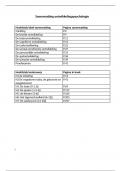
Lecture 1 - Introduction......................................................................................................................2
Lecture 2 – Business Combinations....................................................................................................7
Lecture 3 – Consolidation.................................................................................................................15
Lecture 5 – Financial instruments.....................................................................................................25
Lecture 6 – Financial Instruments classification and measurement & disclosure.............................31
Lecture 7 – Financial instruments and crypto-assets........................................................................39
Lecture 9 - Associates and Joint Arrangements................................................................................46
Lecture 10 – Foreign currency..........................................................................................................57
Lecture 11 – Income taxes................................................................................................................65
Lecture 12 – Presentation & disclosure............................................................................................75
,Lecture 1 - Introduction
Why international standards?
• Most countries have their own set of financial reporting requirements / accounting standards
- E.g. in the Netherlands the Dutch law (Titel 9 Book 2 Dutch Civil Code) and the Dutch
‘Richtlijnen voor de Jaarverslaggeving’ van de Raad voor de Jaarverslaggeving
• This hampers international comparability and does not create a level playing field for competing
companies (for example on the capital markets)
• International comparability is mainly important for listed, internationally operating companies
• So international accounting standards (now called International Financial Reporting Standards of
IFRS) were developed
• As from 2005 the European Union mandates IFRS (after endorsement by the EU) for all listed
companies
• So IFRS exists alongside national standards
- E.g. in The Netherlands listed companies are required to apply IFRS, other companies are
allowed to apply IFRS, but can also apply Dutch GAAP
The annual reporting council prepares Dutch GAAP. If every country has its own GAAP, it is difficult to
compare. If you are an internationally listed company, comparability is more important than if you
are a local bakery.
IFRS is very successful. If you are not a US company but you are located in the US, you do apply IFRS,
but as a US company you do not. Most countries require or allow IFRS.
Value relevance of traditional accounting information declines (cont’d)
Potential causes:
Increasing importance of sometimes unrecognised intangible assets R&D
- Branding
- Software
- People
Alternative real-time sources of financial information (internet)
Growing importance of non-financial information
In 1975, most value was created with tangible assets. The tangible assets in relation to the intangible
assets changes.
Intangibles (brand names, research, reputation) are not included on the balance sheet because the
criteria are so strict. Most of the value is not in the machines but in the people, so that value that is
internally generated is therefore not included in the balance sheet.
There are different ways to deal with intangibles:
More on the balance sheet
More information
Impact climate on financial performance
Carbon Tracker issued ‘Flying Blind’, signalling a lack of information about impact climate in
financial reports and auditor reports in 2021 and repeated this in 2022 and 2024
ESMA issued report ‘The Heat is on’ in October 2023 with recommendations about the disclosure
of the impact of climate change in financial reports
Companies are increasingly responsible for their impact on the environment.
,Examples of environmental impact on financial statements:
Provision for cleaning
Severe weather effects (storms, hurricanes, fires)
Impairments (value drop of PPE) we do not see this for oil and gas companies because oil
prices have risen sharply. Why would you record an impairment if you can sell oil at a high price,
there is no impairment.
Growing need for sustainability information in general
Not just climate, but information about:
• the impact of sustainability risks and opportunities on the entity; and
• the impact of the entity on its environment, effected communities and society at large
Sustainability risks and opportunities may have financial impact
• Regulations and permits may prohibit certain (planned) activities
• Lawsuits, penalties, pricing (such as carbon pricing) may make certain activities loss making
• Customers may ban certain products of companies altogether
• Reputational risks may also affect other parties in the value chain such as investors, suppliers,
business partners, etc.
What we have seen over the years
• All sorts of requirements for non-financial information in financial statements or in annual report
- Remuneration management
- Corporate governance
- Country-by-country reporting of tax payments
- Sustainability information
- Health and safety information
- Diversity information
- Inequality
• Annual report is considered by government / regulators as a convenient mailbox for disclosures
by organisations
• Disadvantages: piecemeal, ‘flavour of the day’, no integration, no clear link with strategy, value
chain or performance.
Initiatives
• Corporate Reporting
- ‘Core and More’ principle (Accountancy Europe) = Don't think of the annual report as a book
but as a website with highlights.
• Integrated reporting = Explain how you struck a balance between financial performance and non-
financial performance.
- International Integrated Reporting Council (IIRC)
o Focus on investors
- Global Reporting Initiative (GRI) = a global organization based in the Netherlands. the focus is
not on financial performance, but reporting the impact on the environment.
o Broader range of stakeholders
- In some countries (like South-Africa) integrated reporting is mandatory
• Strategic report (UK)
• Corporate Sustainability Reporting Directive (European Union)
Call for consolidation
• Different focus
- Investors only (e.g. IIRC, SASB and CDP)
- or wider stakeholder group (GRI)
, • Different geographical area
- Global (GRI/IIRC)
- US (SASB)
- EU (EU’s NFRD and now CSRD)
• Different topics
- Climate-risk (TCFD)
- Carbon (CDP)
- All (GRI) Non-Financial Reporting
• Initiatives for coordination
- Corporate Reporting Dialogue
- Merger of IIRC and SASB and merger of these two with the IFRS Foundation
IFRS foundation was asked to become global standards setter
• International Stock Exchange Supervisors (IOSCO) as well as investors and preparer organisations
asked the IFRS Foundation to become the independent global standard setter for sustainability
disclosures
- IFRS Foundation set up ISSB (International Sustainability Standards Board) next to the IASB
- But kept a capital market focus
• IIRC, CDSB and SASB merged into the IFRS Foundation
• TCFD handed over its monitoring activities to the IFRS Foundation
• So now two global standards setters left: ISSB and Global Reporting Initiative (GRI)
• GRI keeps a multi-stakeholder view
ISSB = should become the global standard setter for sustainability.
New structure of the IFRS foundation
How does sustainability reporting relate to financial reporting?
Lecture 1 - Introduction......................................................................................................................2
Lecture 2 – Business Combinations....................................................................................................7
Lecture 3 – Consolidation.................................................................................................................15
Lecture 5 – Financial instruments.....................................................................................................25
Lecture 6 – Financial Instruments classification and measurement & disclosure.............................31
Lecture 7 – Financial instruments and crypto-assets........................................................................39
Lecture 9 - Associates and Joint Arrangements................................................................................46
Lecture 10 – Foreign currency..........................................................................................................57
Lecture 11 – Income taxes................................................................................................................65
Lecture 12 – Presentation & disclosure............................................................................................75
,Lecture 1 - Introduction
Why international standards?
• Most countries have their own set of financial reporting requirements / accounting standards
- E.g. in the Netherlands the Dutch law (Titel 9 Book 2 Dutch Civil Code) and the Dutch
‘Richtlijnen voor de Jaarverslaggeving’ van de Raad voor de Jaarverslaggeving
• This hampers international comparability and does not create a level playing field for competing
companies (for example on the capital markets)
• International comparability is mainly important for listed, internationally operating companies
• So international accounting standards (now called International Financial Reporting Standards of
IFRS) were developed
• As from 2005 the European Union mandates IFRS (after endorsement by the EU) for all listed
companies
• So IFRS exists alongside national standards
- E.g. in The Netherlands listed companies are required to apply IFRS, other companies are
allowed to apply IFRS, but can also apply Dutch GAAP
The annual reporting council prepares Dutch GAAP. If every country has its own GAAP, it is difficult to
compare. If you are an internationally listed company, comparability is more important than if you
are a local bakery.
IFRS is very successful. If you are not a US company but you are located in the US, you do apply IFRS,
but as a US company you do not. Most countries require or allow IFRS.
Value relevance of traditional accounting information declines (cont’d)
Potential causes:
Increasing importance of sometimes unrecognised intangible assets R&D
- Branding
- Software
- People
Alternative real-time sources of financial information (internet)
Growing importance of non-financial information
In 1975, most value was created with tangible assets. The tangible assets in relation to the intangible
assets changes.
Intangibles (brand names, research, reputation) are not included on the balance sheet because the
criteria are so strict. Most of the value is not in the machines but in the people, so that value that is
internally generated is therefore not included in the balance sheet.
There are different ways to deal with intangibles:
More on the balance sheet
More information
Impact climate on financial performance
Carbon Tracker issued ‘Flying Blind’, signalling a lack of information about impact climate in
financial reports and auditor reports in 2021 and repeated this in 2022 and 2024
ESMA issued report ‘The Heat is on’ in October 2023 with recommendations about the disclosure
of the impact of climate change in financial reports
Companies are increasingly responsible for their impact on the environment.
,Examples of environmental impact on financial statements:
Provision for cleaning
Severe weather effects (storms, hurricanes, fires)
Impairments (value drop of PPE) we do not see this for oil and gas companies because oil
prices have risen sharply. Why would you record an impairment if you can sell oil at a high price,
there is no impairment.
Growing need for sustainability information in general
Not just climate, but information about:
• the impact of sustainability risks and opportunities on the entity; and
• the impact of the entity on its environment, effected communities and society at large
Sustainability risks and opportunities may have financial impact
• Regulations and permits may prohibit certain (planned) activities
• Lawsuits, penalties, pricing (such as carbon pricing) may make certain activities loss making
• Customers may ban certain products of companies altogether
• Reputational risks may also affect other parties in the value chain such as investors, suppliers,
business partners, etc.
What we have seen over the years
• All sorts of requirements for non-financial information in financial statements or in annual report
- Remuneration management
- Corporate governance
- Country-by-country reporting of tax payments
- Sustainability information
- Health and safety information
- Diversity information
- Inequality
• Annual report is considered by government / regulators as a convenient mailbox for disclosures
by organisations
• Disadvantages: piecemeal, ‘flavour of the day’, no integration, no clear link with strategy, value
chain or performance.
Initiatives
• Corporate Reporting
- ‘Core and More’ principle (Accountancy Europe) = Don't think of the annual report as a book
but as a website with highlights.
• Integrated reporting = Explain how you struck a balance between financial performance and non-
financial performance.
- International Integrated Reporting Council (IIRC)
o Focus on investors
- Global Reporting Initiative (GRI) = a global organization based in the Netherlands. the focus is
not on financial performance, but reporting the impact on the environment.
o Broader range of stakeholders
- In some countries (like South-Africa) integrated reporting is mandatory
• Strategic report (UK)
• Corporate Sustainability Reporting Directive (European Union)
Call for consolidation
• Different focus
- Investors only (e.g. IIRC, SASB and CDP)
- or wider stakeholder group (GRI)
, • Different geographical area
- Global (GRI/IIRC)
- US (SASB)
- EU (EU’s NFRD and now CSRD)
• Different topics
- Climate-risk (TCFD)
- Carbon (CDP)
- All (GRI) Non-Financial Reporting
• Initiatives for coordination
- Corporate Reporting Dialogue
- Merger of IIRC and SASB and merger of these two with the IFRS Foundation
IFRS foundation was asked to become global standards setter
• International Stock Exchange Supervisors (IOSCO) as well as investors and preparer organisations
asked the IFRS Foundation to become the independent global standard setter for sustainability
disclosures
- IFRS Foundation set up ISSB (International Sustainability Standards Board) next to the IASB
- But kept a capital market focus
• IIRC, CDSB and SASB merged into the IFRS Foundation
• TCFD handed over its monitoring activities to the IFRS Foundation
• So now two global standards setters left: ISSB and Global Reporting Initiative (GRI)
• GRI keeps a multi-stakeholder view
ISSB = should become the global standard setter for sustainability.
New structure of the IFRS foundation
How does sustainability reporting relate to financial reporting?