Table of Contents
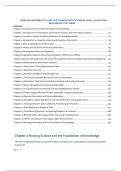
Chapter 1: Introduction to Career Development Interventions…………………………………..1
Chapter 2: Understanding and Applying Theories of Career Development……………………14
Chapter 3: Understanding and Applying Recent Theories of Career Development……………34
Chapter 4: Providing Culturally Competent Career Development Interventions………………51
Chapter 5: Assessment and Career Planning…………………………………………………... 67
M
Chapter 6: Career Information and Resources………………………………………………….79
Chapter 7: Using Technology to Support Career Counseling and Planning……………………88
EL
Chapter 8: Career Counseling Strategies and Techniques for the 21st Century………………..102
Chapter 9: Designing, Implementing, and Evaluating Career Development Programs
AN
and Services...............................................................................................................116
Chapter 10: Career Development Interventions in the Elementary Schools…………………...120
Chapter 11: Career Development Interventions in Middle Schools………………................... 133
IE
Chapter 12: Career Development Interventions in High Schools ……………………………..142
??
Chapter 13: Career Development Interventions in Higher Education ………………...............151
Chapter 14: Career Development Interventions in Community Settings ……………..............166
??
Chapter 15: Ethical Issues in Career Development Interventions……………………………..177
Answer Key…………………………………………………………………………………….188
ii
,MyCounselingLab
Help your students bridge the gap between theory and practice with MyCounselingLab.
MyCounselingLab connects your course content to video- and case-based real world scenarios,
and provides:
• Assignments and Activities assess students’ understanding of key concepts and skill
development.
• Building Counseling Skills Exercises offer opportunities for students to develop and
practice skills critical to their success as professional helpers. Suggested responses are
available to instructors, making grading easy.
• Multiple-Choice Quizzes help students gauge their understanding of important topics and
prepare for success on licensure examinations.
• A Video and Resource Library containing over 400 video clips, including 8 NEW clips:
M
o 21st Century Application of Career Construction Theory with a College Student:
Dr. Mark Savickas
o 21st Century Application of Career Construction Theory with a College Student 2:
EL
Dr. Mark Savickas
o 21st Century Career Construction Theory: A Dialogue between Dr. Mark
Savickas and Dr. Spencer Niles
o 21st Century Application of Holland’s Theory with a College Student: Dr. Janet
AN
Lenz
o 21st Century Career Assessment Interpretation with a College Student: Dr. David
Reile
o 21st Century Career Development Interventions in the School: An Interview with
Dr. Carol Dahir
IE
o 21st Century Counseling with an Unemployed Adult: Dr. Barbara Suddarth
o 21st Century Job-Seeking Intervention with an Unemployed Adult: Dr. Michael
Hall
??
Access to MyCounselingLab can be packaged with this textbook or purchased standalone. To
find out how to package student access to this website and gain access as an instructor, go to
www.MyCounselingLab.com, emails us at , or contact your Pearson
??
sales representative.
If you have already adopted MyCounselingLab, please note that the first printing of the 4th
edition of Career Development Interventions in the 21st Century contain errors in reference to
MyCounselingLab topics. Please see page v of this manual for a corrected correlation, and know
that we regret these errors.
iii
, Chapter 1
Introduction to Career Development Interventions
The first chapter introduces students to the importance of career development
interventions in the 21st century to help individuals adapt to complex career concerns of today’s
workers. Competent career practitioners must possess knowledge and skills required for
providing effective career assistance that encompasses and transcends those required for general
counseling. Preparing students to address career counseling needs with their clients, means
helping them see the connection between mental health, wellness, and career. Career counseling
is not delegated to administering and interpreting occupational assessments, but is inextricably
tied to counseling whereby clients can more clearly articulate their identity and what matters to
them. Career counselors and practitioners seek to empower people to derive meaning from their
life experiences and to translate that meaning into rewarding occupational choices. Specifically,
M
this chapter (1) traces the meaning of work across time (2) highlights the link between work and
worth (3) provides an overview of systematic career development intervention while defining
specific career related terms (4) highlights important events in the history of career development
EL
interventions, as well as the significant impact of Frank Parsons, (6) identifies specific career
counseling competencies and performance indicators, and (7) discusses future trends in career
development interventions
AN
The Meaning of Work Across Time
• The way in which individuals viewed work has greatly differed throughout history
• One’s occupation or career often used a primary means for self-identification and
social status
• There is substantial evidence that the meaning of work is changing throughout the
IE
world in the 21st century
• Initially work was viewed as a means to serve God and evolved in the 19th century as
a means of determining one’s status. Work has the same root as the Greek word:
??
“sorrow”.
• Reformation and influence of Martin Luther and John Calvin tied hard work
(“Protestant work ethic”) to an emerging value that all persons need to work
• Shift occurred at the beginning of the 20th century as individuals as individuals
??
embraced a new work ethic called, “Career” ethic by which individuals “find their fit
and don’t quit” (Maccoby and Terzi, 1981).
• Now in the 21st century (due to downsizing and a global economy) many
organizations are flattening and leaving workers feeling betrayed, anxious and
insecure about the future (Savickas, 1993).
• The elimination of vertical hierarchies challenges the definition of a “successful”
career
• As a result, the meaning of work has expanded to encompass the totality of work/life
roles throughout the course of one’s life.
1
, Linking Work with Worth
• Research supports the importance and centrality of work within individuals’ lives
• If a person has a “successful career”, we tend to attribution positive qualities to the
person regardless of whether we know him or her
• Work provides social interactions, fulfillment of social and personal needs and a
sense of personal identity and meaning (Doherty, 2009).
• Self-worth is substantially dependent upon how individuals feel about their work
contributions
• Problems in self-esteem (or self-worth) occur when individuals develop unrealistic
expectations for work, have not explored a variety of career options, feel that their
skills are underutilized, or feel unable to manage numerous career transitions and
tasks.
•
M
High levels of career uncertainty and occupational dissatisfaction correlate with high
levels of psychological and physiological distress such as increased rates in chemical
dependency, interpersonal violence, suicide criminal activity, and admission into
psychiatric facilities
EL
Providing Systematic Career Development Interventions
• Career development interventions need to be provided in a developmental and
multicultural systematic fashion.
AN
• This process includes helping children, adolescents and adults: (1) learn how to use
both rational and intuitive approaches in career decision making, (2) become clear
about the importance and values they seek to express through participating in various
life roles, (3) cope with ambiguity and change, (4) develop and maintain self-
awareness, (5) develop and maintain occupational and career awareness, (6) maintain
IE
relevant skills and knowledge, (7) engage in lifelong learning, (8) search for jobs
effectively, (9) provide and receive career mentoring, and (10) develop and maintain
skills in multicultural awareness and communication.
??
• Key terms include career, career development, career development interventions,
career counseling, career education, career development programs, and career
development practitioners.
??
Important Events in the History of Career Development Interventions
• Frank Parsons is a central figure in the history of career development interventions.
• He delineated a systematic approach to career decision making that became known as
the Parsonian approach which consisted of three steps: 1) gain self-knowledge, 2)
gain occupational knowledge and 3) use “true reasoning” to decide which occupation
to pursue .
• Parsons three requirements formed the basis of what evolved into the matching model
and trait and factor approach to career development interventions.
• E. G. Williamson helped the advancement of trait-and-factor interventions by
outlining a six-step process to guide trait-and-factor career counseling: analysis,
synthesis, diagnosis, prognosis, counseling and follow-up.
• In classic trait-and-factor approaches, the counselor is active and directive while the
2
Chapter 1: Introduction to Career Development Interventions…………………………………..1
Chapter 2: Understanding and Applying Theories of Career Development……………………14
Chapter 3: Understanding and Applying Recent Theories of Career Development……………34
Chapter 4: Providing Culturally Competent Career Development Interventions………………51
Chapter 5: Assessment and Career Planning…………………………………………………... 67
M
Chapter 6: Career Information and Resources………………………………………………….79
Chapter 7: Using Technology to Support Career Counseling and Planning……………………88
EL
Chapter 8: Career Counseling Strategies and Techniques for the 21st Century………………..102
Chapter 9: Designing, Implementing, and Evaluating Career Development Programs
AN
and Services...............................................................................................................116
Chapter 10: Career Development Interventions in the Elementary Schools…………………...120
Chapter 11: Career Development Interventions in Middle Schools………………................... 133
IE
Chapter 12: Career Development Interventions in High Schools ……………………………..142
??
Chapter 13: Career Development Interventions in Higher Education ………………...............151
Chapter 14: Career Development Interventions in Community Settings ……………..............166
??
Chapter 15: Ethical Issues in Career Development Interventions……………………………..177
Answer Key…………………………………………………………………………………….188
ii
,MyCounselingLab
Help your students bridge the gap between theory and practice with MyCounselingLab.
MyCounselingLab connects your course content to video- and case-based real world scenarios,
and provides:
• Assignments and Activities assess students’ understanding of key concepts and skill
development.
• Building Counseling Skills Exercises offer opportunities for students to develop and
practice skills critical to their success as professional helpers. Suggested responses are
available to instructors, making grading easy.
• Multiple-Choice Quizzes help students gauge their understanding of important topics and
prepare for success on licensure examinations.
• A Video and Resource Library containing over 400 video clips, including 8 NEW clips:
M
o 21st Century Application of Career Construction Theory with a College Student:
Dr. Mark Savickas
o 21st Century Application of Career Construction Theory with a College Student 2:
EL
Dr. Mark Savickas
o 21st Century Career Construction Theory: A Dialogue between Dr. Mark
Savickas and Dr. Spencer Niles
o 21st Century Application of Holland’s Theory with a College Student: Dr. Janet
AN
Lenz
o 21st Century Career Assessment Interpretation with a College Student: Dr. David
Reile
o 21st Century Career Development Interventions in the School: An Interview with
Dr. Carol Dahir
IE
o 21st Century Counseling with an Unemployed Adult: Dr. Barbara Suddarth
o 21st Century Job-Seeking Intervention with an Unemployed Adult: Dr. Michael
Hall
??
Access to MyCounselingLab can be packaged with this textbook or purchased standalone. To
find out how to package student access to this website and gain access as an instructor, go to
www.MyCounselingLab.com, emails us at , or contact your Pearson
??
sales representative.
If you have already adopted MyCounselingLab, please note that the first printing of the 4th
edition of Career Development Interventions in the 21st Century contain errors in reference to
MyCounselingLab topics. Please see page v of this manual for a corrected correlation, and know
that we regret these errors.
iii
, Chapter 1
Introduction to Career Development Interventions
The first chapter introduces students to the importance of career development
interventions in the 21st century to help individuals adapt to complex career concerns of today’s
workers. Competent career practitioners must possess knowledge and skills required for
providing effective career assistance that encompasses and transcends those required for general
counseling. Preparing students to address career counseling needs with their clients, means
helping them see the connection between mental health, wellness, and career. Career counseling
is not delegated to administering and interpreting occupational assessments, but is inextricably
tied to counseling whereby clients can more clearly articulate their identity and what matters to
them. Career counselors and practitioners seek to empower people to derive meaning from their
life experiences and to translate that meaning into rewarding occupational choices. Specifically,
M
this chapter (1) traces the meaning of work across time (2) highlights the link between work and
worth (3) provides an overview of systematic career development intervention while defining
specific career related terms (4) highlights important events in the history of career development
EL
interventions, as well as the significant impact of Frank Parsons, (6) identifies specific career
counseling competencies and performance indicators, and (7) discusses future trends in career
development interventions
AN
The Meaning of Work Across Time
• The way in which individuals viewed work has greatly differed throughout history
• One’s occupation or career often used a primary means for self-identification and
social status
• There is substantial evidence that the meaning of work is changing throughout the
IE
world in the 21st century
• Initially work was viewed as a means to serve God and evolved in the 19th century as
a means of determining one’s status. Work has the same root as the Greek word:
??
“sorrow”.
• Reformation and influence of Martin Luther and John Calvin tied hard work
(“Protestant work ethic”) to an emerging value that all persons need to work
• Shift occurred at the beginning of the 20th century as individuals as individuals
??
embraced a new work ethic called, “Career” ethic by which individuals “find their fit
and don’t quit” (Maccoby and Terzi, 1981).
• Now in the 21st century (due to downsizing and a global economy) many
organizations are flattening and leaving workers feeling betrayed, anxious and
insecure about the future (Savickas, 1993).
• The elimination of vertical hierarchies challenges the definition of a “successful”
career
• As a result, the meaning of work has expanded to encompass the totality of work/life
roles throughout the course of one’s life.
1
, Linking Work with Worth
• Research supports the importance and centrality of work within individuals’ lives
• If a person has a “successful career”, we tend to attribution positive qualities to the
person regardless of whether we know him or her
• Work provides social interactions, fulfillment of social and personal needs and a
sense of personal identity and meaning (Doherty, 2009).
• Self-worth is substantially dependent upon how individuals feel about their work
contributions
• Problems in self-esteem (or self-worth) occur when individuals develop unrealistic
expectations for work, have not explored a variety of career options, feel that their
skills are underutilized, or feel unable to manage numerous career transitions and
tasks.
•
M
High levels of career uncertainty and occupational dissatisfaction correlate with high
levels of psychological and physiological distress such as increased rates in chemical
dependency, interpersonal violence, suicide criminal activity, and admission into
psychiatric facilities
EL
Providing Systematic Career Development Interventions
• Career development interventions need to be provided in a developmental and
multicultural systematic fashion.
AN
• This process includes helping children, adolescents and adults: (1) learn how to use
both rational and intuitive approaches in career decision making, (2) become clear
about the importance and values they seek to express through participating in various
life roles, (3) cope with ambiguity and change, (4) develop and maintain self-
awareness, (5) develop and maintain occupational and career awareness, (6) maintain
IE
relevant skills and knowledge, (7) engage in lifelong learning, (8) search for jobs
effectively, (9) provide and receive career mentoring, and (10) develop and maintain
skills in multicultural awareness and communication.
??
• Key terms include career, career development, career development interventions,
career counseling, career education, career development programs, and career
development practitioners.
??
Important Events in the History of Career Development Interventions
• Frank Parsons is a central figure in the history of career development interventions.
• He delineated a systematic approach to career decision making that became known as
the Parsonian approach which consisted of three steps: 1) gain self-knowledge, 2)
gain occupational knowledge and 3) use “true reasoning” to decide which occupation
to pursue .
• Parsons three requirements formed the basis of what evolved into the matching model
and trait and factor approach to career development interventions.
• E. G. Williamson helped the advancement of trait-and-factor interventions by
outlining a six-step process to guide trait-and-factor career counseling: analysis,
synthesis, diagnosis, prognosis, counseling and follow-up.
• In classic trait-and-factor approaches, the counselor is active and directive while the
2