
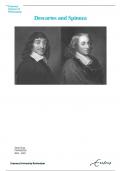
Descartes and Spinoza
Jurian Traas
FW-HIS2022
2022 – 2023
,Inhoudsopgave
Lecture 1 – Introduction to Early Modern Europe.................................................................................................... 3
Substantial forms.....................................................................................................................................................3
Descartes’ point of divergence...................................................................................................................................3
Lecture 2 – Descartes’ New Philosophy and Method...............................................................................................3
Descartes’ main reversal...........................................................................................................................................4
A THEORY OF EVERYTING ........................................................................................................................................5
Principia Philosophiae – 1644....................................................................................................................................5
Lecture 3 – Descartes the Scientist: The project of a Universal Science ........................................................................6
Metaphysics and Science .........................................................................................................................................6
Meditationes de prima philosophia ..........................................................................................................................7
Wax example .........................................................................................................................................................7
Lecture 4 – Mind-Body Problem and Substance Dualism..........................................................................................8
Substance dualism...................................................................................................................................................8
Res extensa and Res cogitans....................................................................................................................................9
The mind................................................................................................................................................................9
Ideas......................................................................................................................................................................9
The mind-body union.............................................................................................................................................11
Lecture V – Descartes’ Legacy and Empiricism – Rationalism Debate.........................................................................11
Descartes’ modernity.............................................................................................................................................11
Arnold Geulincx.....................................................................................................................................................12
Nicolas Malebranche.............................................................................................................................................12
Gottfried Wilhelm Leibniz........................................................................................................................................13
Immanuel Kant......................................................................................................................................................13
Lecture VI – Spinoza’s Metaphysics..................................................................................................................... 14
Substance.............................................................................................................................................................14
Substance Monism................................................................................................................................................15
Lecture VII – The Intellect and Supreme Good in Spinoza........................................................................................15
Deus, Sive Natura..................................................................................................................................................15
Against the final cause............................................................................................................................................16
Mind and body......................................................................................................................................................17
Adequate and inadequate ideas..............................................................................................................................17
Conatus and Affects...............................................................................................................................................18
Lecture VIII – Spinoza on Politics......................................................................................................................... 19
Freedom...............................................................................................................................................................19
2
, Politics..................................................................................................................................................................20
Positive freedom....................................................................................................................................................20
Lecture 1 – Introduction to Early Modern Europe
Descartes’ philosophy replaced the commonsensical view of the scholastic thoughts about forms with a
philosophical understanding of a mechanistic worldview. The aspects of the commonly shared views in
the 17th century against which Descartes fought shall be discussed below.
Substantial forms
The substantial forms theory was the dominant view at the time. In Aristotelian metaphysics, a
material substance is a composite of two incomplete substances: matter and form. If one is not
composite of both these things, it is formless: it cannot be perceived. The matter of a thing is the substrate
that persists through all changes. The form is the thing that changes (Think of a water bottle that changes
the cap, it is still a water bottle). Scholastics asked an additional question: what are the changes that
would destroy the matter? And why do we not distinguish different types of forms as well? They answer
this question by arguing the following.
A substantial form is that which makes matter possible. Any change that occurs in substantial forms
means the destruction of the substance. Accidental forms are secondary qualities, a change in them
does not destroy the substance. Substantial forms give unity to matter, it is what makes an object that
object. Think of the death of a human being: the accidental form can change (turning gray, or getting fat),
but the death of the individual would mean a change in its substantial form: it stops existing as a human
being.
Substantial form theory accounted for two problematic causes. Firstly, due to identity over time,
scholastics could account for the problem of change and identity. Secondly, individuation explains that a
single identity of an object is embedded in the object itself, which resulted in an answer to the question
‘what makes a tree different from other trees?’
Descartes’ point of divergence
Descartes however, argued that what appears to us in nature cannot be fully explained by the scholastic
forms. Forms theory only elevates the questions we have; we cannot explain to anyone what substantial
forms are, or that it actually exists. His argument is that due to preconceptions from our childhood, we
have difficulty in learning the sciences: a cake itself does not have the quality of deliciousness, it gives a
sensation that our brain can interpret as something being delicious. For Descartes, this meant that our
imagination is about sensing things in order to form an image of them. Therefore, Descartes’ philosophy
is a fight against the misjudged ways of thinking through imagination, stemming from misplaces
prejudices in our childhood.
Descartes stated that we cannot have knowledge over things we cannot imagine, since we are
accustomed to thinking through imagination. Descartes rather focused on our own cognitive faculties
and the way in which we can think about matter. The metaphysical categories are put aside, and only
things about which we can be sure are investigated. The Cartesian project therefore becomes how we
can make judgments about the world around us, which we shall call transcendentalism.
Lecture 2 – Descartes’ New Philosophy and Method
In lecture 1, we discussed the importance of early modern philosophy, such as Descartes himself. We
shall now turn to Aristotelian philosophy of substantial forms.
Aristotelian and Scholastic Substance Theory
3
Jurian Traas
FW-HIS2022
2022 – 2023
,Inhoudsopgave
Lecture 1 – Introduction to Early Modern Europe.................................................................................................... 3
Substantial forms.....................................................................................................................................................3
Descartes’ point of divergence...................................................................................................................................3
Lecture 2 – Descartes’ New Philosophy and Method...............................................................................................3
Descartes’ main reversal...........................................................................................................................................4
A THEORY OF EVERYTING ........................................................................................................................................5
Principia Philosophiae – 1644....................................................................................................................................5
Lecture 3 – Descartes the Scientist: The project of a Universal Science ........................................................................6
Metaphysics and Science .........................................................................................................................................6
Meditationes de prima philosophia ..........................................................................................................................7
Wax example .........................................................................................................................................................7
Lecture 4 – Mind-Body Problem and Substance Dualism..........................................................................................8
Substance dualism...................................................................................................................................................8
Res extensa and Res cogitans....................................................................................................................................9
The mind................................................................................................................................................................9
Ideas......................................................................................................................................................................9
The mind-body union.............................................................................................................................................11
Lecture V – Descartes’ Legacy and Empiricism – Rationalism Debate.........................................................................11
Descartes’ modernity.............................................................................................................................................11
Arnold Geulincx.....................................................................................................................................................12
Nicolas Malebranche.............................................................................................................................................12
Gottfried Wilhelm Leibniz........................................................................................................................................13
Immanuel Kant......................................................................................................................................................13
Lecture VI – Spinoza’s Metaphysics..................................................................................................................... 14
Substance.............................................................................................................................................................14
Substance Monism................................................................................................................................................15
Lecture VII – The Intellect and Supreme Good in Spinoza........................................................................................15
Deus, Sive Natura..................................................................................................................................................15
Against the final cause............................................................................................................................................16
Mind and body......................................................................................................................................................17
Adequate and inadequate ideas..............................................................................................................................17
Conatus and Affects...............................................................................................................................................18
Lecture VIII – Spinoza on Politics......................................................................................................................... 19
Freedom...............................................................................................................................................................19
2
, Politics..................................................................................................................................................................20
Positive freedom....................................................................................................................................................20
Lecture 1 – Introduction to Early Modern Europe
Descartes’ philosophy replaced the commonsensical view of the scholastic thoughts about forms with a
philosophical understanding of a mechanistic worldview. The aspects of the commonly shared views in
the 17th century against which Descartes fought shall be discussed below.
Substantial forms
The substantial forms theory was the dominant view at the time. In Aristotelian metaphysics, a
material substance is a composite of two incomplete substances: matter and form. If one is not
composite of both these things, it is formless: it cannot be perceived. The matter of a thing is the substrate
that persists through all changes. The form is the thing that changes (Think of a water bottle that changes
the cap, it is still a water bottle). Scholastics asked an additional question: what are the changes that
would destroy the matter? And why do we not distinguish different types of forms as well? They answer
this question by arguing the following.
A substantial form is that which makes matter possible. Any change that occurs in substantial forms
means the destruction of the substance. Accidental forms are secondary qualities, a change in them
does not destroy the substance. Substantial forms give unity to matter, it is what makes an object that
object. Think of the death of a human being: the accidental form can change (turning gray, or getting fat),
but the death of the individual would mean a change in its substantial form: it stops existing as a human
being.
Substantial form theory accounted for two problematic causes. Firstly, due to identity over time,
scholastics could account for the problem of change and identity. Secondly, individuation explains that a
single identity of an object is embedded in the object itself, which resulted in an answer to the question
‘what makes a tree different from other trees?’
Descartes’ point of divergence
Descartes however, argued that what appears to us in nature cannot be fully explained by the scholastic
forms. Forms theory only elevates the questions we have; we cannot explain to anyone what substantial
forms are, or that it actually exists. His argument is that due to preconceptions from our childhood, we
have difficulty in learning the sciences: a cake itself does not have the quality of deliciousness, it gives a
sensation that our brain can interpret as something being delicious. For Descartes, this meant that our
imagination is about sensing things in order to form an image of them. Therefore, Descartes’ philosophy
is a fight against the misjudged ways of thinking through imagination, stemming from misplaces
prejudices in our childhood.
Descartes stated that we cannot have knowledge over things we cannot imagine, since we are
accustomed to thinking through imagination. Descartes rather focused on our own cognitive faculties
and the way in which we can think about matter. The metaphysical categories are put aside, and only
things about which we can be sure are investigated. The Cartesian project therefore becomes how we
can make judgments about the world around us, which we shall call transcendentalism.
Lecture 2 – Descartes’ New Philosophy and Method
In lecture 1, we discussed the importance of early modern philosophy, such as Descartes himself. We
shall now turn to Aristotelian philosophy of substantial forms.
Aristotelian and Scholastic Substance Theory
3


