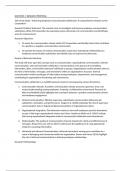
NUR 463 Midterm Objectives
Role of the Psychiatric Nurse
1. Be able to state the phases and describe the goals and tasks of each phase of the nurse
patient relationship.
❖ The nurse-patient relationship is the foundation on which psychiatric nursing is established; it is a relationship in
which both participants must recognize each other as unique and important human beings; it is also a relationship
which mutual learning occurs
❖ The therapeutic nurse-patient relationship
▪ Goal oriented
▪ Ideally, the nurse and patient decide together what the goal of the relationship will be
❖ Phases of the therapeutic nurse-patient relationship
▪ Preinteraction phase: involves preparation for the first encounter with the pt
• Obtaining available information about pt from chart, significant others, or other health team
members
• From this information the initial assessment is begun
• Examining one’s feelings, fears, and anxiety about working with a particular pt
➢ E.g., the nurse may have been raised in an alcoholic family and have ambivalent feelings
about caring for a pt who is alcohol dependent
▪ Orientation (introductory) phase: nurse and patient become acquainted
• Creating an environment for the establishment of trust and rapport
• Establishing a contract for intervention that details the expectations and responsibilities of both the
nurse and pt
• Gathering assessment information to build a strong database
• Identifying the pt.’s strength and limitations
• Formulating nursing diagnosis
• Setting goals that that are mutually agreeable to the nurse and pt.
• Developing a plan of action that is realistic for meeting the established goals
• Exploring feelings of both the pt and nurse in terms of the introductory phase
▪ Working phase
• Maintaining the trust and rapport that was established during the orientation phase
• Promoting insight and perception of reality
• Encouraging the pt. to problem solve
• Overcoming resistance behaviors as the level of anxiety rises in response to the discussion of painfu
issues
• Continuously evaluating progress towards goal attainment
▪ Termination phase: termination of the relationship may occur for a variety of reasons; termination can be a
difficult phase for both the pt and nurse; the main task involves bringing a therapeutic conclusion to the
relationship
• Discuss the pt.’s previous experience with separations and loss
• Summarize goals and achievements
• Review memories of work in the sessions
• Express own feelings about sessions to validate the experience with the pt.
• Provide opportunity for the pt. to discuss thoughts and feelings about termination and loss
• Maintain limits for final termination
2. Be able to identify the difference between transference and countertransference
❖ Transference occurs when the pt. views a member of the healthcare team as having characteristics of another
person who has been significant to the pt.’s personal life
▪ Behaviors
, • Pt. expects exclusive services from the RN, such as extra session time
• Pt. demonstrates jealousy of the RN’s time or attention
• Pt. compares the RN to a former authority figure
• E.g., a pt. can see a nurse as being like their parent and thus can demonstrate some of the same
behaviors with the nurse that they demonstrated with their parent
• Nursing implications: a nurse should be aware that transference by a pt. is more likely to occur with
a person in authority
❖ Countertransference occurs when a healthcare team member displaces characteristics of people in their past onto
pt.
▪ Behaviors
• Nurse overly identifies with pt.
• Nurse competes with pt.
• Nurse argues with pt.
• E.g., a nurse can feel defensive and angry with a pt. for no apparent reason if the pt. reminds them
of a friend who often elicited those feelings
• Nursing implications: a nurse should be aware that pts who induce very strong personal feelings can
become objects of countertransference
3. Be able to list the characteristics of a nurse in the nurse-patient relationship and be able
to identify which characteristic is most important
❖ Rapport: implies special feelings on the part of both the pt. and the nurse based on acceptance, warmth,
friendliness, common interest, a sense of trust, and a nonjudgmental attitude
❖ Trust: to trust one another, one must feel confident in that person's presence, reliability, integrity, veracity, and
sincere desire to provide assistance when requested
❖ Respect: to show respect is to believe in the dignity and worth of an individual regardless of his or her unacceptable
behavior
▪ E.g., calling the pt. by name, spending time with the pt., listening to the pt.’s ideas, preferences, and
requests, and making collaborative decisions concerning their care whenever possible, and allowing for
sufficient time to answer the pt.’s questions and concerns
❖ Genuineness: the concept of genuineness refers to the nurse’s ability to be open honest and real in interactions
with the pt.
▪ To be real is to be aware of what one is experiencing internally and to allow the quality of this inner
experiencing to be apparent in the therapeutic relationship
▪ Genuineness is the most important characteristic of nurse-pt. relationship
❖ Empathy: the ability to see beyond outward behavior and to understand the situation from the pt.’s point of view
▪ With empathy, the nurse can accurately perceive and understand the meaning and relevance of the pt.’s
thoughts and feelings
❖ Therapeutic nurse-client relationship
▪ Is foundational to mental health nursing care
▪ Differs from social and intimate relationships
▪ Purposeful and goal-directed
▪ Well-defined with clear boundaries
▪ Structured to meet the pt.’s needs
▪ Characterized by an interpersonal process that is safe, confidential, reliable, and consistent
▪ Role of the nurse in therapeutic relationship
❖ Consistently focus on the pt.’s ideas, experiences, and feelings
❖ Identify and explore the pt.’s needs and problems
❖ Discuss problem-solving alternatives with the pt.
❖ Help to develop the pt.’s strengths and new coping skills
❖ Encourage positive behavior change in the pt.
❖ Assist the pt. to develop a sense of autonomy and self-reliance
❖ Portray genuineness, empathy, and a positive regard toward the pt.
, o The nurse practices empathy by remaining nonjudgmental and attempting to understand
the pt.’s feelings and actions
o This differs from sympathy, in which the nurse allows oneself to feel the way the pt. does
and is nontherapeutic
❖ Benefits of the therapeutic relationship
▪ Therapeutic relationships contribute to the well-being of those who have a mental illness, as well as other
pts, although the tx goals will be individualized
▪ These relationships take time to establish, but even time-limited therapeutic encounters can have positive
outcomes
▪ Therapeutic relationships have a positive impact on the success of tx
▪ Supervision by peers or the clinical team enhances the RN’s ability to examine their own thoughts and
feelings, maintain boundaries, and continue to learn from nurse-pt. relationships
▪ Factors that positively affect the development of the therapeutic relationship include:
• RN factors
o Consistent approach to interaction
o Adjustment of pace to pt.’s needs
o Attentive listening
o Positive initial impressions
o Comfort level during the relationship
o Self-awareness of own thoughts and feelings
o Consistent availability
• Pt. factors
o Trusting attitude
o Willingness to talk
o Active participation
o Consistent availability
❖ Boundaries of the therapeutic relationship
▪ Boundaries must be established in order to maintain a safe and professional nurse-pt. relationship
▪ Blurred boundaries occur if the relationship begins to meet the needs of the RN rather than those of the pt.,
or if the relationship becomes social rather than therapeutic
▪ The RN must work to maintain a consistent level of involvement with the pt., to reflect on boundary issues
frequently, and to maintain awareness of how behaviors can be perceived by others
▪ Common concerns regarding professional boundaries are commonly r/t:
• Self-disclosure, gift giving, touch, friendship, or romantic association
Therapeutic Communication
1. Be able to identify therapeutic vs. non-therapeutic communication techniques
❖ Therapeutic communication techniques
▪ Using silence
▪ Accepting: understanding, eye contact/nodding
▪ Giving recognition
▪ Offering self
▪ Giving broad openings
▪ Offering general leads
▪ Placing the event in time or sequence
▪ Making observations
▪ Encouraging description of perceptions
▪ Encouraging comparison
▪ Restating: repeating main idea to reflect understanding and/or chance to continue or clarify if necessary
▪ Reflecting: questions and feelings referred back to pt.
, ▪Focusing: taking notice of single idea encourages specific discussion about relevant issue (don’t do until
anxiety lessens)
▪ Exploring
▪ Seeking clarification and validation
▪ Presenting reality
▪ Voicing doubt
▪ Verbalizing the implied: putting into words what the pt. has only implied or said indirectly; helpful with pts
who experiencing impaired verbal communication
▪ Attempting to translate words into feelings: when pt. has difficulty identifying feelings or feelings are
expressed indirectly, nurse tries to find clues to underlying feelings
▪ Formulating a plan of action
❖ Non-therapeutic communication techniques
▪ Giving false reassurance
▪ Rejecting
▪ Approving or disapproving
▪ Agreeing or disagreeing
▪ Giving advice
▪ Probing
▪ Defending
▪ Requesting an explanation
▪ Indicating the existence of an external source of power
▪ Belittling feelings expressed
▪ Making stereotyped comments
▪ Using denial
▪ Interpreting
▪ Introducing an unrelated topic
2. Be able to differentiate between open-ended vs. close ended questions
❖ Open-ended questions
▪ Facilitates spontaneous responses and interactive discussion
▪ Effective communication technique
❖ Closed-ended questions
▪ Use sparingly
▪ Allows nurse to obtain specific data during initial interaction
▪ Avoid using repeated closed-ended questions
▪ Can block further communication
3. Be able to determine the impact of non-therapeutic techniques
❖ Can affect communication with a pt. and diminish nurse-pt. relationship
▪ Discourages pt. decision making
▪ Can present itself as judgmental as well as cause pt. to become defensive and limit trust
4. Be able to determine what is included in non-verbal communication (person based)
❖ Nurses should be of how they communicate nonverbally
❖ Nurses should assess the pts nonverbal communication
❖ Nonverbal communication can have more impact than the verbal words
❖ Nurses should pay attention to certain behaviors to compare it to the verbal message
▪ Appearance:
Role of the Psychiatric Nurse
1. Be able to state the phases and describe the goals and tasks of each phase of the nurse
patient relationship.
❖ The nurse-patient relationship is the foundation on which psychiatric nursing is established; it is a relationship in
which both participants must recognize each other as unique and important human beings; it is also a relationship
which mutual learning occurs
❖ The therapeutic nurse-patient relationship
▪ Goal oriented
▪ Ideally, the nurse and patient decide together what the goal of the relationship will be
❖ Phases of the therapeutic nurse-patient relationship
▪ Preinteraction phase: involves preparation for the first encounter with the pt
• Obtaining available information about pt from chart, significant others, or other health team
members
• From this information the initial assessment is begun
• Examining one’s feelings, fears, and anxiety about working with a particular pt
➢ E.g., the nurse may have been raised in an alcoholic family and have ambivalent feelings
about caring for a pt who is alcohol dependent
▪ Orientation (introductory) phase: nurse and patient become acquainted
• Creating an environment for the establishment of trust and rapport
• Establishing a contract for intervention that details the expectations and responsibilities of both the
nurse and pt
• Gathering assessment information to build a strong database
• Identifying the pt.’s strength and limitations
• Formulating nursing diagnosis
• Setting goals that that are mutually agreeable to the nurse and pt.
• Developing a plan of action that is realistic for meeting the established goals
• Exploring feelings of both the pt and nurse in terms of the introductory phase
▪ Working phase
• Maintaining the trust and rapport that was established during the orientation phase
• Promoting insight and perception of reality
• Encouraging the pt. to problem solve
• Overcoming resistance behaviors as the level of anxiety rises in response to the discussion of painfu
issues
• Continuously evaluating progress towards goal attainment
▪ Termination phase: termination of the relationship may occur for a variety of reasons; termination can be a
difficult phase for both the pt and nurse; the main task involves bringing a therapeutic conclusion to the
relationship
• Discuss the pt.’s previous experience with separations and loss
• Summarize goals and achievements
• Review memories of work in the sessions
• Express own feelings about sessions to validate the experience with the pt.
• Provide opportunity for the pt. to discuss thoughts and feelings about termination and loss
• Maintain limits for final termination
2. Be able to identify the difference between transference and countertransference
❖ Transference occurs when the pt. views a member of the healthcare team as having characteristics of another
person who has been significant to the pt.’s personal life
▪ Behaviors
, • Pt. expects exclusive services from the RN, such as extra session time
• Pt. demonstrates jealousy of the RN’s time or attention
• Pt. compares the RN to a former authority figure
• E.g., a pt. can see a nurse as being like their parent and thus can demonstrate some of the same
behaviors with the nurse that they demonstrated with their parent
• Nursing implications: a nurse should be aware that transference by a pt. is more likely to occur with
a person in authority
❖ Countertransference occurs when a healthcare team member displaces characteristics of people in their past onto
pt.
▪ Behaviors
• Nurse overly identifies with pt.
• Nurse competes with pt.
• Nurse argues with pt.
• E.g., a nurse can feel defensive and angry with a pt. for no apparent reason if the pt. reminds them
of a friend who often elicited those feelings
• Nursing implications: a nurse should be aware that pts who induce very strong personal feelings can
become objects of countertransference
3. Be able to list the characteristics of a nurse in the nurse-patient relationship and be able
to identify which characteristic is most important
❖ Rapport: implies special feelings on the part of both the pt. and the nurse based on acceptance, warmth,
friendliness, common interest, a sense of trust, and a nonjudgmental attitude
❖ Trust: to trust one another, one must feel confident in that person's presence, reliability, integrity, veracity, and
sincere desire to provide assistance when requested
❖ Respect: to show respect is to believe in the dignity and worth of an individual regardless of his or her unacceptable
behavior
▪ E.g., calling the pt. by name, spending time with the pt., listening to the pt.’s ideas, preferences, and
requests, and making collaborative decisions concerning their care whenever possible, and allowing for
sufficient time to answer the pt.’s questions and concerns
❖ Genuineness: the concept of genuineness refers to the nurse’s ability to be open honest and real in interactions
with the pt.
▪ To be real is to be aware of what one is experiencing internally and to allow the quality of this inner
experiencing to be apparent in the therapeutic relationship
▪ Genuineness is the most important characteristic of nurse-pt. relationship
❖ Empathy: the ability to see beyond outward behavior and to understand the situation from the pt.’s point of view
▪ With empathy, the nurse can accurately perceive and understand the meaning and relevance of the pt.’s
thoughts and feelings
❖ Therapeutic nurse-client relationship
▪ Is foundational to mental health nursing care
▪ Differs from social and intimate relationships
▪ Purposeful and goal-directed
▪ Well-defined with clear boundaries
▪ Structured to meet the pt.’s needs
▪ Characterized by an interpersonal process that is safe, confidential, reliable, and consistent
▪ Role of the nurse in therapeutic relationship
❖ Consistently focus on the pt.’s ideas, experiences, and feelings
❖ Identify and explore the pt.’s needs and problems
❖ Discuss problem-solving alternatives with the pt.
❖ Help to develop the pt.’s strengths and new coping skills
❖ Encourage positive behavior change in the pt.
❖ Assist the pt. to develop a sense of autonomy and self-reliance
❖ Portray genuineness, empathy, and a positive regard toward the pt.
, o The nurse practices empathy by remaining nonjudgmental and attempting to understand
the pt.’s feelings and actions
o This differs from sympathy, in which the nurse allows oneself to feel the way the pt. does
and is nontherapeutic
❖ Benefits of the therapeutic relationship
▪ Therapeutic relationships contribute to the well-being of those who have a mental illness, as well as other
pts, although the tx goals will be individualized
▪ These relationships take time to establish, but even time-limited therapeutic encounters can have positive
outcomes
▪ Therapeutic relationships have a positive impact on the success of tx
▪ Supervision by peers or the clinical team enhances the RN’s ability to examine their own thoughts and
feelings, maintain boundaries, and continue to learn from nurse-pt. relationships
▪ Factors that positively affect the development of the therapeutic relationship include:
• RN factors
o Consistent approach to interaction
o Adjustment of pace to pt.’s needs
o Attentive listening
o Positive initial impressions
o Comfort level during the relationship
o Self-awareness of own thoughts and feelings
o Consistent availability
• Pt. factors
o Trusting attitude
o Willingness to talk
o Active participation
o Consistent availability
❖ Boundaries of the therapeutic relationship
▪ Boundaries must be established in order to maintain a safe and professional nurse-pt. relationship
▪ Blurred boundaries occur if the relationship begins to meet the needs of the RN rather than those of the pt.,
or if the relationship becomes social rather than therapeutic
▪ The RN must work to maintain a consistent level of involvement with the pt., to reflect on boundary issues
frequently, and to maintain awareness of how behaviors can be perceived by others
▪ Common concerns regarding professional boundaries are commonly r/t:
• Self-disclosure, gift giving, touch, friendship, or romantic association
Therapeutic Communication
1. Be able to identify therapeutic vs. non-therapeutic communication techniques
❖ Therapeutic communication techniques
▪ Using silence
▪ Accepting: understanding, eye contact/nodding
▪ Giving recognition
▪ Offering self
▪ Giving broad openings
▪ Offering general leads
▪ Placing the event in time or sequence
▪ Making observations
▪ Encouraging description of perceptions
▪ Encouraging comparison
▪ Restating: repeating main idea to reflect understanding and/or chance to continue or clarify if necessary
▪ Reflecting: questions and feelings referred back to pt.
, ▪Focusing: taking notice of single idea encourages specific discussion about relevant issue (don’t do until
anxiety lessens)
▪ Exploring
▪ Seeking clarification and validation
▪ Presenting reality
▪ Voicing doubt
▪ Verbalizing the implied: putting into words what the pt. has only implied or said indirectly; helpful with pts
who experiencing impaired verbal communication
▪ Attempting to translate words into feelings: when pt. has difficulty identifying feelings or feelings are
expressed indirectly, nurse tries to find clues to underlying feelings
▪ Formulating a plan of action
❖ Non-therapeutic communication techniques
▪ Giving false reassurance
▪ Rejecting
▪ Approving or disapproving
▪ Agreeing or disagreeing
▪ Giving advice
▪ Probing
▪ Defending
▪ Requesting an explanation
▪ Indicating the existence of an external source of power
▪ Belittling feelings expressed
▪ Making stereotyped comments
▪ Using denial
▪ Interpreting
▪ Introducing an unrelated topic
2. Be able to differentiate between open-ended vs. close ended questions
❖ Open-ended questions
▪ Facilitates spontaneous responses and interactive discussion
▪ Effective communication technique
❖ Closed-ended questions
▪ Use sparingly
▪ Allows nurse to obtain specific data during initial interaction
▪ Avoid using repeated closed-ended questions
▪ Can block further communication
3. Be able to determine the impact of non-therapeutic techniques
❖ Can affect communication with a pt. and diminish nurse-pt. relationship
▪ Discourages pt. decision making
▪ Can present itself as judgmental as well as cause pt. to become defensive and limit trust
4. Be able to determine what is included in non-verbal communication (person based)
❖ Nurses should be of how they communicate nonverbally
❖ Nurses should assess the pts nonverbal communication
❖ Nonverbal communication can have more impact than the verbal words
❖ Nurses should pay attention to certain behaviors to compare it to the verbal message
▪ Appearance: