Solving Polynomial Equations
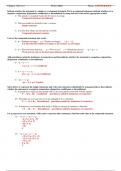
Fundamental Theorem of Algebra: Every polynomial equation of degree n
with complex coefficients has n roots in the complex numbers.
Example: Write a polynomial equation of the smallest degree with roots
4, -5, and 6
(x-4)(x+5)(x-6)= 0
Multiply it all out
x^3 – 3x^2 – 26x +120 = 0 Answer
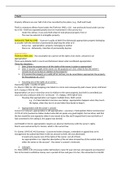
When the coefficients and constant of a polynomial equation are
integers, any rational root of the equation must be among the ratio of
the factors of the constant term and the factors of the leading
coefficient of the polynomial.
Rational Root Theorem: Let f(x) = anx^n + an-1x^n-1+….+ a1x + a0 be a
polynomial equation with integer coefficients where an = 0 and a0 = 0 . Then
all rational roots of the polynomial equation are among +or – p/q, where p is
an integer factor of a0 and q is an integer factor of an.
Descartes Rule of Sign
Recall that when the coefficients of a polynomial function are real numbers,
any imaginary zeros must occur in pairs (conjugates). You must subtract
multiples of z(z) from the number of sign changes in the function when
applying Descartes Rule of Sign because this rule does not take into account
the possibility of imaginary zeros.
The number of imaginary zeros is the number that sums up with the
positive and negative zeros to create the degree.
Setting Boundaries
Upper Bound Theorem: For a positive number, c, if f(x) is divided by (x-c) and
the resulting quotient polynomial and remainder have no changes in sign,
then f(x) has no real roots greater than c.
Fundamental Theorem of Algebra: Every polynomial equation of degree n
with complex coefficients has n roots in the complex numbers.
Example: Write a polynomial equation of the smallest degree with roots
4, -5, and 6
(x-4)(x+5)(x-6)= 0
Multiply it all out
x^3 – 3x^2 – 26x +120 = 0 Answer
When the coefficients and constant of a polynomial equation are
integers, any rational root of the equation must be among the ratio of
the factors of the constant term and the factors of the leading
coefficient of the polynomial.
Rational Root Theorem: Let f(x) = anx^n + an-1x^n-1+….+ a1x + a0 be a
polynomial equation with integer coefficients where an = 0 and a0 = 0 . Then
all rational roots of the polynomial equation are among +or – p/q, where p is
an integer factor of a0 and q is an integer factor of an.
Descartes Rule of Sign
Recall that when the coefficients of a polynomial function are real numbers,
any imaginary zeros must occur in pairs (conjugates). You must subtract
multiples of z(z) from the number of sign changes in the function when
applying Descartes Rule of Sign because this rule does not take into account
the possibility of imaginary zeros.
The number of imaginary zeros is the number that sums up with the
positive and negative zeros to create the degree.
Setting Boundaries
Upper Bound Theorem: For a positive number, c, if f(x) is divided by (x-c) and
the resulting quotient polynomial and remainder have no changes in sign,
then f(x) has no real roots greater than c.