Edward VI 1547-1553 / Mid Tudor Crisis / Protestant
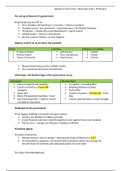
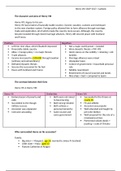
The set-up of Edward VI’s government
Kingship Edward was left to:
Privy Chamber still significant = not public = relied on courtiers
Guarded access = four gentlemen = most important = Sir Michael Stanhope
‘Protectors’ = people who controlled Edward = regent council
Limited power = ‘King on a chessboard’
He who controls Edward, controls England
Regency council set up by Henry VIII examples
Name Position Religious orientation
Sir Edward Wotton Administrator Catholic
Nicholas Wotton Cleric and diplomat Catholic
Thomas Wriothesley Administrator Catholic
Showed Henry favoured the Catholic faction
The council had full power and authority
Advantages and disadvantages of the government set up
Advantages Disadvantages
Men are experienced members Corruption = awarding titles
Country not left to a 9-year-old = Infighting between factions
managed Favouritism
Equal spilt Transfer of power = 18 years old = to be
Henry VIII appointed members = trust king
Succession was open = regency council Cannot make decisions = power struggle
provided an alternative
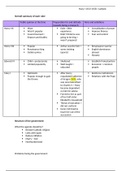
Challenges for the government
Three biggest challenges facing the new government:
Country was divided on religious grounds
Crown finances had been ruined by expensive wars against France and Scotland
Pay for wars = coinage was debased = leading to inflation
Prominent figures
The Duke of Somerset:
Edward Seymour, Earl of Herford = becomes the Duke of Somerset in 1547
He rewarded his supporters and himself with promotions within the peerage (he
became Duke of Somerset) and substantial grants of crown lands
The Duke of Northumberland:
, Edward VI 1547-1553 / Mid Tudor Crisis / Protestant
John Dudley, Viscount Lisle, Earl of Warwick
Was the son of Henry’s tax gatherer, Edmund Dudley, and he was a soldier whose
political career progressed during the 1540’s
He initially enjoyed a good working relationship with Somerset, but this deteriorated
He overthrew Somerset in October 1549 and became Lord President of the Council
and in 1551 Duke of Northumberland
He was executed for treason after the failure of the plot to place Lady Jane Grey on
the throne
Sir William Paget:
Prospered as a diplomat and administrator under Henry VIII
He was appointed clerk to the Privy Council in 1540
He was close to Somerset, but also served Northumberland and Mary
He was excluded from the Privy Council by Elizabeth
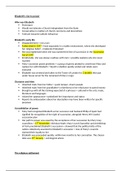
Regency of Somerset
Protector Somerset:
Edward Seymour = Duke of Somerset = control of the Regency Council
Edward Seymour had risen to prominence after his sister, Jane, had married Henry
VIII in 1536
Should the war with Scotland be resumed?
Pro = 2 million already spent on the war with Scotland and nobles and gentry already
wanted victory over Scots
Con = Expensive, loose an allie and peace treaty
Should religious reform along Protestant lives be encouraged officially?
Pro = Win support in Europe and reform group dominated the council
Con = rebellions, MQS was Catholic, Catholic Powers will be displeased, and most
people already followed Catholic rituals
Should the government make economic reform a priority?
Pro = finance war and economy is already poor, so cannot finance a war
Con = taxes could cause rebellions and the Gentry may feel attacked, for example
revoking enclosure
Somerset’s reforms
The set-up of Edward VI’s government
Kingship Edward was left to:
Privy Chamber still significant = not public = relied on courtiers
Guarded access = four gentlemen = most important = Sir Michael Stanhope
‘Protectors’ = people who controlled Edward = regent council
Limited power = ‘King on a chessboard’
He who controls Edward, controls England
Regency council set up by Henry VIII examples
Name Position Religious orientation
Sir Edward Wotton Administrator Catholic
Nicholas Wotton Cleric and diplomat Catholic
Thomas Wriothesley Administrator Catholic
Showed Henry favoured the Catholic faction
The council had full power and authority
Advantages and disadvantages of the government set up
Advantages Disadvantages
Men are experienced members Corruption = awarding titles
Country not left to a 9-year-old = Infighting between factions
managed Favouritism
Equal spilt Transfer of power = 18 years old = to be
Henry VIII appointed members = trust king
Succession was open = regency council Cannot make decisions = power struggle
provided an alternative
Challenges for the government
Three biggest challenges facing the new government:
Country was divided on religious grounds
Crown finances had been ruined by expensive wars against France and Scotland
Pay for wars = coinage was debased = leading to inflation
Prominent figures
The Duke of Somerset:
Edward Seymour, Earl of Herford = becomes the Duke of Somerset in 1547
He rewarded his supporters and himself with promotions within the peerage (he
became Duke of Somerset) and substantial grants of crown lands
The Duke of Northumberland:
, Edward VI 1547-1553 / Mid Tudor Crisis / Protestant
John Dudley, Viscount Lisle, Earl of Warwick
Was the son of Henry’s tax gatherer, Edmund Dudley, and he was a soldier whose
political career progressed during the 1540’s
He initially enjoyed a good working relationship with Somerset, but this deteriorated
He overthrew Somerset in October 1549 and became Lord President of the Council
and in 1551 Duke of Northumberland
He was executed for treason after the failure of the plot to place Lady Jane Grey on
the throne
Sir William Paget:
Prospered as a diplomat and administrator under Henry VIII
He was appointed clerk to the Privy Council in 1540
He was close to Somerset, but also served Northumberland and Mary
He was excluded from the Privy Council by Elizabeth
Regency of Somerset
Protector Somerset:
Edward Seymour = Duke of Somerset = control of the Regency Council
Edward Seymour had risen to prominence after his sister, Jane, had married Henry
VIII in 1536
Should the war with Scotland be resumed?
Pro = 2 million already spent on the war with Scotland and nobles and gentry already
wanted victory over Scots
Con = Expensive, loose an allie and peace treaty
Should religious reform along Protestant lives be encouraged officially?
Pro = Win support in Europe and reform group dominated the council
Con = rebellions, MQS was Catholic, Catholic Powers will be displeased, and most
people already followed Catholic rituals
Should the government make economic reform a priority?
Pro = finance war and economy is already poor, so cannot finance a war
Con = taxes could cause rebellions and the Gentry may feel attacked, for example
revoking enclosure
Somerset’s reforms