Henry VIII 1509-1547 / Catholic
The character and aims of Henry VIII
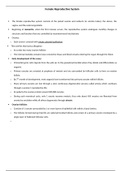
Henry VII’s legacy to his son:
Henry VII had created a financially stable country; income, taxation, customs and exchequer
to the new chamber system. Foreign policy allowed him to form alliances through marriage,
trade and exploration, all of which made the country more secure. Although, the country
became isolated through mixed marriage alliances, Henry still secured peace with Scotland
and France.
Positives Negatives
Left him nine ships, which Elizabeth improved Not a major world power = isolated
Financially stable country Were dynastic threats = PW, WS
Allies = Foreign policy = no major threats Harsh stance on the nobility = retaining = old
Trade alliances families
Income increased to £100,000 through taxation Marriage alliances were mixed
(ordinary and extraordinary) Unpopular taxes
Defeated dynastic threats Control of government = household personal
Secures the succession for his heir rule
Peace with Scotland and France Nobility resentment
Resentment of Council Learned and bonds
Nine ships = bad = compared to Spain
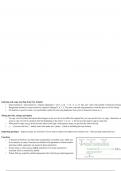
The contrast between their lives
Henry VII vs Henry VIII:
Henry VII Similarities Henry VIII
Endured years of poverty and Both were not raised Succeeded to the throne at
exile to become king nearly 18
Succeeded to the though Both strong-minded Fit and athletic
military success Both achieve a Accession was popular
Accession was unpopular personal monarchy Well educated and taught by
Cold and calculating Same council and pet John Skelton
same government Well prepared for the role of a
renaissance prince
Performed valiant deeds =
jousting = code of Chivalry
Who surrounded Henry on his accession?
Family:
Big sister = Margaret, age 20, married to James IV Scotland
Little sister = Mary, aged 13
Fiancée Catherine of Aragon
, Henry VIII 1509-1547 / Catholic
Council:
Archbishop William Warham
Sir Thomas Lovell, chancellor
Bishop Richard Foxe, Lord Privy Seal
Sir Thomas Howard, Earl of Surrey
Threats:
Cousins in Devon, the Courtenay’s
The Warwicks, Pole family (descended from 5th child of Ed III)
The Staffords, Duke of Buckingham (descended from 6th child of ED III, last duke)
First decisions as King
First decisions = Became king in April 1509
Ordered the arrest of his father’s chief financial enforcers, Empson + Dudley
Marry Catherine of Aragon = honourable and chivalrous thing to do
He needed the approval of her parents and the Pope before the remarriage
Wanted to be an imperial king = promote monarchy as one that recreated the
glories of Henry V’s victory at Agincourt in 1415 = and he was ruling on behalf of God
Henry’s court The royal court acted as the centre of politics and the Kings personality
The court was dedicated to pleasure and refinement = propaganda
He enjoyed the company of scholars and enjoyed music
Increased the number and quality of royal residences
Treatment of Early gestures of goodwill included disbanding the Council Learned in law and
nobility cancelling 175 bonds and recognisances
Regarded them as friends and associates that he could share his sporting and artistic
pleasures with
Having important men = enhanced the prestige at court
Greater nobility carried royal blood = challenge Henry’s claim
Edmund de la Pole = the Earl of Suffolk, 1513 executed for treason
Yorkist threat
Style of Continued to use Justices of the Peace to carry out wishes in local governments
government rather than rely on the nobility
Factionalism = Royal court was the centre of political power, not parliament = Henry
VII did not abide to this
Privy chamber became more important = in his household = had his intimate
advisors with him = followed him wherever he went = he had 30 residences of his
own
Privy chamber = 20 men = advice on matters of state
Never gave affairs of government personal attention = delegated it to his chief
advisors
Thomas Wolsey (1515-1529) and Thomas Cromwell (1532-1540)= dominated the
adults years of Henry’s reign = could lead to corruption
Thomas Wolsey
, Henry VIII 1509-1547 / Catholic
What was his background:
Son of a butcher
While at Oxford, he became the bursar of his college, which allowed him to develop
his organizational skills
Gained promotion to the office of Royal Almoner
1512 – the King entrusted Wolsey with the organisation of the following year’s
expedition to France = expedition went well
By 1514 = Henry declared all major business to Wolsey
Wolsey’s role as chief minister between 1515-29:
Control go the church
Control of the government
Divorce
Foreign policy
Dealing with the youthful King Henry
Wolsey and the church
Condition of the church in the 1520’s Wolsey’s reforms
Educated and uneducated people stayed loyal In his capacity as Papal Legate, Wolsey was able
to the Catholic church to instruct English bishops to carry out their
Anti-clericalism increased = opposition to duties and order inspections of religious life in
religious authority = threat to power monasteries = resulting in 2 dozen houses being
With the advent of printing, more people dissolved = improves quality
became aware of the criticisms of taxes going to 1528, Wolsey drew up more plans for closing
Rome to the Pope monasteries with fewer than 6 inmates =
Reformation in Europe = people sympathetic to improve quality of the clergy
the Church reform Response to Protestantism = encouraged Henry
John Wycliffe was criticised for the beliefs that to take a stand against the new ideas of Martin
scripture was more important than the Pope = Luther = led to the public burning of Lutheran
followers were called Lollards = the Bishop of texts = Lutherism = Martin Luther contradicted
London in 1515 complained about their some key aspects of Catholicism in his 95 Theses
heretical views in 1517
Wolsey and the government
Financial reforms:
Wolsey realised that existing forms of finance could not be exploited much further =
for example, parliamentary grants had settled to a fixed sum, so were unlikely to rise
much in the future
1522, Wolsey organised a national survey to assess who could pay tax and how
much. He used this to gain about £200,000 in forced loans in 1522/23 = this was not
enough due to inflation and expensive foreign policy
To overcome this = Wolsey promised a more flexible tax = the Subsidy did not raise
as much as was hoped, and Wolsey also levied a tax on the church
, Henry VIII 1509-1547 / Catholic
1525, he proposed an ‘Amicable Grant’ from both the church and ordinary taxpayers
based on his valuations of their property = the reaction to this demand was to
provoke the only significant rebellion in the first half of Henry’s reign = leads to
severe resistance, drop in Wool prices and blames this on Wolsey (downfall)
Parliament reforms:
Only called parliament twice (1515 and 1523) = personal monarchy
Parliament called = Hunne’s case = killed by a bishop, so Wolsey apologised on
behalf of the church
Parliament was called for a second time = agree to taxation as a result of the
expensive foreign policy being pursued
Legal/Economic reforms:
1516 = Justice was slow, so was reformed = based on Civil Law
Cases increased to 120 per anum from 12
Economic = Involved in growing of enclosures
1517 = legal cases against enclosure without permission
Ruined relations with Spain = alliance with France
Inflation = recoinage with less silver
Foreign policy in the early years
Why is foreign policy during this period so complicated?
The situation in Europe changed frequently
The Reformation had a big impact in 1517
The growth of the Ottoman Empire
Difficulties The campaigns were expensive and had wiped out the surplus of money that Henry VII
stemming had gathered in his later years
from early Resulted in little achievement beyond the satisfaction of defeating France
victories
Changing Francis I, successor of the French throne, invaded Italy to recapture Milan from the
European Habsburgs
monarchs Charles assumed the title of King of Spain and the HRE, as well as the Duke in the
Netherlands
Wolsey’s aims Wolsey’s aims were to create a new role in Europe for his master
Established England as the peacemaker between countries
Did not ignore Henry’s desire for military glory in competition with Francis I
1519 = Charles was elected as HRE = threatened French control in northern Italy = direct
opposition to each other
Treaty of Leo X, became Pope in 1513 and called for a general crusade to halt the spread of
London Ottoman power in Eastern Europe
Called all major powers to settle their differences and live under ‘universal peace’
Over 2 dozen countries signed the treaty, which committed them to avoid war
Balance of power = prevent conflicts of the type seen since 1494 in Italy
Wolsey had arranged for everyone to sign the treaty separately with England =
immediate fame to Henry and centre of power
The character and aims of Henry VIII
Henry VII’s legacy to his son:
Henry VII had created a financially stable country; income, taxation, customs and exchequer
to the new chamber system. Foreign policy allowed him to form alliances through marriage,
trade and exploration, all of which made the country more secure. Although, the country
became isolated through mixed marriage alliances, Henry still secured peace with Scotland
and France.
Positives Negatives
Left him nine ships, which Elizabeth improved Not a major world power = isolated
Financially stable country Were dynastic threats = PW, WS
Allies = Foreign policy = no major threats Harsh stance on the nobility = retaining = old
Trade alliances families
Income increased to £100,000 through taxation Marriage alliances were mixed
(ordinary and extraordinary) Unpopular taxes
Defeated dynastic threats Control of government = household personal
Secures the succession for his heir rule
Peace with Scotland and France Nobility resentment
Resentment of Council Learned and bonds
Nine ships = bad = compared to Spain
The contrast between their lives
Henry VII vs Henry VIII:
Henry VII Similarities Henry VIII
Endured years of poverty and Both were not raised Succeeded to the throne at
exile to become king nearly 18
Succeeded to the though Both strong-minded Fit and athletic
military success Both achieve a Accession was popular
Accession was unpopular personal monarchy Well educated and taught by
Cold and calculating Same council and pet John Skelton
same government Well prepared for the role of a
renaissance prince
Performed valiant deeds =
jousting = code of Chivalry
Who surrounded Henry on his accession?
Family:
Big sister = Margaret, age 20, married to James IV Scotland
Little sister = Mary, aged 13
Fiancée Catherine of Aragon
, Henry VIII 1509-1547 / Catholic
Council:
Archbishop William Warham
Sir Thomas Lovell, chancellor
Bishop Richard Foxe, Lord Privy Seal
Sir Thomas Howard, Earl of Surrey
Threats:
Cousins in Devon, the Courtenay’s
The Warwicks, Pole family (descended from 5th child of Ed III)
The Staffords, Duke of Buckingham (descended from 6th child of ED III, last duke)
First decisions as King
First decisions = Became king in April 1509
Ordered the arrest of his father’s chief financial enforcers, Empson + Dudley
Marry Catherine of Aragon = honourable and chivalrous thing to do
He needed the approval of her parents and the Pope before the remarriage
Wanted to be an imperial king = promote monarchy as one that recreated the
glories of Henry V’s victory at Agincourt in 1415 = and he was ruling on behalf of God
Henry’s court The royal court acted as the centre of politics and the Kings personality
The court was dedicated to pleasure and refinement = propaganda
He enjoyed the company of scholars and enjoyed music
Increased the number and quality of royal residences
Treatment of Early gestures of goodwill included disbanding the Council Learned in law and
nobility cancelling 175 bonds and recognisances
Regarded them as friends and associates that he could share his sporting and artistic
pleasures with
Having important men = enhanced the prestige at court
Greater nobility carried royal blood = challenge Henry’s claim
Edmund de la Pole = the Earl of Suffolk, 1513 executed for treason
Yorkist threat
Style of Continued to use Justices of the Peace to carry out wishes in local governments
government rather than rely on the nobility
Factionalism = Royal court was the centre of political power, not parliament = Henry
VII did not abide to this
Privy chamber became more important = in his household = had his intimate
advisors with him = followed him wherever he went = he had 30 residences of his
own
Privy chamber = 20 men = advice on matters of state
Never gave affairs of government personal attention = delegated it to his chief
advisors
Thomas Wolsey (1515-1529) and Thomas Cromwell (1532-1540)= dominated the
adults years of Henry’s reign = could lead to corruption
Thomas Wolsey
, Henry VIII 1509-1547 / Catholic
What was his background:
Son of a butcher
While at Oxford, he became the bursar of his college, which allowed him to develop
his organizational skills
Gained promotion to the office of Royal Almoner
1512 – the King entrusted Wolsey with the organisation of the following year’s
expedition to France = expedition went well
By 1514 = Henry declared all major business to Wolsey
Wolsey’s role as chief minister between 1515-29:
Control go the church
Control of the government
Divorce
Foreign policy
Dealing with the youthful King Henry
Wolsey and the church
Condition of the church in the 1520’s Wolsey’s reforms
Educated and uneducated people stayed loyal In his capacity as Papal Legate, Wolsey was able
to the Catholic church to instruct English bishops to carry out their
Anti-clericalism increased = opposition to duties and order inspections of religious life in
religious authority = threat to power monasteries = resulting in 2 dozen houses being
With the advent of printing, more people dissolved = improves quality
became aware of the criticisms of taxes going to 1528, Wolsey drew up more plans for closing
Rome to the Pope monasteries with fewer than 6 inmates =
Reformation in Europe = people sympathetic to improve quality of the clergy
the Church reform Response to Protestantism = encouraged Henry
John Wycliffe was criticised for the beliefs that to take a stand against the new ideas of Martin
scripture was more important than the Pope = Luther = led to the public burning of Lutheran
followers were called Lollards = the Bishop of texts = Lutherism = Martin Luther contradicted
London in 1515 complained about their some key aspects of Catholicism in his 95 Theses
heretical views in 1517
Wolsey and the government
Financial reforms:
Wolsey realised that existing forms of finance could not be exploited much further =
for example, parliamentary grants had settled to a fixed sum, so were unlikely to rise
much in the future
1522, Wolsey organised a national survey to assess who could pay tax and how
much. He used this to gain about £200,000 in forced loans in 1522/23 = this was not
enough due to inflation and expensive foreign policy
To overcome this = Wolsey promised a more flexible tax = the Subsidy did not raise
as much as was hoped, and Wolsey also levied a tax on the church
, Henry VIII 1509-1547 / Catholic
1525, he proposed an ‘Amicable Grant’ from both the church and ordinary taxpayers
based on his valuations of their property = the reaction to this demand was to
provoke the only significant rebellion in the first half of Henry’s reign = leads to
severe resistance, drop in Wool prices and blames this on Wolsey (downfall)
Parliament reforms:
Only called parliament twice (1515 and 1523) = personal monarchy
Parliament called = Hunne’s case = killed by a bishop, so Wolsey apologised on
behalf of the church
Parliament was called for a second time = agree to taxation as a result of the
expensive foreign policy being pursued
Legal/Economic reforms:
1516 = Justice was slow, so was reformed = based on Civil Law
Cases increased to 120 per anum from 12
Economic = Involved in growing of enclosures
1517 = legal cases against enclosure without permission
Ruined relations with Spain = alliance with France
Inflation = recoinage with less silver
Foreign policy in the early years
Why is foreign policy during this period so complicated?
The situation in Europe changed frequently
The Reformation had a big impact in 1517
The growth of the Ottoman Empire
Difficulties The campaigns were expensive and had wiped out the surplus of money that Henry VII
stemming had gathered in his later years
from early Resulted in little achievement beyond the satisfaction of defeating France
victories
Changing Francis I, successor of the French throne, invaded Italy to recapture Milan from the
European Habsburgs
monarchs Charles assumed the title of King of Spain and the HRE, as well as the Duke in the
Netherlands
Wolsey’s aims Wolsey’s aims were to create a new role in Europe for his master
Established England as the peacemaker between countries
Did not ignore Henry’s desire for military glory in competition with Francis I
1519 = Charles was elected as HRE = threatened French control in northern Italy = direct
opposition to each other
Treaty of Leo X, became Pope in 1513 and called for a general crusade to halt the spread of
London Ottoman power in Eastern Europe
Called all major powers to settle their differences and live under ‘universal peace’
Over 2 dozen countries signed the treaty, which committed them to avoid war
Balance of power = prevent conflicts of the type seen since 1494 in Italy
Wolsey had arranged for everyone to sign the treaty separately with England =
immediate fame to Henry and centre of power