11/9/23,g8:28g FundamentalsgofgElectricgCircuitsgAlexanderg5egSolutiong
AM Chapterg10
Chapterg10,gSolutiong1.
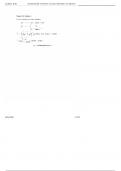
Wegfirstgdeterminegtheginputgimpedance.
1H ——→g jxLg=g j1x10g=g j10
1F —— 1
1
→ =gjg =g–
jxCg
x 0.1 1g
g10g
j
Z ( –1
|g
g =g1+
in g 1 + 1 + 1⎞ =g1.0101–g
| j0.1=g1.015g<g–5.653
o
j10g –gj0.1g 1
⎝ ⎠
2 o
I g<g0 o
g=1.015 =g1.9704g<g5.653
o
g<g–5.653
i(t)g=g1.9704cos(10t+5.65˚)gA
about:blan 1/133
k
,11/9/23,g8:28g FundamentalsgofgElectricgCircuitsgAlexanderg5egSolutiong
AM Chapterg10
Chapterg10,gSolutiong2.
UsinggFig.g10.51,gdesigngagproblemgtoghelpgothergstudentsgbettergunderstandgnodal
g analysis.
Althoughgtheregaregmanygwaysgtogworkgthisgproblem,gthisgisgangexamplegbasedgo
ngtheg samegkindgofgproblemgaskedgingthegthirdgedition.
Problem
SolvegforgVog ingFig.g10.51,gusinggnodalganalysis.
2gΩ
+
430og V j4gΩ Vo
_ –j5gΩ
+
–
Figureg10.51g g ForgProb.g10.2.
Solution
Considergthegcircuitgshowngbelow.
2
Vo
430ogVg g
–j5 j4
+ _
Atgthegmaingnode,
4g–
V og V
=g o +gVo —— 40g=gVg (10g+gj)
→
2 –gjg5g g jg4 o
Vog =g40/(10–j)g =g(40/10.05)35.71˚g=g3.9835.71˚gV
about:blan 2/133
k
,11/9/23,g8:28g FundamentalsgofgElectricgCircuitsgAlexanderg5egSolutiong
AM Chapterg10
Chapterg10,gSolutiong3.
xg=g4
2gcos(4t) —— 230°
16gsin(4t → 163g-g90°g=g-j16
) ——
→
2gH ——→ jxLg=g
1g12g —— j8 1
=g-gj3
F gg j(4)
→ 1
= (1g12)
jxC
Thegcircuitgisgshowngbelo
w.
- j8gΩ 6gΩ
4gΩ Vo
j3gΩ
-
j16 1gΩ 230°g A
gVg g
+
–
Applyinggnodalganalysis
,
Vo
-gj16g– +g2g Vog
gVo = + 6g+g j8
1
4g–gj3
-gj16 ( 1 1g ⎞
+g2g=g |1+g +g |V
4g–gj3g ⎝ 4–g j3g ⎠ 6g+gj8 o
3.92g–gj2.56
Vg
o
=g 4.6823g-
1.22g+gj0.0 =g3.8353g-g35.02°
= g33.15°
4g 1.220731.88°
Therefore,
vog(t)g=g 3.835cos(4tg–g35.02°)gV
about:blan 3/133
k
, 11/9/23,g8:28g FundamentalsgofgElectricgCircuitsgAlexanderg5egSolutiong
AM Chapterg10
Chapterg10,gSolutiong4.
Stepg1.
Convertgthegcircuitgintogthegfrequencygdomaingandgsolvegforgthegnodeg volta
ge,gV1,gusingganalysis.g ThegfindgthegcurrentgICg =gV1/[1+(1/
(j4x0.25)]gwhichg thengproducesgVog =g1xIC.gFinally,gconvertgthegcapacitorgv
oltagegbackgintogthegtimeg domain.
Ix j1 –j1gΩ
V1
1630ºgV
0.5Ix Vgo
Notegthatgwegrepresentedg16sin(4t–
10º)g voltsgbyg1630ºgV.g Thatgwillgmakegourg calculationsgeasiergandgallgw
eghavegtogdogisgtogoffsetgourganswergbygag–10º.
Ourgnodegequationgisg[(V1–16)/j]g–g(0.5Ix)g+g[(V1–0)/(1–
j)]g=g0.g Weghavegtwog unknowns,gthereforegwegneedgagconstraintgequation
.g Ixg =g[(16–V1)/j]g=gj(V1–
16).g OncegweghavegV1,gwegcangfindgIog =gV1g /(1–j)gandgVog =g1xIo.
Stepg2. Nowgallgwegneedgtogdogisgtogsolvegourgequations.
[(V1–16)/j]g–g[0.5j(V1–16]g+g[(V1–0)/(1–j)]g=g[–j–j0.5+0.5+j0.5]V1g +j16+j8g=g0
or
[0.5–j]V1g=g–j24gorgVg1g=gj24/(–0.5+j)g=g(24390º)/(1.1183116.57º)
=g21.473–26.57ºg V.
Finally,gIxg =gV1/(1–j)g=g(21.473–
26.57º)g(0.7071345º)g=g15.181318.43ºgAgandg Vog =g1xIog =g15.181318.43
ºgVgor
vo(t)g=g 15.181sin(4t–10º+18.43º)g=g15.181sin(4t–8.43º)gvolts.
about:blan 4/133
k
AM Chapterg10
Chapterg10,gSolutiong1.
Wegfirstgdeterminegtheginputgimpedance.
1H ——→g jxLg=g j1x10g=g j10
1F —— 1
1
→ =gjg =g–
jxCg
x 0.1 1g
g10g
j
Z ( –1
|g
g =g1+
in g 1 + 1 + 1⎞ =g1.0101–g
| j0.1=g1.015g<g–5.653
o
j10g –gj0.1g 1
⎝ ⎠
2 o
I g<g0 o
g=1.015 =g1.9704g<g5.653
o
g<g–5.653
i(t)g=g1.9704cos(10t+5.65˚)gA
about:blan 1/133
k
,11/9/23,g8:28g FundamentalsgofgElectricgCircuitsgAlexanderg5egSolutiong
AM Chapterg10
Chapterg10,gSolutiong2.
UsinggFig.g10.51,gdesigngagproblemgtoghelpgothergstudentsgbettergunderstandgnodal
g analysis.
Althoughgtheregaregmanygwaysgtogworkgthisgproblem,gthisgisgangexamplegbasedgo
ngtheg samegkindgofgproblemgaskedgingthegthirdgedition.
Problem
SolvegforgVog ingFig.g10.51,gusinggnodalganalysis.
2gΩ
+
430og V j4gΩ Vo
_ –j5gΩ
+
–
Figureg10.51g g ForgProb.g10.2.
Solution
Considergthegcircuitgshowngbelow.
2
Vo
430ogVg g
–j5 j4
+ _
Atgthegmaingnode,
4g–
V og V
=g o +gVo —— 40g=gVg (10g+gj)
→
2 –gjg5g g jg4 o
Vog =g40/(10–j)g =g(40/10.05)35.71˚g=g3.9835.71˚gV
about:blan 2/133
k
,11/9/23,g8:28g FundamentalsgofgElectricgCircuitsgAlexanderg5egSolutiong
AM Chapterg10
Chapterg10,gSolutiong3.
xg=g4
2gcos(4t) —— 230°
16gsin(4t → 163g-g90°g=g-j16
) ——
→
2gH ——→ jxLg=g
1g12g —— j8 1
=g-gj3
F gg j(4)
→ 1
= (1g12)
jxC
Thegcircuitgisgshowngbelo
w.
- j8gΩ 6gΩ
4gΩ Vo
j3gΩ
-
j16 1gΩ 230°g A
gVg g
+
–
Applyinggnodalganalysis
,
Vo
-gj16g– +g2g Vog
gVo = + 6g+g j8
1
4g–gj3
-gj16 ( 1 1g ⎞
+g2g=g |1+g +g |V
4g–gj3g ⎝ 4–g j3g ⎠ 6g+gj8 o
3.92g–gj2.56
Vg
o
=g 4.6823g-
1.22g+gj0.0 =g3.8353g-g35.02°
= g33.15°
4g 1.220731.88°
Therefore,
vog(t)g=g 3.835cos(4tg–g35.02°)gV
about:blan 3/133
k
, 11/9/23,g8:28g FundamentalsgofgElectricgCircuitsgAlexanderg5egSolutiong
AM Chapterg10
Chapterg10,gSolutiong4.
Stepg1.
Convertgthegcircuitgintogthegfrequencygdomaingandgsolvegforgthegnodeg volta
ge,gV1,gusingganalysis.g ThegfindgthegcurrentgICg =gV1/[1+(1/
(j4x0.25)]gwhichg thengproducesgVog =g1xIC.gFinally,gconvertgthegcapacitorgv
oltagegbackgintogthegtimeg domain.
Ix j1 –j1gΩ
V1
1630ºgV
0.5Ix Vgo
Notegthatgwegrepresentedg16sin(4t–
10º)g voltsgbyg1630ºgV.g Thatgwillgmakegourg calculationsgeasiergandgallgw
eghavegtogdogisgtogoffsetgourganswergbygag–10º.
Ourgnodegequationgisg[(V1–16)/j]g–g(0.5Ix)g+g[(V1–0)/(1–
j)]g=g0.g Weghavegtwog unknowns,gthereforegwegneedgagconstraintgequation
.g Ixg =g[(16–V1)/j]g=gj(V1–
16).g OncegweghavegV1,gwegcangfindgIog =gV1g /(1–j)gandgVog =g1xIo.
Stepg2. Nowgallgwegneedgtogdogisgtogsolvegourgequations.
[(V1–16)/j]g–g[0.5j(V1–16]g+g[(V1–0)/(1–j)]g=g[–j–j0.5+0.5+j0.5]V1g +j16+j8g=g0
or
[0.5–j]V1g=g–j24gorgVg1g=gj24/(–0.5+j)g=g(24390º)/(1.1183116.57º)
=g21.473–26.57ºg V.
Finally,gIxg =gV1/(1–j)g=g(21.473–
26.57º)g(0.7071345º)g=g15.181318.43ºgAgandg Vog =g1xIog =g15.181318.43
ºgVgor
vo(t)g=g 15.181sin(4t–10º+18.43º)g=g15.181sin(4t–8.43º)gvolts.
about:blan 4/133
k