NURSING NOTES:
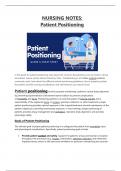
Patient Positioning
In this guide for patient positioning, learn about the common bed positions such as Fowler’s, dorsal
recumbent, supine, prone, lateral, lithotomy, Sims’, Trendelenburg’s, and other surgical positions
commonly used. Learn about the different patient positioning guidelines, how to properly position
the patient, and the nursing considerations and interventions you need to know.
Patient positioning involves properly maintaining a patient’s neutral body alignment
by preventing hyperextension and extreme lateral rotation to prevent complications
of immobility and injury. Positioning patients is an essential aspect of nursing practice and a
responsibility of the registered nurse. In surgery, specimen collection, or other treatments, proper
patient positioning provides optimal exposure to the surgical/treatment site and maintenance of the
patient’s dignity by controlling unnecessary exposure. In most settings, proper positioning of
patients provides airway management and ventilation, maintains body alignment, and provides
physiologic safety.
Goals of Patient Positioning
The ultimate goal of proper patient positioning is to safeguard the patient from immobility injury
and physiological complications. Specifically, patient positioning goals include:
Provide patient comfort and safety. Support the patient’s airway and maintain circulation
throughout the procedure (e.g., surgery, examination, specimen collection, and treatment).
Impaired venous return to the heart and ventilation-to-perfusion mismatching are common
, complications. Proper positioning promotes comfort by preventing nerve damage and by
preventing unnecessary extension or rotation of the body.
Maintaining patient dignity and privacy. In surgery, proper positioning is a way to respect
the patient’s dignity by minimizing exposure of the patient, who often feels vulnerable
perioperatively.
Allows maximum visibility and access. Proper positioning allows ease of surgical access as
well as for anesthetic administration during the perioperative phase.
Guidelines for Patient Positioning
Proper execution is needed during patient positioning to prevent injury for both the patient and the
nurse. Remember these principles and guidelines when positioning clients:
Explain the procedure. Explain to the client why their position is being changed and how it
will be done. Rapport with the patient will make them more likely to maintain the new
position.
Encourage the client to assist as much as possible. Determine if the client can fully or
partially assist. Clients that can assist will save strain on the nurse. It will also be a form of
exercise, increasing the client’s independence and self-esteem.
Get adequate help. When planning to move or reposition the client, ask for help from
other caregivers. Positioning may not be a one-person task.
Use mechanical aids. Bed boards, slide boards, pillows, patient lifts, and slings can facilitate
the ease of changing positions.
Raise the client’s bed. Adjust or reposition the client’s bed so that the weight is at the
nurse’s center of gravity level.
Frequent position changes. Note that any correct or incorrect position can be detrimental
to the patient if maintained for a long time. Repositioning the patient every two hours helps
prevent complications like pressure ulcers and skin breakdown.
Avoid friction and shearing. When moving patients, lift rather than slide to
prevent friction that can abrade the skin making it more prone to skin breakdown.
Proper body mechanics. Observe good body mechanics for your and your patient’s safety.
Position yourself close to the client.
Avoid twisting your back, neck, and pelvis by keeping them aligned.
Flex your knees and keep your feet wide apart.
Use your arms and legs and not your back.
Tighten abdominal muscles and gluteal muscles in preparation for the move.
A person with the heaviest load coordinates the efforts of the nurse and initiates the
count to 3.
, Common Patient Positions
Supine or Dorsal Recumbent Position
Supine position, or dorsal recumbent, is wherein the patient lies flat on the back with head and
shoulders slightly elevated using a pillow unless contraindicated (e.g., spinal anesthesia,
spinal surgery).
Variation in position. In supine position, legs may be extended or slightly bent with arms up
or down. It provides comfort in general for patients under recovery after some type of
surgery.
Most commonly used position. Supine or dorsal recumbent is used for general examination
or physical assessment.
Watch out for skin breakdown. Supine position may put patients at risk for pressure
ulcers and nerve damage. Assess for skin breakdown and pad bony prominences.
Support for supine position. Small pillows may be placed under the head to lumbar
curvature. Heels must be protected from pressure by using a pillow or ankle roll. Prevent
prolonged plantar flexion and stretch injury of the feet by placing a padded footboard.
Supine position in surgery. Supine is frequently used on procedures involving the anterior
surface of the body (e.g., abdominal area, cardiac, thoracic area). A small pillow or donut
should be used to stabilize the head, as an extreme rotation of the head during surgery can
lead to occlusion of the vertebral artery.
Fowler’s Position
Fowler’s position, also known as semi-sitting position, is a bed position wherein the head of the
bed is elevated 45 to 60 degrees. Variations of Fowler’s position include low Fowler’s (15 to 30
degrees), semi-Fowler’s (30 to 45 degrees), and high Fowler’s (nearly vertical).
Patient Positioning
In this guide for patient positioning, learn about the common bed positions such as Fowler’s, dorsal
recumbent, supine, prone, lateral, lithotomy, Sims’, Trendelenburg’s, and other surgical positions
commonly used. Learn about the different patient positioning guidelines, how to properly position
the patient, and the nursing considerations and interventions you need to know.
Patient positioning involves properly maintaining a patient’s neutral body alignment
by preventing hyperextension and extreme lateral rotation to prevent complications
of immobility and injury. Positioning patients is an essential aspect of nursing practice and a
responsibility of the registered nurse. In surgery, specimen collection, or other treatments, proper
patient positioning provides optimal exposure to the surgical/treatment site and maintenance of the
patient’s dignity by controlling unnecessary exposure. In most settings, proper positioning of
patients provides airway management and ventilation, maintains body alignment, and provides
physiologic safety.
Goals of Patient Positioning
The ultimate goal of proper patient positioning is to safeguard the patient from immobility injury
and physiological complications. Specifically, patient positioning goals include:
Provide patient comfort and safety. Support the patient’s airway and maintain circulation
throughout the procedure (e.g., surgery, examination, specimen collection, and treatment).
Impaired venous return to the heart and ventilation-to-perfusion mismatching are common
, complications. Proper positioning promotes comfort by preventing nerve damage and by
preventing unnecessary extension or rotation of the body.
Maintaining patient dignity and privacy. In surgery, proper positioning is a way to respect
the patient’s dignity by minimizing exposure of the patient, who often feels vulnerable
perioperatively.
Allows maximum visibility and access. Proper positioning allows ease of surgical access as
well as for anesthetic administration during the perioperative phase.
Guidelines for Patient Positioning
Proper execution is needed during patient positioning to prevent injury for both the patient and the
nurse. Remember these principles and guidelines when positioning clients:
Explain the procedure. Explain to the client why their position is being changed and how it
will be done. Rapport with the patient will make them more likely to maintain the new
position.
Encourage the client to assist as much as possible. Determine if the client can fully or
partially assist. Clients that can assist will save strain on the nurse. It will also be a form of
exercise, increasing the client’s independence and self-esteem.
Get adequate help. When planning to move or reposition the client, ask for help from
other caregivers. Positioning may not be a one-person task.
Use mechanical aids. Bed boards, slide boards, pillows, patient lifts, and slings can facilitate
the ease of changing positions.
Raise the client’s bed. Adjust or reposition the client’s bed so that the weight is at the
nurse’s center of gravity level.
Frequent position changes. Note that any correct or incorrect position can be detrimental
to the patient if maintained for a long time. Repositioning the patient every two hours helps
prevent complications like pressure ulcers and skin breakdown.
Avoid friction and shearing. When moving patients, lift rather than slide to
prevent friction that can abrade the skin making it more prone to skin breakdown.
Proper body mechanics. Observe good body mechanics for your and your patient’s safety.
Position yourself close to the client.
Avoid twisting your back, neck, and pelvis by keeping them aligned.
Flex your knees and keep your feet wide apart.
Use your arms and legs and not your back.
Tighten abdominal muscles and gluteal muscles in preparation for the move.
A person with the heaviest load coordinates the efforts of the nurse and initiates the
count to 3.
, Common Patient Positions
Supine or Dorsal Recumbent Position
Supine position, or dorsal recumbent, is wherein the patient lies flat on the back with head and
shoulders slightly elevated using a pillow unless contraindicated (e.g., spinal anesthesia,
spinal surgery).
Variation in position. In supine position, legs may be extended or slightly bent with arms up
or down. It provides comfort in general for patients under recovery after some type of
surgery.
Most commonly used position. Supine or dorsal recumbent is used for general examination
or physical assessment.
Watch out for skin breakdown. Supine position may put patients at risk for pressure
ulcers and nerve damage. Assess for skin breakdown and pad bony prominences.
Support for supine position. Small pillows may be placed under the head to lumbar
curvature. Heels must be protected from pressure by using a pillow or ankle roll. Prevent
prolonged plantar flexion and stretch injury of the feet by placing a padded footboard.
Supine position in surgery. Supine is frequently used on procedures involving the anterior
surface of the body (e.g., abdominal area, cardiac, thoracic area). A small pillow or donut
should be used to stabilize the head, as an extreme rotation of the head during surgery can
lead to occlusion of the vertebral artery.
Fowler’s Position
Fowler’s position, also known as semi-sitting position, is a bed position wherein the head of the
bed is elevated 45 to 60 degrees. Variations of Fowler’s position include low Fowler’s (15 to 30
degrees), semi-Fowler’s (30 to 45 degrees), and high Fowler’s (nearly vertical).