Head-to-Toe Assessment: Complete Physical
Assessment Guide
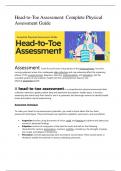
Assessment is the first and most critical phase of the nursing process. Incorrect
nursing judgment arises from inadequate data collection and may adversely affect the remaining
phases of the nursing process: diagnosis, planning, implementation, and evaluation. Get the
complete picture of your patient’s health with this comprehensive head-to-toe
physical assessment guide.
A head-to-toe assessment is a comprehensive physical assessment data
collection method to gather patient data and determine the patient’s health status. It involves
examining the entire body from head to toe in a systematic and thorough manner to identify health
issues the patient may be experiencing.
Assessment Techniques
To make your head-to-toe assessment systematic, you need to know about the four basic
assessment techniques. These techniques are inspection, palpation, percussion, and auscultation.
Inspection involves using the senses of vision, smell, and hearing to observe and detect any
normal or abnormal findings.
Palpation consists of using parts of the hand to touch and feel for the following
characteristics: texture, temperature, moisture, mobility, consistency, the strength of pulses,
size, shape, and degree of tenderness.
Percussion involves tapping body parts to produce sound waves. These sound waves or
vibrations enable the examiner to assess underlying structures.
, Auscultation involves the use of a stethoscope to listen for heart sounds, movement
of blood through the cardiovascular system, movement of the bowel, and movement of air
through the respiratory tract.
Using COLDSPA mnemonic
The COLDSPA mnemonic is a useful memory aid for exploring each symptom of health concern.
Mnemonic General Question
Character Describe the sign or symptom (appearance, feeling, sound, smell, or taste)
Onset When did it begin?
Location Where is it? Does it radiate? Does it occur anywhere else?
Duration How long does it last? Does it recur?
Severity How bad is it? How much does it bother you?
Pattern What makes it better or worse?
Associated factors What other symptoms occur with it? How doe it affect you?
History of Present Health Concerns
This section takes into account several aspects of the health problem and asks questions whose
answers can provide a detailed description of the concern.
,Past Health History
These are questions to elicit data related to the client’s past, strengths, and weaknesses in their
health history.
Family Health History
The family history should include as many generic relatives as the client can recall; in addition to
genetic predisposition, it is also helpful to see other health problems that may have affected the
client by virtue of having grown up in the family and being exposed to these problems.
Lifestyle and Health Practices
These questions are used to assess how the clients are managing their lives, their awareness of
health, and unhealthy living patterns. These are usually open-ended questions to promote dialogue
with the client.
Physical Assessment Guide
NOTE: Remember to use the COLDSPA mnemonic (Character, Onset, Location, Duration, Severity,
Patterns, and Associated Factors) to investigate and collect information for each symptom the client
shares.
1. General Appearance/Survey
The general appearance or general survey is the first step in a head-to-toe assessment. The
information gathered during the general survey provides clues about the overall health of the client.
The general survey includes the overall impression of the client, mental status exam, and vital signs.
2. Chief Complaint
The chief complaint is the main reason why a client is seeking medical attention. It is the symptom
or problem that is most concerning to the patient and is the focus of their visit. It is typically the first
thing the healthcare provider asks about when seeing a patient, as it helps to provide context and
background for the rest of the assessment and treatment.
3. Health History
The health history is an excellent way to begin the assessment process because it lays the
groundwork for identifying nursing problems and provides a focus for the physical examination. The
importance of health history lies in its ability to provide information that will assist the examiner in
identifying areas of strength and limitation in the individual’s lifestyle and current health status.
, 4. Assessment of the Integument
The skin, hair, and nails are external structures that serve a variety of specialized functions. Diseases
and disorders of the skin, hair, and nails can be local or they may be caused by an underlying
systemic problem. To perform a complete and accurate assessment, the nurse needs to collect data
about current symptoms, the client’s past and family history, and lifestyle and health practices.
History of present health concern
Skin
Are you experiencing any current skin problems such as rashes, lesions, dryness, oiliness,
drainage, bruising, swelling, or increased pigmentation? What aggravates the problem? What
relieves it?
Describe any birthmarks, tattoos, or moles, changes in their color, size, or shape.
Have you noticed any change in your ability to feel pain, pressure, light touch,
or temperature changes? Are you experiencing any pain, itching, tingling, or numbness?
Hair and Nails
Have you had any hair loss or change in the condition of your hair? Describe.
Have you had any change in the condition or appearance of your nails? Describe.
Past health history
Describe any previous problems with skin, hair, or nails, including any treatment or surgery
and its effectiveness.
Have you ever had any allergic skin reactions to food, medications, plants, or other
environmental substances?
Have you had a fever, nausea, vomiting, GI, or respiratory problems?
For female clients: Are you pregnant? Are your menstrual periods regular?
Family history
Has anyone in your family had a recent illness, rash, other skin problems, or allergy? Describe.
Has anyone in your family had skin cancer?
Lifestyle and health practices
Do you sunbathe? How much sun or tanning booth exposure do you get? What type of sun
protection do you use?
In your daily activities, are you regularly exposed to chemicals that may harm the skin?
Do you spend long periods of time sitting or lying in one position?
Have you had any exposure to extreme temperatures?
What are your daily routine for skin, hair, and nail care?
Assessment Guide
Assessment is the first and most critical phase of the nursing process. Incorrect
nursing judgment arises from inadequate data collection and may adversely affect the remaining
phases of the nursing process: diagnosis, planning, implementation, and evaluation. Get the
complete picture of your patient’s health with this comprehensive head-to-toe
physical assessment guide.
A head-to-toe assessment is a comprehensive physical assessment data
collection method to gather patient data and determine the patient’s health status. It involves
examining the entire body from head to toe in a systematic and thorough manner to identify health
issues the patient may be experiencing.
Assessment Techniques
To make your head-to-toe assessment systematic, you need to know about the four basic
assessment techniques. These techniques are inspection, palpation, percussion, and auscultation.
Inspection involves using the senses of vision, smell, and hearing to observe and detect any
normal or abnormal findings.
Palpation consists of using parts of the hand to touch and feel for the following
characteristics: texture, temperature, moisture, mobility, consistency, the strength of pulses,
size, shape, and degree of tenderness.
Percussion involves tapping body parts to produce sound waves. These sound waves or
vibrations enable the examiner to assess underlying structures.
, Auscultation involves the use of a stethoscope to listen for heart sounds, movement
of blood through the cardiovascular system, movement of the bowel, and movement of air
through the respiratory tract.
Using COLDSPA mnemonic
The COLDSPA mnemonic is a useful memory aid for exploring each symptom of health concern.
Mnemonic General Question
Character Describe the sign or symptom (appearance, feeling, sound, smell, or taste)
Onset When did it begin?
Location Where is it? Does it radiate? Does it occur anywhere else?
Duration How long does it last? Does it recur?
Severity How bad is it? How much does it bother you?
Pattern What makes it better or worse?
Associated factors What other symptoms occur with it? How doe it affect you?
History of Present Health Concerns
This section takes into account several aspects of the health problem and asks questions whose
answers can provide a detailed description of the concern.
,Past Health History
These are questions to elicit data related to the client’s past, strengths, and weaknesses in their
health history.
Family Health History
The family history should include as many generic relatives as the client can recall; in addition to
genetic predisposition, it is also helpful to see other health problems that may have affected the
client by virtue of having grown up in the family and being exposed to these problems.
Lifestyle and Health Practices
These questions are used to assess how the clients are managing their lives, their awareness of
health, and unhealthy living patterns. These are usually open-ended questions to promote dialogue
with the client.
Physical Assessment Guide
NOTE: Remember to use the COLDSPA mnemonic (Character, Onset, Location, Duration, Severity,
Patterns, and Associated Factors) to investigate and collect information for each symptom the client
shares.
1. General Appearance/Survey
The general appearance or general survey is the first step in a head-to-toe assessment. The
information gathered during the general survey provides clues about the overall health of the client.
The general survey includes the overall impression of the client, mental status exam, and vital signs.
2. Chief Complaint
The chief complaint is the main reason why a client is seeking medical attention. It is the symptom
or problem that is most concerning to the patient and is the focus of their visit. It is typically the first
thing the healthcare provider asks about when seeing a patient, as it helps to provide context and
background for the rest of the assessment and treatment.
3. Health History
The health history is an excellent way to begin the assessment process because it lays the
groundwork for identifying nursing problems and provides a focus for the physical examination. The
importance of health history lies in its ability to provide information that will assist the examiner in
identifying areas of strength and limitation in the individual’s lifestyle and current health status.
, 4. Assessment of the Integument
The skin, hair, and nails are external structures that serve a variety of specialized functions. Diseases
and disorders of the skin, hair, and nails can be local or they may be caused by an underlying
systemic problem. To perform a complete and accurate assessment, the nurse needs to collect data
about current symptoms, the client’s past and family history, and lifestyle and health practices.
History of present health concern
Skin
Are you experiencing any current skin problems such as rashes, lesions, dryness, oiliness,
drainage, bruising, swelling, or increased pigmentation? What aggravates the problem? What
relieves it?
Describe any birthmarks, tattoos, or moles, changes in their color, size, or shape.
Have you noticed any change in your ability to feel pain, pressure, light touch,
or temperature changes? Are you experiencing any pain, itching, tingling, or numbness?
Hair and Nails
Have you had any hair loss or change in the condition of your hair? Describe.
Have you had any change in the condition or appearance of your nails? Describe.
Past health history
Describe any previous problems with skin, hair, or nails, including any treatment or surgery
and its effectiveness.
Have you ever had any allergic skin reactions to food, medications, plants, or other
environmental substances?
Have you had a fever, nausea, vomiting, GI, or respiratory problems?
For female clients: Are you pregnant? Are your menstrual periods regular?
Family history
Has anyone in your family had a recent illness, rash, other skin problems, or allergy? Describe.
Has anyone in your family had skin cancer?
Lifestyle and health practices
Do you sunbathe? How much sun or tanning booth exposure do you get? What type of sun
protection do you use?
In your daily activities, are you regularly exposed to chemicals that may harm the skin?
Do you spend long periods of time sitting or lying in one position?
Have you had any exposure to extreme temperatures?
What are your daily routine for skin, hair, and nail care?