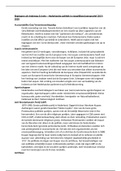
Chapter 2
SOCIAL IDENTITY IN INDUSTRIAL
AND ORGANIZATIONAL
PSYCHOLOGY: CONCEPTS,
CONTROVERSIES AND
CONTRIBUTIONS
S. Alexander Haslam
School of Psychology, University of Exeter
and
Naomi Ellemers
Department of Psychology, Leiden University
It is now 25 years since the publication of Tajfel and Turner’s (1979) seminal
statement on social identity theory and 15 years since Ashforth and Mael
(1989) published their classic Academy of Management Review article point-
ing to the potential value of using this theory to enhance researchers’ under-
standing of organizational life. Whatever else the latter article may have
achieved, it is clear that it was highly prophetic, as, over the intervening
period, industrial and organizational psychologists’ interest in social identity
and related concepts has increased at a phenomenal rate. On top of nearly 300
citations of the Ashforth and Mael paper, this is indicated, among other
developments, by the publication of several key books and journal special
issues devoted to research in this area (e.g., Albert, Ashforth, & Dutton,
2000; Haslam, 2001, 2004; Haslam, van Knippenberg, Platow, & Ellemers,
2003; Hogg & Terry, 2001; Tyler & Blader, 2000; van Knippenberg & Hogg,
2001) and the exponential rise in articles that make reference to the terms
‘social’ and/or ‘organizational’ identity (for details see Haslam, 2004, p. xxv;
Haslam, Postmes, & Ellemers, 2003). As the range of journals listed in Table
2.1 indicates, it is also apparent that this research has had a broad as well as a
deep impact on the field.
These trends indicate that a thoroughgoing review of the status of social
identity in industrial and organizational fields is very timely (see also
International Review of Industrial and Organizational Psychology, 2005 Volume 20
Edited by G. P. Hodgkinson and J. K. Ford. # 2005 John Wiley & Sons, Ltd.
,40 I NTERNATIONAL R EVIEW OF I NDUSTRIAL AND O RGANIZATIONAL P SYCHOLOGY 2005
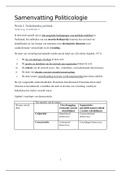
Table 2.1 Outlets for articles on ‘social identity’ and ‘organizations’ (1990–2004).*
Organizational psychology journals Frequency %
Academy of Management Journal 8
Academy of Management Review 7
Administrative Science Quarterly 8
Applied Psychology: An International Review 3
British Journal of Management 2
Group and Organization Management 2
Hispanic Journal of Behavioral Sciences 2
Human Relations 13
International Journal of Human Resource Management 6
Journal of Applied Psychology 4
Journal of Management 2
Journal of Management Studies 2
Journal of Marketing 2
Journal of Organizational Behavior 7
Journal of Occupational and Organizational Psychology 5
Organization Science 5
Research in Organizational Behavior 9
Zeitschrift für Arbeits und Organizationspsychologie 3
Other (N ¼ 1 per outlet) 32
Total 122 73
Social/General psychology journals Frequency %
British Journal of Social Psychology 4
European Journal of Social Psychology 1
Group Processes & Intergroup Relations 4
Journal of Applied Behavioral Science 2
Journal of Applied Social Psychology 4
Personality and Social Psychology Bulletin 4
Personality and Social Psychology Review 3
Other (N ¼ 1 per outlet) 23
Total 45 27
* These publications came up in an electronic search, carried out with the following criteria: In
ISI Web of Science (SCI-Expanded and SSCI) a full search was carried out for literature
published between 1990 and 2004 (all languages) with the search terms ‘social identi* and
organization*’ and with ‘social identi* and organisation*’. This yielded 213 hits. According to
the same specifications a search was also carried out with Webspirs (Psychlit), which yielded 179
hits. After excluding duplications, obviously non-relevant publications, unpublished disserta-
tions, and book chapters, this resulted in 167 unique hits.
Hodgkinson, 2003). Not least, this is because commentators have recently
identified concerns and confusions that lead them to call into question the
capacity for social identity work to contribute to theoretical and practical
progress (e.g., see Cornelissen, 2002a; Jost & Elsbach, 2001; Polzer,
Milton, & Swann, 2002). Although a recent contribution in this series by
, S OCIAL I DENTITY IN I NDUSTRIAL AND O RGANIZATIONAL P SYCHOLOGY 41
van Dick (2004) also examined how identification in work contexts can be
understood from a social identity perspective, this previous contribution
focused on examining the relevance of the concept of identity for the analysis
of organizational behavior, with a particular emphasis on organizational
mergers and group productivity (see also Cartwright, 2005). The goal of
the present chapter is different, as we aim to address the social identity
approach to organizational behavior in a broader sense. Thus, our present
aim is to review developments in this area and, in the process, both (a) engage
with and resolve controversies that have arisen in the field and (b) identify
those research avenues that have been associated with most progress and
which hold out the most promise for future advance.
A key conclusion that emerges from this review is that, while the social
identity perspective has delivered—and should continue to deliver—a con-
siderable return on the investment of research energy, the dividends of this
activity are contingent on close attention being paid to the core theoretical
concepts which lie at its heart. This is because, as social identity work
develops and becomes ever more influential, there is a danger these ideas
will be diluted and simplified and that, as a result, the approach will lose
its explanatory and practical power (Ellemers, Haslam, Platow, & van Knip-
penberg, 2003; Turner, 1999). In order to offset this possibility, a core goal
of this chapter is to (re)connect the field with underlying theory and to
demonstrate that it is through a detailed elaboration of those forms of under-
standing first signalled by Tajfel and Turner (1979) that the best prospects
for the future lie.
SOCIAL IDENTITY CONCEPTS
Social Identity and the Search for Positive Distinctiveness
Within social psychology the concept of social identity grew from an aware-
ness of the reality of the group and of its distinctive contribution to social
cognition and behavior. A core idea here was that groups are not only ex-
ternal features of the world, they are also internalized so that they contribute
to a person’s sense of self.
The specific empirical catalyst for this insight was a series of (now famous)
studies conducted by Tajfel and his colleagues in the early 1970s (Tajfel,
1970; Tajfel, Billig, Bundy, & Flament, 1971). These were designed to
identify the minimal conditions that would lead members of one group to
discriminate in favor of the ingroup to which they belonged and against
another outgroup. For this purpose, participants were assigned to groups
that were intended to be as empty and meaningless as possible—the goal
being to add meaning to the situation in order to discover at what point
people would start to discriminate against the outgroup. Participants were
led to believe that assignment to groups was made on the basis of trivial
, 42 I NTERNATIONAL R EVIEW OF I NDUSTRIAL AND O RGANIZATIONAL P SYCHOLOGY 2005
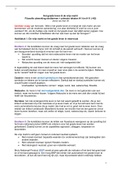
Points for member of
Klee group: 7 8 9 10 11 12 13 14 15 16 17 18 19
Kandinsky group: 1 3 5 7 9 11 13 15 17 19 21 23 25
MD F MIP
MJP
Figure 2.1 A typical matrix from a minimal group study.
Based on Tajfel (ed.) (1978), Differentiation between Social Groups: Studies in the Social Psychology of Intergroup Relations,
London: Academic Press. Note: Participants decide how many points to award to the ingroup and outgroup member by selecting
one pair of numbers. In this example, a participant in the Klee group would make a choice towards the left-hand end of the
matrix to achieve the maximum gain of the ingroup member relative to that of the outgroup member (MD). A choice in the
middle of the matrix would achieve fairness (F), and one towards the right-hand end would achieve maximum joint group profit
(MJP) and maximum ingroup profit (MIP). The shaded response thus indicates a compromise between strategies of maximum
difference and fairness.
criteria, such as their preference for the abstract painters Klee and Kan-
dinsky. Actually, though, assignment to one or other of the groups was
random. (In fact, all participants were assigned to the same group.)
As is now well known, the key finding that emerged from these minimal
group studies (as they were later dubbed) was that even the most stripped-
down conditions were sufficient to encourage ingroup-favouring responses.
That is, when using matrices like those in Figure 2.1 to assign points to
unidentified members of the ingroup and outgroup, participants tended to
deviate from a strategy of fairness by awarding more points to ingroup
members than outgroup members. In so doing, the participants explicitly
eschewed a strategy that would serve to maximize their ingroup’s absolute
economic gain in favor of one that maximized their relative gain over the
outgroup.
For Turner (1975) and Tajfel (1978) the most important upshot of the
minimal group studies was that they suggested that the mere act of
individuals categorizing themselves as group members was sufficient to lead
them to display ingroup favoritism. This conclusion was at odds with the
predictions of psychodynamic and utilitarian theories (e.g., Dollard, Doob,
Miller, Mowrer, & Sears, 1939; Sherif, 1966) and implied that significant
forms of group behavior (in this case discrimination) could not be fully
explained if they are understood solely ‘in terms of ‘‘objective’’ conflicts of
interest or in terms of deep-seated motives that [they] may serve’ (Tajfel et
al., 1971, p. 176).
Since Tajfel et al.’s (1971) initial studies, these findings have been exten-
sively replicated and research has served to underline the role that internalized
group membership plays in the observed results (Tajfel, 1978). Significantly,
too, applied research by Brown (1978) has shown that the basic motivations
revealed in minimal group settings are reproduced in work environments. For
example, when employee groups negotiate wage settlements, a key goal is
often not simply to earn as much as possible, but to preserve wage differentials
that ensure one’s own group earns more than others.
SOCIAL IDENTITY IN INDUSTRIAL
AND ORGANIZATIONAL
PSYCHOLOGY: CONCEPTS,
CONTROVERSIES AND
CONTRIBUTIONS
S. Alexander Haslam
School of Psychology, University of Exeter
and
Naomi Ellemers
Department of Psychology, Leiden University
It is now 25 years since the publication of Tajfel and Turner’s (1979) seminal
statement on social identity theory and 15 years since Ashforth and Mael
(1989) published their classic Academy of Management Review article point-
ing to the potential value of using this theory to enhance researchers’ under-
standing of organizational life. Whatever else the latter article may have
achieved, it is clear that it was highly prophetic, as, over the intervening
period, industrial and organizational psychologists’ interest in social identity
and related concepts has increased at a phenomenal rate. On top of nearly 300
citations of the Ashforth and Mael paper, this is indicated, among other
developments, by the publication of several key books and journal special
issues devoted to research in this area (e.g., Albert, Ashforth, & Dutton,
2000; Haslam, 2001, 2004; Haslam, van Knippenberg, Platow, & Ellemers,
2003; Hogg & Terry, 2001; Tyler & Blader, 2000; van Knippenberg & Hogg,
2001) and the exponential rise in articles that make reference to the terms
‘social’ and/or ‘organizational’ identity (for details see Haslam, 2004, p. xxv;
Haslam, Postmes, & Ellemers, 2003). As the range of journals listed in Table
2.1 indicates, it is also apparent that this research has had a broad as well as a
deep impact on the field.
These trends indicate that a thoroughgoing review of the status of social
identity in industrial and organizational fields is very timely (see also
International Review of Industrial and Organizational Psychology, 2005 Volume 20
Edited by G. P. Hodgkinson and J. K. Ford. # 2005 John Wiley & Sons, Ltd.
,40 I NTERNATIONAL R EVIEW OF I NDUSTRIAL AND O RGANIZATIONAL P SYCHOLOGY 2005
Table 2.1 Outlets for articles on ‘social identity’ and ‘organizations’ (1990–2004).*
Organizational psychology journals Frequency %
Academy of Management Journal 8
Academy of Management Review 7
Administrative Science Quarterly 8
Applied Psychology: An International Review 3
British Journal of Management 2
Group and Organization Management 2
Hispanic Journal of Behavioral Sciences 2
Human Relations 13
International Journal of Human Resource Management 6
Journal of Applied Psychology 4
Journal of Management 2
Journal of Management Studies 2
Journal of Marketing 2
Journal of Organizational Behavior 7
Journal of Occupational and Organizational Psychology 5
Organization Science 5
Research in Organizational Behavior 9
Zeitschrift für Arbeits und Organizationspsychologie 3
Other (N ¼ 1 per outlet) 32
Total 122 73
Social/General psychology journals Frequency %
British Journal of Social Psychology 4
European Journal of Social Psychology 1
Group Processes & Intergroup Relations 4
Journal of Applied Behavioral Science 2
Journal of Applied Social Psychology 4
Personality and Social Psychology Bulletin 4
Personality and Social Psychology Review 3
Other (N ¼ 1 per outlet) 23
Total 45 27
* These publications came up in an electronic search, carried out with the following criteria: In
ISI Web of Science (SCI-Expanded and SSCI) a full search was carried out for literature
published between 1990 and 2004 (all languages) with the search terms ‘social identi* and
organization*’ and with ‘social identi* and organisation*’. This yielded 213 hits. According to
the same specifications a search was also carried out with Webspirs (Psychlit), which yielded 179
hits. After excluding duplications, obviously non-relevant publications, unpublished disserta-
tions, and book chapters, this resulted in 167 unique hits.
Hodgkinson, 2003). Not least, this is because commentators have recently
identified concerns and confusions that lead them to call into question the
capacity for social identity work to contribute to theoretical and practical
progress (e.g., see Cornelissen, 2002a; Jost & Elsbach, 2001; Polzer,
Milton, & Swann, 2002). Although a recent contribution in this series by
, S OCIAL I DENTITY IN I NDUSTRIAL AND O RGANIZATIONAL P SYCHOLOGY 41
van Dick (2004) also examined how identification in work contexts can be
understood from a social identity perspective, this previous contribution
focused on examining the relevance of the concept of identity for the analysis
of organizational behavior, with a particular emphasis on organizational
mergers and group productivity (see also Cartwright, 2005). The goal of
the present chapter is different, as we aim to address the social identity
approach to organizational behavior in a broader sense. Thus, our present
aim is to review developments in this area and, in the process, both (a) engage
with and resolve controversies that have arisen in the field and (b) identify
those research avenues that have been associated with most progress and
which hold out the most promise for future advance.
A key conclusion that emerges from this review is that, while the social
identity perspective has delivered—and should continue to deliver—a con-
siderable return on the investment of research energy, the dividends of this
activity are contingent on close attention being paid to the core theoretical
concepts which lie at its heart. This is because, as social identity work
develops and becomes ever more influential, there is a danger these ideas
will be diluted and simplified and that, as a result, the approach will lose
its explanatory and practical power (Ellemers, Haslam, Platow, & van Knip-
penberg, 2003; Turner, 1999). In order to offset this possibility, a core goal
of this chapter is to (re)connect the field with underlying theory and to
demonstrate that it is through a detailed elaboration of those forms of under-
standing first signalled by Tajfel and Turner (1979) that the best prospects
for the future lie.
SOCIAL IDENTITY CONCEPTS
Social Identity and the Search for Positive Distinctiveness
Within social psychology the concept of social identity grew from an aware-
ness of the reality of the group and of its distinctive contribution to social
cognition and behavior. A core idea here was that groups are not only ex-
ternal features of the world, they are also internalized so that they contribute
to a person’s sense of self.
The specific empirical catalyst for this insight was a series of (now famous)
studies conducted by Tajfel and his colleagues in the early 1970s (Tajfel,
1970; Tajfel, Billig, Bundy, & Flament, 1971). These were designed to
identify the minimal conditions that would lead members of one group to
discriminate in favor of the ingroup to which they belonged and against
another outgroup. For this purpose, participants were assigned to groups
that were intended to be as empty and meaningless as possible—the goal
being to add meaning to the situation in order to discover at what point
people would start to discriminate against the outgroup. Participants were
led to believe that assignment to groups was made on the basis of trivial
, 42 I NTERNATIONAL R EVIEW OF I NDUSTRIAL AND O RGANIZATIONAL P SYCHOLOGY 2005
Points for member of
Klee group: 7 8 9 10 11 12 13 14 15 16 17 18 19
Kandinsky group: 1 3 5 7 9 11 13 15 17 19 21 23 25
MD F MIP
MJP
Figure 2.1 A typical matrix from a minimal group study.
Based on Tajfel (ed.) (1978), Differentiation between Social Groups: Studies in the Social Psychology of Intergroup Relations,
London: Academic Press. Note: Participants decide how many points to award to the ingroup and outgroup member by selecting
one pair of numbers. In this example, a participant in the Klee group would make a choice towards the left-hand end of the
matrix to achieve the maximum gain of the ingroup member relative to that of the outgroup member (MD). A choice in the
middle of the matrix would achieve fairness (F), and one towards the right-hand end would achieve maximum joint group profit
(MJP) and maximum ingroup profit (MIP). The shaded response thus indicates a compromise between strategies of maximum
difference and fairness.
criteria, such as their preference for the abstract painters Klee and Kan-
dinsky. Actually, though, assignment to one or other of the groups was
random. (In fact, all participants were assigned to the same group.)
As is now well known, the key finding that emerged from these minimal
group studies (as they were later dubbed) was that even the most stripped-
down conditions were sufficient to encourage ingroup-favouring responses.
That is, when using matrices like those in Figure 2.1 to assign points to
unidentified members of the ingroup and outgroup, participants tended to
deviate from a strategy of fairness by awarding more points to ingroup
members than outgroup members. In so doing, the participants explicitly
eschewed a strategy that would serve to maximize their ingroup’s absolute
economic gain in favor of one that maximized their relative gain over the
outgroup.
For Turner (1975) and Tajfel (1978) the most important upshot of the
minimal group studies was that they suggested that the mere act of
individuals categorizing themselves as group members was sufficient to lead
them to display ingroup favoritism. This conclusion was at odds with the
predictions of psychodynamic and utilitarian theories (e.g., Dollard, Doob,
Miller, Mowrer, & Sears, 1939; Sherif, 1966) and implied that significant
forms of group behavior (in this case discrimination) could not be fully
explained if they are understood solely ‘in terms of ‘‘objective’’ conflicts of
interest or in terms of deep-seated motives that [they] may serve’ (Tajfel et
al., 1971, p. 176).
Since Tajfel et al.’s (1971) initial studies, these findings have been exten-
sively replicated and research has served to underline the role that internalized
group membership plays in the observed results (Tajfel, 1978). Significantly,
too, applied research by Brown (1978) has shown that the basic motivations
revealed in minimal group settings are reproduced in work environments. For
example, when employee groups negotiate wage settlements, a key goal is
often not simply to earn as much as possible, but to preserve wage differentials
that ensure one’s own group earns more than others.