Limiting Molar Conductivity: Full Explanation
1. Introduction
Limiting molar conductivity (Lambda_m0) is the molar conductivity of an electrolyte at infinite
dilution, where ion-ion interactions are negligible. It helps in understanding electrolyte behavior
and calculating ion conductance.
2. Concept of Limiting Molar Conductivity
At infinite dilution, the ions are completely dissociated and free to move, leading to their maximum
possible conductivity. - Strong electrolytes: Lambda_m increases slightly with dilution and
approaches a constant value at infinite dilution. - Weak electrolytes: Lambda_m increases
significantly due to greater ionization.
3. Kohlrausch’s Law
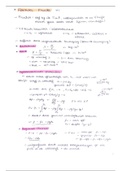
Kohlrausch's Law states that at infinite dilution, the molar conductivity of an electrolyte is the
sum of the individual contributions of its ions: Lambda_m0 = lambda_0+ + lambda_0- Applications:
- Determining the limiting molar conductivity of weak electrolytes. - Finding the transport numbers
of ions.
4. Graphical Representation
Graphs help visualize how molar conductivity changes with concentration: - Strong electrolytes:
Lambda_m vs. √C is a straight line with a small negative slope. - Weak electrolytes: Lambda_m
increases sharply with dilution due to increasing ionization.
5. Applications of Limiting Molar Conductivity
1. Determining the conductance of individual ions. 2. Estimating the degree of ionization of weak
electrolytes. 3. Calculating the dissociation constant (Ka) of weak acids and bases.
6. Conclusion
Limiting molar conductivity provides crucial insights into ion behavior at infinite dilution. It
plays a key role in electrochemistry, helping in the study of electrolytes and their properties.
1. Introduction
Limiting molar conductivity (Lambda_m0) is the molar conductivity of an electrolyte at infinite
dilution, where ion-ion interactions are negligible. It helps in understanding electrolyte behavior
and calculating ion conductance.
2. Concept of Limiting Molar Conductivity
At infinite dilution, the ions are completely dissociated and free to move, leading to their maximum
possible conductivity. - Strong electrolytes: Lambda_m increases slightly with dilution and
approaches a constant value at infinite dilution. - Weak electrolytes: Lambda_m increases
significantly due to greater ionization.
3. Kohlrausch’s Law
Kohlrausch's Law states that at infinite dilution, the molar conductivity of an electrolyte is the
sum of the individual contributions of its ions: Lambda_m0 = lambda_0+ + lambda_0- Applications:
- Determining the limiting molar conductivity of weak electrolytes. - Finding the transport numbers
of ions.
4. Graphical Representation
Graphs help visualize how molar conductivity changes with concentration: - Strong electrolytes:
Lambda_m vs. √C is a straight line with a small negative slope. - Weak electrolytes: Lambda_m
increases sharply with dilution due to increasing ionization.
5. Applications of Limiting Molar Conductivity
1. Determining the conductance of individual ions. 2. Estimating the degree of ionization of weak
electrolytes. 3. Calculating the dissociation constant (Ka) of weak acids and bases.
6. Conclusion
Limiting molar conductivity provides crucial insights into ion behavior at infinite dilution. It
plays a key role in electrochemistry, helping in the study of electrolytes and their properties.