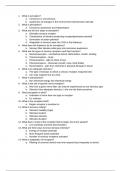
1. What is sensation?
a. Conscious or unconscious
b. Awareness of changes in the environment (internal and external)
2. What is perception?
a. Conscious awareness and interpretation
3. What are the four steps to sensation?
a. Stimulate sensory receptor
b. Transduction of stimulus producing receptor/generator potential
c. Generation of action potential
d. Integration of sensory input into CNS to the thalamus
4. What does the thalamus do for sensations?
a. Sensory filter decides what goes into conscious awareness
5. What are the types of sensory receptors and their function?
a. Mechanoreceptor - mechanical stimuli, deformation, stretch, binding
b. Thermoreceptors - temp
c. Photoreceptors - light to retina of eye
d. Chemoreceptors - chemicals (mouth, nose, body fluids)
e. Nocireceptors - pain from chemical or physical damage to tissue
6. What is an adequate stimulus?
a. The type of stimulus to which a sensory receptor responds best
b. Can only respond one at a time
7. What is transduction?
a. Non electrical energy into electrical energy
8. What is the law of specific nerve energies?
a. Info from a given nerve fiber can only be experienced as one stimulus type
b. Stimulus from adequate stimulus i s the one the brain perceives
9. Most perception is what?
a. Activation of more than one type or receptor
b. Ex. wetness
10. What is the receptive field?
a. Region receptor is sensitive to
11. What is sensory coding?
a. Stimulus modality (type)
b. Stimulus location
c. Stimulus intensity
d. Stimulus duration
12. What does it mean if the receptive field is larger and more spread?
a. Les sensitivity and less discrimination
13. What are three ways to know stimulus intensity?
a. Energy of receptor potential
b. More frequent action potential
c. Number of sensory receptors activated
14. What is adaptation of receptors?
a. Filtering of common stimuli over time respond less frequently to stimuli
a. Conscious or unconscious
b. Awareness of changes in the environment (internal and external)
2. What is perception?
a. Conscious awareness and interpretation
3. What are the four steps to sensation?
a. Stimulate sensory receptor
b. Transduction of stimulus producing receptor/generator potential
c. Generation of action potential
d. Integration of sensory input into CNS to the thalamus
4. What does the thalamus do for sensations?
a. Sensory filter decides what goes into conscious awareness
5. What are the types of sensory receptors and their function?
a. Mechanoreceptor - mechanical stimuli, deformation, stretch, binding
b. Thermoreceptors - temp
c. Photoreceptors - light to retina of eye
d. Chemoreceptors - chemicals (mouth, nose, body fluids)
e. Nocireceptors - pain from chemical or physical damage to tissue
6. What is an adequate stimulus?
a. The type of stimulus to which a sensory receptor responds best
b. Can only respond one at a time
7. What is transduction?
a. Non electrical energy into electrical energy
8. What is the law of specific nerve energies?
a. Info from a given nerve fiber can only be experienced as one stimulus type
b. Stimulus from adequate stimulus i s the one the brain perceives
9. Most perception is what?
a. Activation of more than one type or receptor
b. Ex. wetness
10. What is the receptive field?
a. Region receptor is sensitive to
11. What is sensory coding?
a. Stimulus modality (type)
b. Stimulus location
c. Stimulus intensity
d. Stimulus duration
12. What does it mean if the receptive field is larger and more spread?
a. Les sensitivity and less discrimination
13. What are three ways to know stimulus intensity?
a. Energy of receptor potential
b. More frequent action potential
c. Number of sensory receptors activated
14. What is adaptation of receptors?
a. Filtering of common stimuli over time respond less frequently to stimuli