Summary #5 constructivism & PBL
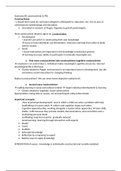
Constructivism
= a broad term (used by curriculum designers, philosophers, educators, etc.) for an area in
contemporary epistemology and education.
Grounded in research of Piaget, Vygotsky & gestalt psychologists.
Most constructivist theories agree on 2 central ideas
1. Psychological
= Learners are active in constructing their own knowledge
focus on how individuals use information, resources and help from other to build
mental models
2. Social
= Social interactions are important in the knowledge construction process
learning increases ability to participate in culturally meaningful acts.
o First wave constructivism/solo constructivism/cognitive constructivism
emphasis is on central idea 1; individual makes meaningful cognitive structures. Internal
psychological life is the focus.
Closely related to Piaget: environment is an important factor in development, but did
not believe social interaction for changing thinking
Radical constructivism? We can never know objective reality/truth
o Second wave constructivism
putting learning in social and cultural context shape individual development & learning
Closely related to Vygotsky: social constructivist
Appropriation: being able to reason, act and participate using cultural tools.
Important concepts:
- Zone of proximal development: area in which a child can solve a problem with help
(scaffolding) of a peer/adult culture and cognition shape each other.
- Cognitive apprenticeship: working alongside a master/other apprentice learn skills,
trades, crafts because they provide models, demonstrations, and corrections and a
motivating personal bond.
- Scaffolding: help from teacher, gradually reduced.
- Social learning: learning through interaction with experts
Model
Coach
Scaffold
Articulate knowledge
Reflection by comparing to expert
Explore ways to apply knowledge
INTEGRATION of waves: knowledge is individually constructed and socially mediated.
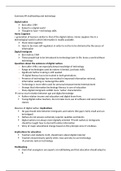
Constructivism
= a broad term (used by curriculum designers, philosophers, educators, etc.) for an area in
contemporary epistemology and education.
Grounded in research of Piaget, Vygotsky & gestalt psychologists.
Most constructivist theories agree on 2 central ideas
1. Psychological
= Learners are active in constructing their own knowledge
focus on how individuals use information, resources and help from other to build
mental models
2. Social
= Social interactions are important in the knowledge construction process
learning increases ability to participate in culturally meaningful acts.
o First wave constructivism/solo constructivism/cognitive constructivism
emphasis is on central idea 1; individual makes meaningful cognitive structures. Internal
psychological life is the focus.
Closely related to Piaget: environment is an important factor in development, but did
not believe social interaction for changing thinking
Radical constructivism? We can never know objective reality/truth
o Second wave constructivism
putting learning in social and cultural context shape individual development & learning
Closely related to Vygotsky: social constructivist
Appropriation: being able to reason, act and participate using cultural tools.
Important concepts:
- Zone of proximal development: area in which a child can solve a problem with help
(scaffolding) of a peer/adult culture and cognition shape each other.
- Cognitive apprenticeship: working alongside a master/other apprentice learn skills,
trades, crafts because they provide models, demonstrations, and corrections and a
motivating personal bond.
- Scaffolding: help from teacher, gradually reduced.
- Social learning: learning through interaction with experts
Model
Coach
Scaffold
Articulate knowledge
Reflection by comparing to expert
Explore ways to apply knowledge
INTEGRATION of waves: knowledge is individually constructed and socially mediated.