Organic chemistry
a) Introduction
4.1- a hydrocarbon is a compound of hydrogen and carbon only
4.2-
The Molecular formula shows how many of each type of atom we have in a molecule of a
compound. E.g., C4H8
The Empirical formula shows the simplest whole number ratio of atoms present in a compound. E.g.,
C2H6 CH3
The General formula shows the formula for a family of compounds (a ‘homologous series’) in terms
of n carbon atoms. E.g., CnH2n
The Structural formula shows the atoms and how they are bonded together. E.g.,
CH3CH = CHCH3
The Displayed formula shows all the atoms and all the bonds, therefore showing how they are
arranged in the molecule. E.g.,
4.3-
- A functional group is an atom or a group of atoms that determine the chemical properties of a compound.
For example, the functional group of an alcohol is the -OH group.
-Isomers are molecules with the same molecular formula but with a different structure.
- A Homologous series is a group of substances with:
the same general formula.
similar chemical properties because they have the same functional group.
a trend (graduation) in physical properties.
4.4-
1. Meth- 4. But-
2. Eth- 5. Pent-
3. Prop- 6. Hex-
4.5-
4.6-
In a substitution reaction an atom or group of atoms is replaced by a different atom or group of atoms.
An addition reaction occurs when an atom or group of atoms is added to a molecule without taking anything
away.
A combustion reaction is another way to say ‘burning’ and is a reaction with oxygen. Combustion of
hydrocarbons with excess oxygen gives the products water and carbon dioxide, and also releases heat energy
(exothermic reaction).
b) Crude oil
4.7- Crude oil is a mixture of hydrocarbons
4.8-
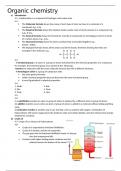
Crude oil is separated by fractional distillation.
Crude oil is heated, and the oil evaporates.
The gas goes into the fractional distillation tower. As the gas
rises the temperature falls.
Fractions with higher boiling points condense and are
collected nearer the bottom of the tower.
a) Introduction
4.1- a hydrocarbon is a compound of hydrogen and carbon only
4.2-
The Molecular formula shows how many of each type of atom we have in a molecule of a
compound. E.g., C4H8
The Empirical formula shows the simplest whole number ratio of atoms present in a compound. E.g.,
C2H6 CH3
The General formula shows the formula for a family of compounds (a ‘homologous series’) in terms
of n carbon atoms. E.g., CnH2n
The Structural formula shows the atoms and how they are bonded together. E.g.,
CH3CH = CHCH3
The Displayed formula shows all the atoms and all the bonds, therefore showing how they are
arranged in the molecule. E.g.,
4.3-
- A functional group is an atom or a group of atoms that determine the chemical properties of a compound.
For example, the functional group of an alcohol is the -OH group.
-Isomers are molecules with the same molecular formula but with a different structure.
- A Homologous series is a group of substances with:
the same general formula.
similar chemical properties because they have the same functional group.
a trend (graduation) in physical properties.
4.4-
1. Meth- 4. But-
2. Eth- 5. Pent-
3. Prop- 6. Hex-
4.5-
4.6-
In a substitution reaction an atom or group of atoms is replaced by a different atom or group of atoms.
An addition reaction occurs when an atom or group of atoms is added to a molecule without taking anything
away.
A combustion reaction is another way to say ‘burning’ and is a reaction with oxygen. Combustion of
hydrocarbons with excess oxygen gives the products water and carbon dioxide, and also releases heat energy
(exothermic reaction).
b) Crude oil
4.7- Crude oil is a mixture of hydrocarbons
4.8-
Crude oil is separated by fractional distillation.
Crude oil is heated, and the oil evaporates.
The gas goes into the fractional distillation tower. As the gas
rises the temperature falls.
Fractions with higher boiling points condense and are
collected nearer the bottom of the tower.