

Kolb - chapter 9
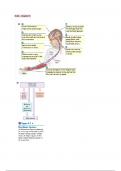
, ● Motor system = parts of the nervous system that take part mostly in producing
movement and for the spinal-cord neural circuits that issue commands to muscles
through the peripheral nerves
The neocortex : initiating movement
Producing movement
1. (posterior to the central fissure), the posterior cortex specifies movement goals and
sends sensory information from vision, touch and hearing into frontal regions via multiple
routes
a. More direct routes prompt the primary motor cortex to execute relatively
automatic movements
b. Conscious control movements take indirect routes through temporal and frontal
cortex
2. On instructions from the posterior cortex the prefrontal cortex generates plans for
movements that it passes long to the premotor and motor cortex
3. The premotor cortex (anterior to M1) houses a movement repertoire = lexicon, that
recognizes movements and selects similar/different actions
a. The premotor area, corresponding to Brodmann’s area 6, includes a ventral
region and a dorsal region called the supplementary motor cortex
4. The lexicon of the primary motor cortex (M1/ Brodmann's area 4)consists of more
elementary movements than the premotor lexicon ⇒ including hand and mouth
movements
● When a movement goal arises in posterior cortex there are two routes for action
● Simple movement = premotor + motor cortex
● Planning required = temporal and PFC make decisions and premotor +motor execute
, ● When a participant taps a finger, blood flow increases are limited to primary
somatosensory and motor cortices
● When sequence of finger movement included, blood flow increases in premotor cortex
as well
● When the participant uses a finger to navigate a maze → blood flow increases in PFC
and parietal and temporal cortex regions
Mapping the motor cortex using electrical stimulation
● Homunculus of the motor cortex → M1
● Secondary homunculus in supplementary motor cortex/area 6
● Motor homunculus is upside down relative to the actual body
● Feet located dorsally within the central fissure and head located ventrally above lateral
fissure
● Disproportionate sizes of body parts compared with their sizes in the actual body
○ Reflect the precise motor movements in hands, finers, lips and tongue
○ Parts of the body which we have broader motor control over have a smaller
representation in the motor cortex
● Arrangement of body parts different from actual body
Multiple representations in the motor cortex
● There may be as many as 10 homunculi within the motor and premotor cortices, and
parts of the homunculi are not arranged as simply as Penfield sketched them
● Ex. finger movements can be obtained from many points
● Ex. many locations from which finger movements are obtained also elicit movements in
other body parts
Natural movement categories
, ● Electrical stimulation elicits ethological categories of movement = movements used in
everyday activities
● Stimulation that causes the hand to move to the mouth, for example, also causes the
digits to close with the forefinger positioned against the thumb, the forearm supinated
(turned upward), and the wrist flexed such that the grip is aimed at the mouth
○ Electrical stimulation that results in the hand coming to the mouth always recruits
that movement, but in a variety of ways depending on the hand’s starting point
● Movement categories evoked by stimulation lack the flexibility of typical movement
● If stimulation continues after the hand has reached the mouth, the hand remains there
for the duration of the stimulation
● Cortical locations in premotor and motor cortex = Each region represents three types of
organization: the body part to be moved, the spatial location to which the movement is
directed, and the movement’s function
● Motor representation shows that many cortical maps of the body exist, but each map
represents
○ A different action
○ The part of the space in which an action is to take place
○ That action’s intended function
● Certain movement types cluster together relative to the part of the motor cortex from
which they are elicited
● Graziano’s topography is consistent with Penfield’s map and with the idea that
whole-body movements are represented in the premotor cortex and more discrete
movements in the motor cortex
Visual-parietal-motor connections
● Motor cortex not the only region that evokes movement
● Movements can be elicited by electrically stimulating the parietal cortex
● Parietal topography mirrors the motor homunculus
● Anatomical studies of the relationships between the topographical regions of the motor
cortex and the matching parietal regions show that they have dense anatomical
connections
● Motor and parietal cortex topographical regions → producing movement
○ To perform a reaching movement, visual/somatosensory/auditory information
about a target must be sent to the motor cortex
○ To guide reaching to a target visual cortex has to identify location and the object
itself (extrinsic and intrinsic properties)
○ Based on information about object location, the visual cortex instructs the parietal
arm region about the object’s location and the hand region about how to shape
the digits to grasp the object
● Parietal regions = sensory receptors on the body that will be activated when the object is
contacted
● Reach and grasp regions of the parietal cortex connect to reach and grasp regions of the
motor cortex = produce movements over descending pathways to the spinal cord
● Visual to parietal cortex to motor cortex = dual pathway
, ● Motor system = parts of the nervous system that take part mostly in producing
movement and for the spinal-cord neural circuits that issue commands to muscles
through the peripheral nerves
The neocortex : initiating movement
Producing movement
1. (posterior to the central fissure), the posterior cortex specifies movement goals and
sends sensory information from vision, touch and hearing into frontal regions via multiple
routes
a. More direct routes prompt the primary motor cortex to execute relatively
automatic movements
b. Conscious control movements take indirect routes through temporal and frontal
cortex
2. On instructions from the posterior cortex the prefrontal cortex generates plans for
movements that it passes long to the premotor and motor cortex
3. The premotor cortex (anterior to M1) houses a movement repertoire = lexicon, that
recognizes movements and selects similar/different actions
a. The premotor area, corresponding to Brodmann’s area 6, includes a ventral
region and a dorsal region called the supplementary motor cortex
4. The lexicon of the primary motor cortex (M1/ Brodmann's area 4)consists of more
elementary movements than the premotor lexicon ⇒ including hand and mouth
movements
● When a movement goal arises in posterior cortex there are two routes for action
● Simple movement = premotor + motor cortex
● Planning required = temporal and PFC make decisions and premotor +motor execute
, ● When a participant taps a finger, blood flow increases are limited to primary
somatosensory and motor cortices
● When sequence of finger movement included, blood flow increases in premotor cortex
as well
● When the participant uses a finger to navigate a maze → blood flow increases in PFC
and parietal and temporal cortex regions
Mapping the motor cortex using electrical stimulation
● Homunculus of the motor cortex → M1
● Secondary homunculus in supplementary motor cortex/area 6
● Motor homunculus is upside down relative to the actual body
● Feet located dorsally within the central fissure and head located ventrally above lateral
fissure
● Disproportionate sizes of body parts compared with their sizes in the actual body
○ Reflect the precise motor movements in hands, finers, lips and tongue
○ Parts of the body which we have broader motor control over have a smaller
representation in the motor cortex
● Arrangement of body parts different from actual body
Multiple representations in the motor cortex
● There may be as many as 10 homunculi within the motor and premotor cortices, and
parts of the homunculi are not arranged as simply as Penfield sketched them
● Ex. finger movements can be obtained from many points
● Ex. many locations from which finger movements are obtained also elicit movements in
other body parts
Natural movement categories
, ● Electrical stimulation elicits ethological categories of movement = movements used in
everyday activities
● Stimulation that causes the hand to move to the mouth, for example, also causes the
digits to close with the forefinger positioned against the thumb, the forearm supinated
(turned upward), and the wrist flexed such that the grip is aimed at the mouth
○ Electrical stimulation that results in the hand coming to the mouth always recruits
that movement, but in a variety of ways depending on the hand’s starting point
● Movement categories evoked by stimulation lack the flexibility of typical movement
● If stimulation continues after the hand has reached the mouth, the hand remains there
for the duration of the stimulation
● Cortical locations in premotor and motor cortex = Each region represents three types of
organization: the body part to be moved, the spatial location to which the movement is
directed, and the movement’s function
● Motor representation shows that many cortical maps of the body exist, but each map
represents
○ A different action
○ The part of the space in which an action is to take place
○ That action’s intended function
● Certain movement types cluster together relative to the part of the motor cortex from
which they are elicited
● Graziano’s topography is consistent with Penfield’s map and with the idea that
whole-body movements are represented in the premotor cortex and more discrete
movements in the motor cortex
Visual-parietal-motor connections
● Motor cortex not the only region that evokes movement
● Movements can be elicited by electrically stimulating the parietal cortex
● Parietal topography mirrors the motor homunculus
● Anatomical studies of the relationships between the topographical regions of the motor
cortex and the matching parietal regions show that they have dense anatomical
connections
● Motor and parietal cortex topographical regions → producing movement
○ To perform a reaching movement, visual/somatosensory/auditory information
about a target must be sent to the motor cortex
○ To guide reaching to a target visual cortex has to identify location and the object
itself (extrinsic and intrinsic properties)
○ Based on information about object location, the visual cortex instructs the parietal
arm region about the object’s location and the hand region about how to shape
the digits to grasp the object
● Parietal regions = sensory receptors on the body that will be activated when the object is
contacted
● Reach and grasp regions of the parietal cortex connect to reach and grasp regions of the
motor cortex = produce movements over descending pathways to the spinal cord
● Visual to parietal cortex to motor cortex = dual pathway


