

Carskadon : normal human sleep
➢ Sleep is a reversible behavioral state of perceptual disengagement from and
unresponsiveness to the environment
➢ Physiological and behavioral processes
➢ Accompanied by postural recumbency, behavioral quiescence, closed eyes, and all the
other indicators one commonly associated with sleeping
➢ Anomalies : sleepwalking, sleep talking, teeth grinding, and other physical activities,
intrusions of sleep—sleep itself, dream imagery, or muscle weakness
➢ Two states
○ REM
○ Non REM
➢ Alternate cyclically across
sleep episodes
➢ NREM sleep includes a
variably synchronous
cortical
electroencephalogram ⇒
low muscle tonus and
minimal psychological
activity
○ Four stages, roughly
parallel a depth of
sleep continuum
○ arousal thresholds
generally lowest in
stage 1 and highest
in stage 4 sleep
○ relatively inactive
yet actively
regulating brain in a
movable body
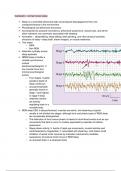
➢ REM sleep EEG is desynchronized, muscles are atonic, and dreaming is typical
○ usually is not divided into stages, although tonic and phasic types of REM sleep
are occasionally distinguished
○ The distinction of tonic versus phasic is based on short-lived events such as eye
movements that tend to occur in clusters separated by episodes of relative
quiescence
○ Sleep phasic activity ⇒ bursts of rapid eye movements, muscle twitches and
cardiorespiratory irregularities ⇒ associated with dreaming, vivid dream recall
○ Inhibition of spinal motor neurons by brainstem mechanisms mediates
suppression of postural motor tonus in REM sleep
○ an activated brain in a paralyzed body
,Sleep onset
➢ Onset under normal circumstances in normal adult humans is through NREM sleep
➢ The precise definition of the onset of sleep has been a topic of debate, primarily because
there is no single measure that is 100% clear-cut 100% of the time
➢ change in EEG pattern is not always associated with a person's perception of sleep, yet
even when subjects report that they are still awake, clear behavioral changes can
indicate the presence of sleep
Electromyogram
→ shows a gradual
diminution of muscle
tonus as sleep
approaches, but
rarely does a discrete
EMG change pinpoint
sleep onset
→ presleep lvl of
EMG, if the person is
relaxed can be
indistinguishable from
unequivocal sleep
,Electrooculogram
→ shows slow, possibly asynchronous eye movements as sleep approaches
→ usually disappear within several minutes of EEG changes
→ Occasionally, the onset of these slow eye movements coincides with a person's perceived
sleep onset; more often, subjects report that they are still awake
Electroencephalogram (EEG)
→ changes from a pattern of clear rhythmic alpha activity (particularly in occipital region) to a
low voltage mixed frequency pattern (stage 1 sleep)
→ This EEG change usually occurs seconds to minutes after the start of slow eye movements
→ the onset of a stage 1 EEG pattern may or may not coincide with perceived sleep onset
→ the K-complex or sleep spindle (stage 2 sleep) needed to acknowledge sleep onset
→ sleep onset often does not occur all at once; instead, there may be a wavering of vigilance
before “unequivocal” sleep ensues
→ difficult to accept a single variable as marking sleep onset
→ falling asleep is not a unitary event
→ a reasonable consensus exists that the EEG change to stage 1, usually heralded or
accompanied by slow eye movements, identifies the transition to sleep, provided that another
EEG sleep pattern does not intervene
Behavioral concomitants of sleep onset
Simple behavioral task
→ volunteers were asked to tap two switches alternatively at a steady pace ⇒ this simple
behavior continues after the onset of slow eye movements and may persist for several seconds
, after the EEG changes to a stage 1 sleep pattern ⇒ behavior then ceases, usually to recur only
after the EEG reverts to a waking pattern
Visual response
→ bright light placed in front of the subject’s eyes and the subject is asked to respond when a
light flash is seen by pressing a sensitive microswitch taped to the hand
→ When the EEG pattern is stage 1 or stage 2 sleep, the response is absent more than 85% of
the time
→ When volunteers are queried afterward, they report that they did not see the light flash, not
that they saw the flash but the response was inhibited
→ perceptual disengagement accompanies sleep onset
Auditory response
→ the response to sleep onset is examined with a series of tones played over earphones to a
subject who is instructed to respond each time a tone is heard
→ reaction times became longer in proximity to the onset of stage 1 sleep, and responses were
absent coincident with a change in EEG to unequivocal sleep
→ the return of the response after its sleep-related disappearance typically requires the
resumption of a waking EEG pattern
➢ Sleep is a reversible behavioral state of perceptual disengagement from and
unresponsiveness to the environment
➢ Physiological and behavioral processes
➢ Accompanied by postural recumbency, behavioral quiescence, closed eyes, and all the
other indicators one commonly associated with sleeping
➢ Anomalies : sleepwalking, sleep talking, teeth grinding, and other physical activities,
intrusions of sleep—sleep itself, dream imagery, or muscle weakness
➢ Two states
○ REM
○ Non REM
➢ Alternate cyclically across
sleep episodes
➢ NREM sleep includes a
variably synchronous
cortical
electroencephalogram ⇒
low muscle tonus and
minimal psychological
activity
○ Four stages, roughly
parallel a depth of
sleep continuum
○ arousal thresholds
generally lowest in
stage 1 and highest
in stage 4 sleep
○ relatively inactive
yet actively
regulating brain in a
movable body
➢ REM sleep EEG is desynchronized, muscles are atonic, and dreaming is typical
○ usually is not divided into stages, although tonic and phasic types of REM sleep
are occasionally distinguished
○ The distinction of tonic versus phasic is based on short-lived events such as eye
movements that tend to occur in clusters separated by episodes of relative
quiescence
○ Sleep phasic activity ⇒ bursts of rapid eye movements, muscle twitches and
cardiorespiratory irregularities ⇒ associated with dreaming, vivid dream recall
○ Inhibition of spinal motor neurons by brainstem mechanisms mediates
suppression of postural motor tonus in REM sleep
○ an activated brain in a paralyzed body
,Sleep onset
➢ Onset under normal circumstances in normal adult humans is through NREM sleep
➢ The precise definition of the onset of sleep has been a topic of debate, primarily because
there is no single measure that is 100% clear-cut 100% of the time
➢ change in EEG pattern is not always associated with a person's perception of sleep, yet
even when subjects report that they are still awake, clear behavioral changes can
indicate the presence of sleep
Electromyogram
→ shows a gradual
diminution of muscle
tonus as sleep
approaches, but
rarely does a discrete
EMG change pinpoint
sleep onset
→ presleep lvl of
EMG, if the person is
relaxed can be
indistinguishable from
unequivocal sleep
,Electrooculogram
→ shows slow, possibly asynchronous eye movements as sleep approaches
→ usually disappear within several minutes of EEG changes
→ Occasionally, the onset of these slow eye movements coincides with a person's perceived
sleep onset; more often, subjects report that they are still awake
Electroencephalogram (EEG)
→ changes from a pattern of clear rhythmic alpha activity (particularly in occipital region) to a
low voltage mixed frequency pattern (stage 1 sleep)
→ This EEG change usually occurs seconds to minutes after the start of slow eye movements
→ the onset of a stage 1 EEG pattern may or may not coincide with perceived sleep onset
→ the K-complex or sleep spindle (stage 2 sleep) needed to acknowledge sleep onset
→ sleep onset often does not occur all at once; instead, there may be a wavering of vigilance
before “unequivocal” sleep ensues
→ difficult to accept a single variable as marking sleep onset
→ falling asleep is not a unitary event
→ a reasonable consensus exists that the EEG change to stage 1, usually heralded or
accompanied by slow eye movements, identifies the transition to sleep, provided that another
EEG sleep pattern does not intervene
Behavioral concomitants of sleep onset
Simple behavioral task
→ volunteers were asked to tap two switches alternatively at a steady pace ⇒ this simple
behavior continues after the onset of slow eye movements and may persist for several seconds
, after the EEG changes to a stage 1 sleep pattern ⇒ behavior then ceases, usually to recur only
after the EEG reverts to a waking pattern
Visual response
→ bright light placed in front of the subject’s eyes and the subject is asked to respond when a
light flash is seen by pressing a sensitive microswitch taped to the hand
→ When the EEG pattern is stage 1 or stage 2 sleep, the response is absent more than 85% of
the time
→ When volunteers are queried afterward, they report that they did not see the light flash, not
that they saw the flash but the response was inhibited
→ perceptual disengagement accompanies sleep onset
Auditory response
→ the response to sleep onset is examined with a series of tones played over earphones to a
subject who is instructed to respond each time a tone is heard
→ reaction times became longer in proximity to the onset of stage 1 sleep, and responses were
absent coincident with a change in EEG to unequivocal sleep
→ the return of the response after its sleep-related disappearance typically requires the
resumption of a waking EEG pattern


