Diagnostic Clinical Clinical
What is it? History & Physical studies Diagnosis intervention Therapeutics Notes Pictures
Surgery EOR Topic List
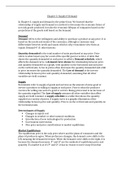
Preoperative 35%
Perioperative management and thoughtful decision-making are necessary to optimize
patient outcomes and experiences through the phases of care by aligning four elements:
● The right patient:
○ Thorough risk assessment
○ shared decisions
○ meticulous preoperative preparation
■ Marking patient with surgical marker pre-op
■ Time-out intraop
● The right operation:
○ The best treatment for the disease based upon the best available
evidence.
● The right provider:
○ A surgeon who has the training, skills, and judgment to safely and expertly
care for the patient’s condition.
● The right place:
Source: UWorld
○ A healthcare facility with the necessary resources.
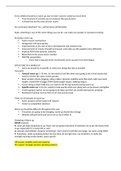
Postoperative 40%
fever
Cause of fever Presentation S/S Diagnostic Treatment
Atelectasis First 24 h Isolated fever; may have tachypnea, dyspnea, and/or tachycardia CXR Pulmonary toilet; admission if unsure or patient is ill appearing
Pneumonia 3–7 d Dyspnea, chest pain, productive cough, fever, and/or tachypnea CXR Admission and coverage with broad-spectrum antibiotics
Urinary tract infections 2–5 d Often none; possibly dysuria UA Admission if patient is elderly or toxic
Skin and soft tissue infection 5–10 d Increasing pain, erythema, swelling, drainage, and tenderness at incision site Examination, aspiration Drainage, packing, and outpatient antibiotic therapy
If not septic, warm soaks
Thrombophlebitis (septic and sterile) <3 d Warm, tender, and swollen vein None
If septic, surgical removal
Deep vein thrombosis 4–6 d Extremity swelling and pain US Admission and anticoagulation
Intra-abdominal abscesses 4–21 d Fever and elevated WBC count without specific focal abdominal findings CT Admission and antibiotic administration
Stool testing using
Pseudomembranous colitis Anytime Diarrhea Metronidazole or vancomycin
immunoassay
Peritonitis 4–21 d Tachycardia and abdominal pain, peritoneal irritation CT Admission and antibiotic administration
Pulmonary embolism Anytime Shortness of breath, tachypnea, and/or hemodynamic instability CT or VQ scan Admission and anticoagulation
Transfusion check for
Transfusion reaction First 24 h Fever, chills Admission depending on condition of patient
incompatibility
, Diagnostic Clinical Clinical
What is it? History & Physical studies Diagnosis intervention Therapeutics Notes Pictures
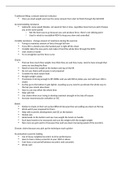
Gastrointestinal (15%)
Perioperative risk assessment and complications for the GI tract
Complications are common after abdominal surgeries, they range from N/V to complete bowel obstructions.
Complications include:
Incisional Hernia
What is it? presentation RF Diagnosis Treatment Iatrogenic C. diff infection
breakdown of - abd mass that enlarges -vertical or midline clinical or CT Surgical fixation What is it? presentation RF Diagnosis Treatment
prior fascial with Valsalva, can be incision scan of Antibiotic – diarrhea usually - elderly culture fidaxomicin or
closure delayed from surgery by abdomen associated starting shortly - debilitated vancomycin
months to years colitis after abx therapy -
caused by immunocompromis
Intussusception anaerobic ed
What is it? presentation RF Diagnosis Treatment bacteria - mult abx
Telescoping - abdominal pain -most commonly (MCly) in clinical or CT Surgical c.diff; - prolonged abx
of the - bilious vomiting pediatric age group scan of fixation fecal-oral - have IBD
intestines - distention - occur within first 2 postop abdomen transmission
onto weeks
themselves - usually after retroperitoneal
and pelvic surgeries
Mechanical Bowel Obstruction
- Anesthesia and surgical manipulation result in a decrease of the normal propulsive activity of the gut, or
postoperative ileus (for small bowel) and pseudo-obstruction (for large bowel).
- Normal GI peristalsis should return in 24 hrs after non abdominal operations. GI operations return ~48 hours
(see chart below for more on bowel obstruction)
Postoperative constipation and fecal impaction
- common with opioid use
Abdominal Compartment Syndrome
What is it? RF
Intra-abd HTN Aggressive resuscitation
Post Op Pancreatitis
(see below)
post op cholecystitis
- frequently acalculous, more common in males and progresses rapidly to gallbladder necrosis
, Diagnostic Clinical Clinical
What is it? History & Physical studies Diagnosis intervention Therapeutics Notes Pictures
Diagnoses
collection of
History
pus in the area
- intermittent pain with
around the
anorectal sitting, activity,
anus and
abscess defecation
rectum that is
- malodorous drainage
the result of an Imaging
- tenesmus (urge to
infection - suspicion for
defecate) I&D
deep/complex
most - itching and odor from
abscess do CT
common type rectum Clinical based on
with IV for any abscess
of anorectal - constipation secondary physical exam and
perianal contrast give abx if pt is:
abscess, in to pain digital rectal exam
-
abscess - if recurrent
the soft tissue (DRE)
abscesses, immunosuppres
surrounding PE
screen for sed
the anus with patient in SIMS
Crohn's - systemic
position, laying flat with
under the - MRI for fistula symptoms
leg bent
skin's surface - overlying
- erythema
ischiorectal in deep cellulitis
- induration I&D in the OR
abscess tissues, caused common abx
- fluctuance
by blocked - Amox/Clav
- tenderness
ducts or combo
- cipro and
metronidazole
tunnel that
Imaging - surgical correction
communicates History via fistulotomy
between the - anoscopy (preserve anal
- mild, cyclical perianal
anal canal and - MRI best for soft tissue sphincter function
pain
fistula the perianal differentiation and prevent
- pus and stool drainage recurrence)
skin. Often - fistulography: insertion of
forms through from skin opening - Seton for Crohn's
catheter w contrast radiographs patients (surgical
the bed of a - pruritus
from mult. angles thread left open)
previous ulcer
, Diagnostic Clinical Clinical
What is it? History & Physical studies Diagnosis intervention Therapeutics Notes Pictures
History
- chronic constipation
Physical
- Partial: rectal
incontinence
prolapse of - Complete: concentric
the rectum out rings of rectal mucosa Imaging
- ensure
of the body outside of anus a colonoscopy Surgery if
rectal prolapse clinical adequate fluid
two types: - protrusion of soft rectal or flexible incarcerated
sigmoidoscopy
and fiber intake
complete and mucosa reducible but
partial worsens on valsalva
- decreased anal tone
on DRE
- if can't be reduced and
is edematous, it's
incarcerated =
surgical emergency
History Acute:
longitudinal
- severe tearing pain - supportive (stool softener, sitz
tears in the anal - hematochezia (bright red baths, fiber rich diet)
mucosa distal to blood per rectum = BRBPR)
- NTG or CCB topical for muscle
the dentate line, with wiping
relaxation preventing spasm
anal fissure usually <5mm. - malodorous perianal N/A
drainage
- peri-anal itching Chronic:
Two types:
- referral to GI
primary or
Physical - botox
secondary
- increased sphincter tone - sphincterotomy
History
clinical MC
- associated with evacuation posterior
trauma
caused by midline
primary anal
evacuation N/A
fissure Physical
trauma - superficial lacerations
located in posterior or anterior
midline
Physical
caused by - multiple, non-healing
secondary anal
disease like fissures, wide and deep, N/A
fissure
Crohn's disease located on lateral sides of
anus
What is it? History & Physical studies Diagnosis intervention Therapeutics Notes Pictures
Surgery EOR Topic List
Preoperative 35%
Perioperative management and thoughtful decision-making are necessary to optimize
patient outcomes and experiences through the phases of care by aligning four elements:
● The right patient:
○ Thorough risk assessment
○ shared decisions
○ meticulous preoperative preparation
■ Marking patient with surgical marker pre-op
■ Time-out intraop
● The right operation:
○ The best treatment for the disease based upon the best available
evidence.
● The right provider:
○ A surgeon who has the training, skills, and judgment to safely and expertly
care for the patient’s condition.
● The right place:
Source: UWorld
○ A healthcare facility with the necessary resources.
Postoperative 40%
fever
Cause of fever Presentation S/S Diagnostic Treatment
Atelectasis First 24 h Isolated fever; may have tachypnea, dyspnea, and/or tachycardia CXR Pulmonary toilet; admission if unsure or patient is ill appearing
Pneumonia 3–7 d Dyspnea, chest pain, productive cough, fever, and/or tachypnea CXR Admission and coverage with broad-spectrum antibiotics
Urinary tract infections 2–5 d Often none; possibly dysuria UA Admission if patient is elderly or toxic
Skin and soft tissue infection 5–10 d Increasing pain, erythema, swelling, drainage, and tenderness at incision site Examination, aspiration Drainage, packing, and outpatient antibiotic therapy
If not septic, warm soaks
Thrombophlebitis (septic and sterile) <3 d Warm, tender, and swollen vein None
If septic, surgical removal
Deep vein thrombosis 4–6 d Extremity swelling and pain US Admission and anticoagulation
Intra-abdominal abscesses 4–21 d Fever and elevated WBC count without specific focal abdominal findings CT Admission and antibiotic administration
Stool testing using
Pseudomembranous colitis Anytime Diarrhea Metronidazole or vancomycin
immunoassay
Peritonitis 4–21 d Tachycardia and abdominal pain, peritoneal irritation CT Admission and antibiotic administration
Pulmonary embolism Anytime Shortness of breath, tachypnea, and/or hemodynamic instability CT or VQ scan Admission and anticoagulation
Transfusion check for
Transfusion reaction First 24 h Fever, chills Admission depending on condition of patient
incompatibility
, Diagnostic Clinical Clinical
What is it? History & Physical studies Diagnosis intervention Therapeutics Notes Pictures
Gastrointestinal (15%)
Perioperative risk assessment and complications for the GI tract
Complications are common after abdominal surgeries, they range from N/V to complete bowel obstructions.
Complications include:
Incisional Hernia
What is it? presentation RF Diagnosis Treatment Iatrogenic C. diff infection
breakdown of - abd mass that enlarges -vertical or midline clinical or CT Surgical fixation What is it? presentation RF Diagnosis Treatment
prior fascial with Valsalva, can be incision scan of Antibiotic – diarrhea usually - elderly culture fidaxomicin or
closure delayed from surgery by abdomen associated starting shortly - debilitated vancomycin
months to years colitis after abx therapy -
caused by immunocompromis
Intussusception anaerobic ed
What is it? presentation RF Diagnosis Treatment bacteria - mult abx
Telescoping - abdominal pain -most commonly (MCly) in clinical or CT Surgical c.diff; - prolonged abx
of the - bilious vomiting pediatric age group scan of fixation fecal-oral - have IBD
intestines - distention - occur within first 2 postop abdomen transmission
onto weeks
themselves - usually after retroperitoneal
and pelvic surgeries
Mechanical Bowel Obstruction
- Anesthesia and surgical manipulation result in a decrease of the normal propulsive activity of the gut, or
postoperative ileus (for small bowel) and pseudo-obstruction (for large bowel).
- Normal GI peristalsis should return in 24 hrs after non abdominal operations. GI operations return ~48 hours
(see chart below for more on bowel obstruction)
Postoperative constipation and fecal impaction
- common with opioid use
Abdominal Compartment Syndrome
What is it? RF
Intra-abd HTN Aggressive resuscitation
Post Op Pancreatitis
(see below)
post op cholecystitis
- frequently acalculous, more common in males and progresses rapidly to gallbladder necrosis
, Diagnostic Clinical Clinical
What is it? History & Physical studies Diagnosis intervention Therapeutics Notes Pictures
Diagnoses
collection of
History
pus in the area
- intermittent pain with
around the
anorectal sitting, activity,
anus and
abscess defecation
rectum that is
- malodorous drainage
the result of an Imaging
- tenesmus (urge to
infection - suspicion for
defecate) I&D
deep/complex
most - itching and odor from
abscess do CT
common type rectum Clinical based on
with IV for any abscess
of anorectal - constipation secondary physical exam and
perianal contrast give abx if pt is:
abscess, in to pain digital rectal exam
-
abscess - if recurrent
the soft tissue (DRE)
abscesses, immunosuppres
surrounding PE
screen for sed
the anus with patient in SIMS
Crohn's - systemic
position, laying flat with
under the - MRI for fistula symptoms
leg bent
skin's surface - overlying
- erythema
ischiorectal in deep cellulitis
- induration I&D in the OR
abscess tissues, caused common abx
- fluctuance
by blocked - Amox/Clav
- tenderness
ducts or combo
- cipro and
metronidazole
tunnel that
Imaging - surgical correction
communicates History via fistulotomy
between the - anoscopy (preserve anal
- mild, cyclical perianal
anal canal and - MRI best for soft tissue sphincter function
pain
fistula the perianal differentiation and prevent
- pus and stool drainage recurrence)
skin. Often - fistulography: insertion of
forms through from skin opening - Seton for Crohn's
catheter w contrast radiographs patients (surgical
the bed of a - pruritus
from mult. angles thread left open)
previous ulcer
, Diagnostic Clinical Clinical
What is it? History & Physical studies Diagnosis intervention Therapeutics Notes Pictures
History
- chronic constipation
Physical
- Partial: rectal
incontinence
prolapse of - Complete: concentric
the rectum out rings of rectal mucosa Imaging
- ensure
of the body outside of anus a colonoscopy Surgery if
rectal prolapse clinical adequate fluid
two types: - protrusion of soft rectal or flexible incarcerated
sigmoidoscopy
and fiber intake
complete and mucosa reducible but
partial worsens on valsalva
- decreased anal tone
on DRE
- if can't be reduced and
is edematous, it's
incarcerated =
surgical emergency
History Acute:
longitudinal
- severe tearing pain - supportive (stool softener, sitz
tears in the anal - hematochezia (bright red baths, fiber rich diet)
mucosa distal to blood per rectum = BRBPR)
- NTG or CCB topical for muscle
the dentate line, with wiping
relaxation preventing spasm
anal fissure usually <5mm. - malodorous perianal N/A
drainage
- peri-anal itching Chronic:
Two types:
- referral to GI
primary or
Physical - botox
secondary
- increased sphincter tone - sphincterotomy
History
clinical MC
- associated with evacuation posterior
trauma
caused by midline
primary anal
evacuation N/A
fissure Physical
trauma - superficial lacerations
located in posterior or anterior
midline
Physical
caused by - multiple, non-healing
secondary anal
disease like fissures, wide and deep, N/A
fissure
Crohn's disease located on lateral sides of
anus