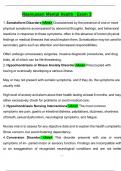
Rasmussen Mental Health - Exam 3
1. Somatoform Disorders <Ans> Characterized by the presence of one or more
physical symptoms accompanied by abnormal thoughts, feelings, and behavioral
reactions in response to these symptoms, often in the absence of known physical
findings or medical illnesses that would explain them. Somatization may be used for
secondary gains such as attention and decreased responsibilities.
Often undergo unnecessary surgeries, invasive diagnostic procedures, and drug
trials, all of which can be life-threatening.
2. Hypochondriasis or Illness Anxiety Disorder <Ans> Preoccupied with
having or eventually developing a serious illness.
May or may not present with somatic symptoms, and if they do, the symptoms are
usually mild.
High level of anxiety and alarm about their health lasting at least 6 months, and may
either excessively check for problems or avoid medical care.
3. Hypochondriasis Nursing Interventions <Ans> The most common
symptoms are pain, gastric or intestinal distress, palpitations, dizziness, shortness
of breath, sexual dysfunction, neurological symptoms, and fatigue.
Nurses role is to assess for any objective data and to explain the health complaints.
Show concern, but avoid fostering dependency.
4. Conversion Disorder <Ans> This disorder presents with one or more
symptoms of im- paired motor or sensory function. Findings are incompatible with
or an exaggeration of recognized neurological conditions and are not better
,explained by another mental or medical disorder.
Most common are blindness, deafness, paralysis, inability to talk. Symptoms are
beyond conscious control and are related directly to conflict .
5. Conversion Disorder Assessment <Ans> Rule out physiological causes for
symptoms or deficits.
Physical limitation or disability, feelings of guilt, anxiety, or frustration.
Low self esteem and feelings of inadequacy, unexpressed anger/guilt, conflict.
Secondary gain is attention, decrease in workload, decreased responsibilities.
6. Conversion Disorder Nursing Interventions <Ans> Encourage
independence in ADL's in a matter of fact manner.
,7. Factitious Disorder Imposed On Self or Munchausen Syndrome <Ans>
Refers to the deliberate fabrication of symptoms or self-injury, without obvious
external reward or gain. The patient identifies himself/herself in a deceptive manner
to others as sick or impaired. This disorder is further specified as a single episode
or recurrent.
8. Malingering <Ans> Different from Factitious disorder because there is an
external incentive such as missing work, evading criminal prosecution,
obtaining financial gain. Symptoms stop as soon as they gain what they
wanted.
9. Munchausen Nursing Interventions <Ans> - Explore the needs being met
by the client, assist with identification of alternative ways to meet needs.
- Teach the client to relate feelings and conflicts with the physical symptoms.
- Convey understanding that symptoms are real to the client, assure illness has been
ruled out.
- Explore the source of the anxiety, stimulate verbalization of the anxiety.
- Encourage relaxation techniques, use pain assessment scale implement pain
reduction.
- Report and assess any new physical complaint, provide positive feedback.
- Encourage diversional activities, encourage the client to recognize their emotions.
10. Dissociative Disorders <Ans> A disturbance in the normally well-integrated
continu- um of consciousness, memory, identity, and perception.
Dissociation is an unconscious defense mechanism to protect the individual against
overwhelming anxiety related to past trauma, and ranges from minor to severe in
presentation.
, Patients with dissociative disorders have intact reality testing, meaning they are not
delusional or hallucinating.
11. Dissociative Fugue <Ans> The patient in a fugue state frequently
relocates and assumes a new identity while not recalling previous identity or
places previously inhabited.
The distracters are more consistent with paranoid schizophrenia, generalized anx-
iety disorder, or bipolar disorder. Head injury, posttraumatic stress disorder, or a
neurological disorder should also be considered.
12. Dissociative Amnesia <Ans> Related to a traumatic incident, and may be
accompa- nied by a fugue where the patient flees from their normal life to another
location and starts a new life. Gradually over time, memories of the original life may
be triggered. Patients can become confused and embarrassed when the amnesia
subsides and memory returns.
1. Somatoform Disorders <Ans> Characterized by the presence of one or more
physical symptoms accompanied by abnormal thoughts, feelings, and behavioral
reactions in response to these symptoms, often in the absence of known physical
findings or medical illnesses that would explain them. Somatization may be used for
secondary gains such as attention and decreased responsibilities.
Often undergo unnecessary surgeries, invasive diagnostic procedures, and drug
trials, all of which can be life-threatening.
2. Hypochondriasis or Illness Anxiety Disorder <Ans> Preoccupied with
having or eventually developing a serious illness.
May or may not present with somatic symptoms, and if they do, the symptoms are
usually mild.
High level of anxiety and alarm about their health lasting at least 6 months, and may
either excessively check for problems or avoid medical care.
3. Hypochondriasis Nursing Interventions <Ans> The most common
symptoms are pain, gastric or intestinal distress, palpitations, dizziness, shortness
of breath, sexual dysfunction, neurological symptoms, and fatigue.
Nurses role is to assess for any objective data and to explain the health complaints.
Show concern, but avoid fostering dependency.
4. Conversion Disorder <Ans> This disorder presents with one or more
symptoms of im- paired motor or sensory function. Findings are incompatible with
or an exaggeration of recognized neurological conditions and are not better
,explained by another mental or medical disorder.
Most common are blindness, deafness, paralysis, inability to talk. Symptoms are
beyond conscious control and are related directly to conflict .
5. Conversion Disorder Assessment <Ans> Rule out physiological causes for
symptoms or deficits.
Physical limitation or disability, feelings of guilt, anxiety, or frustration.
Low self esteem and feelings of inadequacy, unexpressed anger/guilt, conflict.
Secondary gain is attention, decrease in workload, decreased responsibilities.
6. Conversion Disorder Nursing Interventions <Ans> Encourage
independence in ADL's in a matter of fact manner.
,7. Factitious Disorder Imposed On Self or Munchausen Syndrome <Ans>
Refers to the deliberate fabrication of symptoms or self-injury, without obvious
external reward or gain. The patient identifies himself/herself in a deceptive manner
to others as sick or impaired. This disorder is further specified as a single episode
or recurrent.
8. Malingering <Ans> Different from Factitious disorder because there is an
external incentive such as missing work, evading criminal prosecution,
obtaining financial gain. Symptoms stop as soon as they gain what they
wanted.
9. Munchausen Nursing Interventions <Ans> - Explore the needs being met
by the client, assist with identification of alternative ways to meet needs.
- Teach the client to relate feelings and conflicts with the physical symptoms.
- Convey understanding that symptoms are real to the client, assure illness has been
ruled out.
- Explore the source of the anxiety, stimulate verbalization of the anxiety.
- Encourage relaxation techniques, use pain assessment scale implement pain
reduction.
- Report and assess any new physical complaint, provide positive feedback.
- Encourage diversional activities, encourage the client to recognize their emotions.
10. Dissociative Disorders <Ans> A disturbance in the normally well-integrated
continu- um of consciousness, memory, identity, and perception.
Dissociation is an unconscious defense mechanism to protect the individual against
overwhelming anxiety related to past trauma, and ranges from minor to severe in
presentation.
, Patients with dissociative disorders have intact reality testing, meaning they are not
delusional or hallucinating.
11. Dissociative Fugue <Ans> The patient in a fugue state frequently
relocates and assumes a new identity while not recalling previous identity or
places previously inhabited.
The distracters are more consistent with paranoid schizophrenia, generalized anx-
iety disorder, or bipolar disorder. Head injury, posttraumatic stress disorder, or a
neurological disorder should also be considered.
12. Dissociative Amnesia <Ans> Related to a traumatic incident, and may be
accompa- nied by a fugue where the patient flees from their normal life to another
location and starts a new life. Gradually over time, memories of the original life may
be triggered. Patients can become confused and embarrassed when the amnesia
subsides and memory returns.