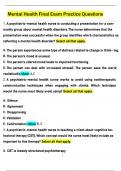
Mental Health Final Exam Practice Questions
1. A psychiatric-mental health nurse is conducting a presentation for a com-
munity group about mental health disorders. The nurse determines that the
presentation was successful when the group identifies which characteristics as
reflecting a mental health disorder? Select all that apply.
A. The person experiences some type of distress related to change in think- ing.
B. The person's mood is unusual
C. The person's altered mood leads to impaired functioning
D. The person can deal with increased stressE. The person sees the world
realistically <Ans> A,C
2. A psychiatric-mental health nurse works to avoid using nontherapeutic
communication techniques when engaging with clients. Which technique
would the nurse most likely avoid using? Select all that apply.
A. Silence
B. Agreement
C. Disapproving
D. Validation
E. Confrontation <Ans> B, C
3. A psychiatric-mental health nurse is teaching a client about cognitive be-
havioral therapy (CBT). Which concept would the nurse most likely include as
important to this therapy? Select all that apply.
A. CBT is loosely structured psychotherapy
,B. CBT focuses on identifying negative, inaccurate thoughts
C. CBT strives to help the client accurately interpret situations
D. CBT is based on global evaluation of human worth
E. CBT focuses on what is healthful and functional only <Ans> B, C
4. Patients with depression must exhibit either or to
be considered as having symptomatic requirements for diagnosis.
A. Suicidal behaviors or thoughts
B. Feelings of worthlessness
C. Loss of interest in activities
D. Fatigue
E. Depressed Mood <Ans> C, E
, 5. After learning about theories of depression, the instructor determines the
education was successful when the students identify which of the following
biological factors as playing a potential role in depression? Select all that apply.
A. Serotonergic activity
B. Negative distortions of thought
C. Inflammation
D. Genetic Risk
E. Social Environment <Ans> A, C, D
6. Which of the following would the nurse be alert for in a patient receiving
fluoxetine?
A. Hypertensive crisis
B. Sedation
C. Weight gain
D. Serotonin syndrome <Ans> D
7. When would you expect a patient with fluoxetine to be at highest risk to
develop serotonin syndrome?
A. In the first 72 hours of starting medication
B. In the first 10 days of starting medication
C. Once the medication reaches therapeutic levels (around week 2 of admin-
istration)
D. Serotonin Syndrome is equally likely to occur at any point throughout
treatment <Ans> A
1. A psychiatric-mental health nurse is conducting a presentation for a com-
munity group about mental health disorders. The nurse determines that the
presentation was successful when the group identifies which characteristics as
reflecting a mental health disorder? Select all that apply.
A. The person experiences some type of distress related to change in think- ing.
B. The person's mood is unusual
C. The person's altered mood leads to impaired functioning
D. The person can deal with increased stressE. The person sees the world
realistically <Ans> A,C
2. A psychiatric-mental health nurse works to avoid using nontherapeutic
communication techniques when engaging with clients. Which technique
would the nurse most likely avoid using? Select all that apply.
A. Silence
B. Agreement
C. Disapproving
D. Validation
E. Confrontation <Ans> B, C
3. A psychiatric-mental health nurse is teaching a client about cognitive be-
havioral therapy (CBT). Which concept would the nurse most likely include as
important to this therapy? Select all that apply.
A. CBT is loosely structured psychotherapy
,B. CBT focuses on identifying negative, inaccurate thoughts
C. CBT strives to help the client accurately interpret situations
D. CBT is based on global evaluation of human worth
E. CBT focuses on what is healthful and functional only <Ans> B, C
4. Patients with depression must exhibit either or to
be considered as having symptomatic requirements for diagnosis.
A. Suicidal behaviors or thoughts
B. Feelings of worthlessness
C. Loss of interest in activities
D. Fatigue
E. Depressed Mood <Ans> C, E
, 5. After learning about theories of depression, the instructor determines the
education was successful when the students identify which of the following
biological factors as playing a potential role in depression? Select all that apply.
A. Serotonergic activity
B. Negative distortions of thought
C. Inflammation
D. Genetic Risk
E. Social Environment <Ans> A, C, D
6. Which of the following would the nurse be alert for in a patient receiving
fluoxetine?
A. Hypertensive crisis
B. Sedation
C. Weight gain
D. Serotonin syndrome <Ans> D
7. When would you expect a patient with fluoxetine to be at highest risk to
develop serotonin syndrome?
A. In the first 72 hours of starting medication
B. In the first 10 days of starting medication
C. Once the medication reaches therapeutic levels (around week 2 of admin-
istration)
D. Serotonin Syndrome is equally likely to occur at any point throughout
treatment <Ans> A