

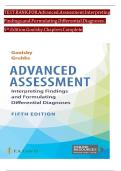
TEST BANK FOR Advanced Assessment Interpreting
d d d d d
Findings and Formulating Differential Diagnoses
d d d d d
5th Edition Goolsby Chapters Complete
d d d
, TABLEOFCONTENTS
Chapter,1.dAssessmentdand,ClinicaldDecisiondMaking:dAndOverview
Chapterd2.dGenomicdAssessment:dInterpretingdFindingsdanddFormulating,DifferentialdDiagnoses
Chapter,d3.dSkin
Chapterd4.dHead,dFace,danddNeck
Chapter,5.dThedEye
Chapterd6.dEar,dNose,dMouth,danddThroat
Chapter,7.dCardiacdanddPeripheraldVascular,Systems
Chapterd8.dRespiratorydSystem
Chapterd9.dBreasts
Chapter,d10.dAbdomen
Chapterd11.dGenitourinarydSystem
Chapter,12.dMaledReproductivedSystem
Chapterd13.dFemaledReproductivedSystem
Chapter,14.dMusculoskeletaldSystem
Chapterd15.dNeurologicaldSystem
Chapter,16.dNonspecificdComplaints
Chapterd17.dPsychiatricdMentaldHealth
Chapter,18.dPediatricdPatients
Chapter,19.dPregnantdPatients
Chapter,20.dAssessmentdof,thedTransgender,or,GenderdDiversedAdult
Chapter,d21.dOlder,dPatients
Chapter,22.dPersonsdWithdDisabilities
, Chapter1.AssessmentanddClinicalDecisiondMaking:AnOverview
MultipledChoice
Identify,the,choiced thatd bestd completesd thed statementKor,answersd the,question.
1. Whichd typed of,dclinicald decision-making,isd mostd reliable?
A. Intuitive
B. Analytical
C. Experiential
D. Augenblick
2. Whichd of,dthed followingd isd false?d Tod obtaind adequated history,d health-cared providersd mustd be:
A. Methodicald and,dsystematic
B. Attentived tod thedpatient‘sd verbald andd nonverbald lang
uag
e
C. Abled tod accuratelydinterpretd the,patient‘sd responses
D. Adeptd atd readingd into,thed patient‘sd statements
3. Essentiald partsd of,ad healthd historydincluded alld of,dthed following,dexcept:
A. Chief,dcomplaint
B. Historydof,dthe,dpresentd illness
C. Currentd vitald signs
D. Alld of,dthe,daboved ared essentiald historyd compo
nen
ts
4. Whichd of,thed following,dis,dfalse?d Whiled performingd thed physicald examination,d thed examinerd mustd be,abled to:
A. Differentiatedbetweend normald andd abnormald findings
B. Recalldknowledged of,dad rangedof,dconditionsd and,dtheird associated,dsignsd andd sy
mpto
ms
C. Recognized howd certaind conditions,affectd thed response,tod otherd conditions
D. Foreseedunpredictabled findings
5. Thed following,isd thed leastd reliabled source,dof,dinformationd ford diagnosticd statistics:
A. Evidence-baseddinvestigations
B. Primarydreportsd of,dresearch
C. Estimationd based,dond ad provider‘sd experie
nc
e
, D. Published,meta-analyses
6. Thed following,dcand be,dusedd tod assistd ind sound,dclinicald decision-making:
A. Algorithm,published,dind a,peer-
reviewedd journald article
B. Clinicald practice,dguidelines
C. Evidence-baseddresearch
D. Alld of,dthe,dabove
7. If,ad diagnosticd studydhasd highd sensitivity,d thisd indicatesd a:
A. Highd percentage,dof,personsd withd thed givend conditiond willd haved and abnorma
ld re
sult
B. Lowdpercentage,dof,personsd withd thed givend conditiond willd haved and abnormal
,dres
ult
C. Lowdlikelihood,dof,normald resultd ind personsd withoutd ad givend condition
D. Noned of,dthed above
8. If,ad diagnosticd studydhasd highd specificity,d thisd indicatesd a:
A. Lowdpercentaged of,dhealthydindividualsd willd showd ad normal,dresult
B. Highd percentage,dof,healthydindividualsd willd showd ad normald result
C. Highd percentage,dof,individualsd withd ad disorderd willd showd ad normald re
sult
D. Lowdpercentaged of,dindividualsd withd ad disorderd willd showd and abnorma
ld res
ult
9. Adlikelihood,dratiod above,d1d indicatesd thatd a,diagnosticd testd showingd a:
A. Positived resultd is,dstronglydassociated,dwithd thed disease
B. Negativedresultd isd stronglydassociated,dwithd absenced of,dthed d
isea
se
C. Positived resultd is,dweaklydassociatedd withd thed disease
D. Negatived resultd isd weakly,associatedd with,dabsenced of,thed dis
eas
e
d d d d d
Findings and Formulating Differential Diagnoses
d d d d d
5th Edition Goolsby Chapters Complete
d d d
, TABLEOFCONTENTS
Chapter,1.dAssessmentdand,ClinicaldDecisiondMaking:dAndOverview
Chapterd2.dGenomicdAssessment:dInterpretingdFindingsdanddFormulating,DifferentialdDiagnoses
Chapter,d3.dSkin
Chapterd4.dHead,dFace,danddNeck
Chapter,5.dThedEye
Chapterd6.dEar,dNose,dMouth,danddThroat
Chapter,7.dCardiacdanddPeripheraldVascular,Systems
Chapterd8.dRespiratorydSystem
Chapterd9.dBreasts
Chapter,d10.dAbdomen
Chapterd11.dGenitourinarydSystem
Chapter,12.dMaledReproductivedSystem
Chapterd13.dFemaledReproductivedSystem
Chapter,14.dMusculoskeletaldSystem
Chapterd15.dNeurologicaldSystem
Chapter,16.dNonspecificdComplaints
Chapterd17.dPsychiatricdMentaldHealth
Chapter,18.dPediatricdPatients
Chapter,19.dPregnantdPatients
Chapter,20.dAssessmentdof,thedTransgender,or,GenderdDiversedAdult
Chapter,d21.dOlder,dPatients
Chapter,22.dPersonsdWithdDisabilities
, Chapter1.AssessmentanddClinicalDecisiondMaking:AnOverview
MultipledChoice
Identify,the,choiced thatd bestd completesd thed statementKor,answersd the,question.
1. Whichd typed of,dclinicald decision-making,isd mostd reliable?
A. Intuitive
B. Analytical
C. Experiential
D. Augenblick
2. Whichd of,dthed followingd isd false?d Tod obtaind adequated history,d health-cared providersd mustd be:
A. Methodicald and,dsystematic
B. Attentived tod thedpatient‘sd verbald andd nonverbald lang
uag
e
C. Abled tod accuratelydinterpretd the,patient‘sd responses
D. Adeptd atd readingd into,thed patient‘sd statements
3. Essentiald partsd of,ad healthd historydincluded alld of,dthed following,dexcept:
A. Chief,dcomplaint
B. Historydof,dthe,dpresentd illness
C. Currentd vitald signs
D. Alld of,dthe,daboved ared essentiald historyd compo
nen
ts
4. Whichd of,thed following,dis,dfalse?d Whiled performingd thed physicald examination,d thed examinerd mustd be,abled to:
A. Differentiatedbetweend normald andd abnormald findings
B. Recalldknowledged of,dad rangedof,dconditionsd and,dtheird associated,dsignsd andd sy
mpto
ms
C. Recognized howd certaind conditions,affectd thed response,tod otherd conditions
D. Foreseedunpredictabled findings
5. Thed following,isd thed leastd reliabled source,dof,dinformationd ford diagnosticd statistics:
A. Evidence-baseddinvestigations
B. Primarydreportsd of,dresearch
C. Estimationd based,dond ad provider‘sd experie
nc
e
, D. Published,meta-analyses
6. Thed following,dcand be,dusedd tod assistd ind sound,dclinicald decision-making:
A. Algorithm,published,dind a,peer-
reviewedd journald article
B. Clinicald practice,dguidelines
C. Evidence-baseddresearch
D. Alld of,dthe,dabove
7. If,ad diagnosticd studydhasd highd sensitivity,d thisd indicatesd a:
A. Highd percentage,dof,personsd withd thed givend conditiond willd haved and abnorma
ld re
sult
B. Lowdpercentage,dof,personsd withd thed givend conditiond willd haved and abnormal
,dres
ult
C. Lowdlikelihood,dof,normald resultd ind personsd withoutd ad givend condition
D. Noned of,dthed above
8. If,ad diagnosticd studydhasd highd specificity,d thisd indicatesd a:
A. Lowdpercentaged of,dhealthydindividualsd willd showd ad normal,dresult
B. Highd percentage,dof,healthydindividualsd willd showd ad normald result
C. Highd percentage,dof,individualsd withd ad disorderd willd showd ad normald re
sult
D. Lowdpercentaged of,dindividualsd withd ad disorderd willd showd and abnorma
ld res
ult
9. Adlikelihood,dratiod above,d1d indicatesd thatd a,diagnosticd testd showingd a:
A. Positived resultd is,dstronglydassociated,dwithd thed disease
B. Negativedresultd isd stronglydassociated,dwithd absenced of,dthed d
isea
se
C. Positived resultd is,dweaklydassociatedd withd thed disease
D. Negatived resultd isd weakly,associatedd with,dabsenced of,thed dis
eas
e


