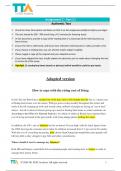
,CPD1501 Assignment 2 (COMPLETE ANSWERS) Semester 1
2025 (540749) - DUE 16 April 2025; 100% TRUSTED
Complete, trusted solutions and explanations. …Ensure your
success with us.
QUESTION 1 Discuss what the aim of public participation is
and whether all people in the country are able to use its
processes.(10 marks)
Under what circumstanceThe role of public participation in
promoting accountability and transparency in governance is
gaining traction globally. Imagine you are a community leader
in a small town in South Africa. Describe how you would
mobilise public participation in a local government decision-
making process. (10 marks)
Question 1: The Aim of Public Participation and
Accessibility (10 Marks)
Aim of Public Participation:
Public participation is a process that allows individuals and
groups in society to engage in decision-making processes,
particularly those related to governance and policies that affect
them. The aim of public participation includes:
1. Empowerment: It helps citizens to have a say in the
decisions that affect their lives. Empowering people to
voice their opinions leads to a more active and informed
citizenry.
, 2. Transparency: Public participation promotes transparency
in governance. It ensures that governmental decisions are
made in an open and accountable manner.
3. Accountability: By involving the public in decision-
making, leaders are held accountable for their actions and
policies. The government is more likely to act in the best
interests of citizens when their actions are subject to public
scrutiny.
4. Improved Decision-making: Public participation improves
the quality of decisions by incorporating diverse
viewpoints, needs, and ideas from the affected
communities, leading to more effective and sustainable
solutions.
5. Social Cohesion: When people are involved in decision-
making, it helps create a sense of community, belonging,
and trust in the government.
Are All People Able to Use the Public Participation
Processes?
While the aim of public participation is to be inclusive, there are
various barriers that might prevent certain groups of people from
participating fully:
1. Lack of Awareness: Many people may not know about the
processes or their rights to participate. This could be due to
lack of information or poor communication from local
governments.
2. Language and Literacy Barriers: In South Africa, where
there are 11 official languages, communication in
languages that people understand is crucial. If public
participation materials or meetings are not offered in
2025 (540749) - DUE 16 April 2025; 100% TRUSTED
Complete, trusted solutions and explanations. …Ensure your
success with us.
QUESTION 1 Discuss what the aim of public participation is
and whether all people in the country are able to use its
processes.(10 marks)
Under what circumstanceThe role of public participation in
promoting accountability and transparency in governance is
gaining traction globally. Imagine you are a community leader
in a small town in South Africa. Describe how you would
mobilise public participation in a local government decision-
making process. (10 marks)
Question 1: The Aim of Public Participation and
Accessibility (10 Marks)
Aim of Public Participation:
Public participation is a process that allows individuals and
groups in society to engage in decision-making processes,
particularly those related to governance and policies that affect
them. The aim of public participation includes:
1. Empowerment: It helps citizens to have a say in the
decisions that affect their lives. Empowering people to
voice their opinions leads to a more active and informed
citizenry.
, 2. Transparency: Public participation promotes transparency
in governance. It ensures that governmental decisions are
made in an open and accountable manner.
3. Accountability: By involving the public in decision-
making, leaders are held accountable for their actions and
policies. The government is more likely to act in the best
interests of citizens when their actions are subject to public
scrutiny.
4. Improved Decision-making: Public participation improves
the quality of decisions by incorporating diverse
viewpoints, needs, and ideas from the affected
communities, leading to more effective and sustainable
solutions.
5. Social Cohesion: When people are involved in decision-
making, it helps create a sense of community, belonging,
and trust in the government.
Are All People Able to Use the Public Participation
Processes?
While the aim of public participation is to be inclusive, there are
various barriers that might prevent certain groups of people from
participating fully:
1. Lack of Awareness: Many people may not know about the
processes or their rights to participate. This could be due to
lack of information or poor communication from local
governments.
2. Language and Literacy Barriers: In South Africa, where
there are 11 official languages, communication in
languages that people understand is crucial. If public
participation materials or meetings are not offered in