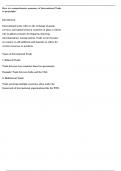
Here is a comprehensive summary of International Trade
in geography:
Introduction
International trade refers to the exchange of goods,
services, and capital between countries. It plays a critical
role in global economic development, fostering
interdependence among nations. Trade occurs because
no country is self-sufficient and depends on others for
certain resources or products.
Types of International Trade
1. Bilateral Trade:
Trade between two countries based on agreements.
Example: Trade between India and the USA.
2. Multilateral Trade:
Trade involving multiple countries, often under the
framework of international organizations like the WTO.
, Example: Trade within the European Union or through
free trade agreements.
3. Visible Trade:
Involves the exchange of physical goods (e.g., machinery,
food items).
4. Invisible Trade:
Involves the exchange of services (e.g., tourism, banking,
and IT services).
Factors Influencing International Trade
1. Natural Resources:
Availability of resources like minerals, oil, and
agricultural products influences trade.
Example: Oil-exporting countries like Saudi Arabia
dominate global energy trade.
2. Industrial Development:
Developed countries export manufactured goods, while
developing nations often export raw materials.
in geography:
Introduction
International trade refers to the exchange of goods,
services, and capital between countries. It plays a critical
role in global economic development, fostering
interdependence among nations. Trade occurs because
no country is self-sufficient and depends on others for
certain resources or products.
Types of International Trade
1. Bilateral Trade:
Trade between two countries based on agreements.
Example: Trade between India and the USA.
2. Multilateral Trade:
Trade involving multiple countries, often under the
framework of international organizations like the WTO.
, Example: Trade within the European Union or through
free trade agreements.
3. Visible Trade:
Involves the exchange of physical goods (e.g., machinery,
food items).
4. Invisible Trade:
Involves the exchange of services (e.g., tourism, banking,
and IT services).
Factors Influencing International Trade
1. Natural Resources:
Availability of resources like minerals, oil, and
agricultural products influences trade.
Example: Oil-exporting countries like Saudi Arabia
dominate global energy trade.
2. Industrial Development:
Developed countries export manufactured goods, while
developing nations often export raw materials.