HEARING AND BALANCE DISORDERS- 07/09/2022
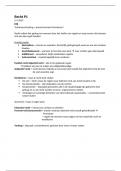
Hearing is conducted over 2 pathways: Air and bone
Otoscopic Examination:
Inspection: otoscope
Palpation: indirect/ with a pneumatic otoscope
To examine the external auditory canal and tympanic membrane, the otoscope should be held in the examiner RIGHT HAND, IN A PENCIL-HOLD POSITION, with the examiner’s
hand braced AGAINST patient’s face. [prevent going too far from ext. canal]
Reasons to examined external auditory:
- Discharge
- Inflammation
- Foreign body
Healthy tympanic membrane: pearly gray positioned obliquely at the base of the canal
Proper Otoscopic examination of the external auditory canal and tympanic membrane requires that the canal be free of large cerumen
If difficulty remove gently with warm water [No, if contraindicated]
Disease Definition Etiology/Patho S/S Labs/Diagnoses Nursing Interventions
Prevalence increases Deafness
HEARING LOSS with age Tinnitus -Talk pt in the less impaired ear , using
50% over the age of 70 “ringing ears” gestures, facial expressions, to help .
Presbycusis [Age related Inability to hear
hear. Loss] in group
Occurs in men more than Turning up tv
women vol.
Risk Factors As hearing loss
Family history of increases person may
experience:
sensorineural
a. Fatigue
, impairment b. Speech
Congenital deterioration
malformation of the c. Social isolation
cranial structure[ear] d. Indifference
Low birth weight e. withdrawal
[<1500 g]
Bacterial meningitis
Perforation of
tympanic membrane
Exposure to excessive
noise levels
Infection
Medications
Ototoxicity
Trauma
Tumors
2 Types:***
-Conductive
-Sensorineural
CONDUCTIVE HEARRING LOSS SENSORINEURAL HEARRING LOSS
Results from External ear disorder such as: Causes
Impacted cerumen [Foreign body] o Damage to cranial nerve VIII [ vestibulocochlear nerve]
Middle ear disorder:
Otitis Media
COMBINED HEARING Otosclerosis
LOSS ( C +S)
The efficient transmission of sound by air to the inner ear is interrupted
CONDITIONS OF THE MIDDLE EAR
o The middle ear consist of the tympanic membrane ( eardrum) and the three smallest bones of the body : Malleus , incus, stapes
Caused by:
Injury
Disease
, Aging process
Manifestations include: ear pain, pressure, fever , headache, conductive hearing loss and purulent or bloody drainage if perforation of the eardrum occurs
Risk Factors :
Middle Ear disorders:
Recurrent colds and otitis media
Enlarged adenoids
Trauma
Changes in air pressure ( scuva diving, flying)inner.
Disease Definition Etiology/Patho S/S Labs/Diagnoses Nursing Interventions
ACUTE OTITIS MEDIA Acute infection Caused : Vary severity of - If drainage-
Last less than 6 weeks Streptococcus infection antibiotic
MC Children pneumoniae Otalgia
Haemophilus Influenza Drainage Surgical:
Moraxella Catarrhalis Fever - Myringotomy/
Risk Factors Hearing loss Tympanotomy
Age ( younger than 12 months) Tympanic membrane
Chronic upper respirat. erythematous and
Infections often bulgin
Medical Conditions that
predispose to ear infections
Down Syndrome, cystic
fibrosis cleft palate
Chronic exposure to
secondhand cigarette smoke
Disease Definition Etiology/Patho S/S Labs/Diagnoses Nursing Interventions
OTOSCLEROSIS Involve 1 or both ears
Abnormal spongy bone,
around the oval window with
resulting fixation of the stapes
Hearing is conducted over 2 pathways: Air and bone
Otoscopic Examination:
Inspection: otoscope
Palpation: indirect/ with a pneumatic otoscope
To examine the external auditory canal and tympanic membrane, the otoscope should be held in the examiner RIGHT HAND, IN A PENCIL-HOLD POSITION, with the examiner’s
hand braced AGAINST patient’s face. [prevent going too far from ext. canal]
Reasons to examined external auditory:
- Discharge
- Inflammation
- Foreign body
Healthy tympanic membrane: pearly gray positioned obliquely at the base of the canal
Proper Otoscopic examination of the external auditory canal and tympanic membrane requires that the canal be free of large cerumen
If difficulty remove gently with warm water [No, if contraindicated]
Disease Definition Etiology/Patho S/S Labs/Diagnoses Nursing Interventions
Prevalence increases Deafness
HEARING LOSS with age Tinnitus -Talk pt in the less impaired ear , using
50% over the age of 70 “ringing ears” gestures, facial expressions, to help .
Presbycusis [Age related Inability to hear
hear. Loss] in group
Occurs in men more than Turning up tv
women vol.
Risk Factors As hearing loss
Family history of increases person may
experience:
sensorineural
a. Fatigue
, impairment b. Speech
Congenital deterioration
malformation of the c. Social isolation
cranial structure[ear] d. Indifference
Low birth weight e. withdrawal
[<1500 g]
Bacterial meningitis
Perforation of
tympanic membrane
Exposure to excessive
noise levels
Infection
Medications
Ototoxicity
Trauma
Tumors
2 Types:***
-Conductive
-Sensorineural
CONDUCTIVE HEARRING LOSS SENSORINEURAL HEARRING LOSS
Results from External ear disorder such as: Causes
Impacted cerumen [Foreign body] o Damage to cranial nerve VIII [ vestibulocochlear nerve]
Middle ear disorder:
Otitis Media
COMBINED HEARING Otosclerosis
LOSS ( C +S)
The efficient transmission of sound by air to the inner ear is interrupted
CONDITIONS OF THE MIDDLE EAR
o The middle ear consist of the tympanic membrane ( eardrum) and the three smallest bones of the body : Malleus , incus, stapes
Caused by:
Injury
Disease
, Aging process
Manifestations include: ear pain, pressure, fever , headache, conductive hearing loss and purulent or bloody drainage if perforation of the eardrum occurs
Risk Factors :
Middle Ear disorders:
Recurrent colds and otitis media
Enlarged adenoids
Trauma
Changes in air pressure ( scuva diving, flying)inner.
Disease Definition Etiology/Patho S/S Labs/Diagnoses Nursing Interventions
ACUTE OTITIS MEDIA Acute infection Caused : Vary severity of - If drainage-
Last less than 6 weeks Streptococcus infection antibiotic
MC Children pneumoniae Otalgia
Haemophilus Influenza Drainage Surgical:
Moraxella Catarrhalis Fever - Myringotomy/
Risk Factors Hearing loss Tympanotomy
Age ( younger than 12 months) Tympanic membrane
Chronic upper respirat. erythematous and
Infections often bulgin
Medical Conditions that
predispose to ear infections
Down Syndrome, cystic
fibrosis cleft palate
Chronic exposure to
secondhand cigarette smoke
Disease Definition Etiology/Patho S/S Labs/Diagnoses Nursing Interventions
OTOSCLEROSIS Involve 1 or both ears
Abnormal spongy bone,
around the oval window with
resulting fixation of the stapes