

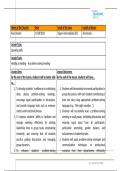
Name of the Teacher Date Level of the class Length of lesson
Ruan Venter 11/08/2024 Upper-intermediate (B2) 60 minutes
Lesson Type:
Speaking skills
Lesson Topic:
Hosting a meeting – A problem-solving meeting
Lesson Aims: Lesson Outcomes:
By the end of the lesson, students will be better able By the end of the lesson, students will have…
to…
1. To develop students’ confidence in contributing 1. Students will demonstrate increased participation in
ideas during problem-solving meetings, group discussions, with each student contributing at
encourage equal participation in discussions, least one idea using appropriate problem-solving
and provide language tools such as sentence language (e.g., “We might consider…”).
starters and functional phrases. 2. Students will successfully lead a problem-solving
2. To improve students’ ability to facilitate and meeting in small groups, facilitating discussions and
manage meetings effectively by rotating ensuring equal input from all participants,
leadership roles in group tasks, emphasizing particularly promoting gender balance and
inclusivity, and ensuring that all students inclusiveness in leadership roles.
practice guiding discussions and managing 3. Students will apply problem-solving strategies and
group dynamics. communication techniques to professional
3. To enhance students’ problem-solving scenarios from their departments, effectively
pg. 1 Lesson Plan 150823
, communication skills in professional contexts suggesting and negotiating solutions in English
by using real-life scenarios from their while considering both personal and workspace
respective departments and focusing on applications of the language.
practical language for suggesting, evaluating,
and agreeing on solutions in English.
Anticipated difficulties: Suggested solutions:
1. Since all students are from the same company 1. Create smaller groups where students feel more
and in different departments, some may feel comfortable sharing ideas. Encourage a round-
hesitant to contribute ideas, especially if they robin style discussion where everyone must
are not used to speaking up in meetings contribute at least one suggestion. Provide
sentence starters to help initiate participation (e.g.,
“One possible solution could be…”)
2. With only 5 women in a class of 12, the women 2. Rotate leadership roles in group activities to ensure
may feel outnumbered or less inclined to voice equal participation and assign both men and
their opinions in group discussions, especially in women as meeting facilitators. Create mixed-
a professional setting. gender pairs or small groups where women are
encouraged to take on leadership roles, fostering a
3. Students may have differing motivations for balanced dynamic. Additionally, try to highlight the
learning English, some are intrinsically importance of diverse perspectives in meetings to
motivated by personal growth, while others are create an inclusive environment for all voices
extrinsically driven by workplace requirements.
pg. 2 Lesson Plan 150823
, This can lead to varying levels of engagement
and focus during lessons. 3. Design activities that cater to both personal and
professional goals. For example, use real-life work
scenarios from their departments to solve
problems, while also allowing flexibility for
students to apply the language to their interests.
Emphasize both immediate, practical applications
in their jobs and the long-term personal benefits of
improving communication skills. This approach will
help bridge the gap between different motivations
and keep all students engaged.
Target Language Analysis
Include an analysis of the target language you will present for your learners to complete the ‘real-life’ task you
have chosen.
● Choose your set phrases/expressions (8-12 is appropriate).
● Analyse them in a paragraph or table by including the meaning (if applicable), function, features of
pronunciation (speaking), or spelling and punctuation (writing). Plus, anything else you think is relevant.
Language item Function What will you What will you teach Concept Checking
teach about the about the Questions
form? pronunciation?
1. Let's get started Beginning the Imperative form: Emphasize the When should the
pg. 3 Lesson Plan 150823
Ruan Venter 11/08/2024 Upper-intermediate (B2) 60 minutes
Lesson Type:
Speaking skills
Lesson Topic:
Hosting a meeting – A problem-solving meeting
Lesson Aims: Lesson Outcomes:
By the end of the lesson, students will be better able By the end of the lesson, students will have…
to…
1. To develop students’ confidence in contributing 1. Students will demonstrate increased participation in
ideas during problem-solving meetings, group discussions, with each student contributing at
encourage equal participation in discussions, least one idea using appropriate problem-solving
and provide language tools such as sentence language (e.g., “We might consider…”).
starters and functional phrases. 2. Students will successfully lead a problem-solving
2. To improve students’ ability to facilitate and meeting in small groups, facilitating discussions and
manage meetings effectively by rotating ensuring equal input from all participants,
leadership roles in group tasks, emphasizing particularly promoting gender balance and
inclusivity, and ensuring that all students inclusiveness in leadership roles.
practice guiding discussions and managing 3. Students will apply problem-solving strategies and
group dynamics. communication techniques to professional
3. To enhance students’ problem-solving scenarios from their departments, effectively
pg. 1 Lesson Plan 150823
, communication skills in professional contexts suggesting and negotiating solutions in English
by using real-life scenarios from their while considering both personal and workspace
respective departments and focusing on applications of the language.
practical language for suggesting, evaluating,
and agreeing on solutions in English.
Anticipated difficulties: Suggested solutions:
1. Since all students are from the same company 1. Create smaller groups where students feel more
and in different departments, some may feel comfortable sharing ideas. Encourage a round-
hesitant to contribute ideas, especially if they robin style discussion where everyone must
are not used to speaking up in meetings contribute at least one suggestion. Provide
sentence starters to help initiate participation (e.g.,
“One possible solution could be…”)
2. With only 5 women in a class of 12, the women 2. Rotate leadership roles in group activities to ensure
may feel outnumbered or less inclined to voice equal participation and assign both men and
their opinions in group discussions, especially in women as meeting facilitators. Create mixed-
a professional setting. gender pairs or small groups where women are
encouraged to take on leadership roles, fostering a
3. Students may have differing motivations for balanced dynamic. Additionally, try to highlight the
learning English, some are intrinsically importance of diverse perspectives in meetings to
motivated by personal growth, while others are create an inclusive environment for all voices
extrinsically driven by workplace requirements.
pg. 2 Lesson Plan 150823
, This can lead to varying levels of engagement
and focus during lessons. 3. Design activities that cater to both personal and
professional goals. For example, use real-life work
scenarios from their departments to solve
problems, while also allowing flexibility for
students to apply the language to their interests.
Emphasize both immediate, practical applications
in their jobs and the long-term personal benefits of
improving communication skills. This approach will
help bridge the gap between different motivations
and keep all students engaged.
Target Language Analysis
Include an analysis of the target language you will present for your learners to complete the ‘real-life’ task you
have chosen.
● Choose your set phrases/expressions (8-12 is appropriate).
● Analyse them in a paragraph or table by including the meaning (if applicable), function, features of
pronunciation (speaking), or spelling and punctuation (writing). Plus, anything else you think is relevant.
Language item Function What will you What will you teach Concept Checking
teach about the about the Questions
form? pronunciation?
1. Let's get started Beginning the Imperative form: Emphasize the When should the
pg. 3 Lesson Plan 150823


