Global Health Nursing: Chapter 16
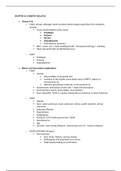
Framework for global health nursing assessment
• Patterns of care
• Demographic transitions
• Epidemiologic transitions
Patterns of care
• Place or the lived environment
• what part is urban, rural or country? How does it influence their risk for disease
• Perceptions of health care
• do they believe in western medicine? Who do they trust? What do they use for
healing? If community doesn’t know nurse or trust the nurse, they’re not going
to seek them for treatment. Nurse will not be effective. What’s their attitude
toward healthcare, providers, women?
• Privilege or inequality
• Living conditions, access to food and clean water? Safety in homes. Quality and
quantity of education (for girls).
• Population health differences (demographics)
• Looks at birth rates. How many kids are dying. Life expectancy, diseases that
occur within that community.
• Providers
• Who provides health care in that community and what are they differences in
their licensure and expertise.
, • Procedures and interventions
• What do they do in terms of primary care, preventions?
• Partnerships
• What are the partnerships they have? Like in certain countries, there’s district
hospitals where everyone can go to. than there’s private hospitals where ppl
with money will go for care.
• Politics and policies
• Make a difference in terms of who’s providing the care.
• Personal insight of health care workers
• What does that community tell you, what they value, cultural beliefs and how
seek care?
Demographic Transitions
• Population increase or decrease (births vs. deaths)
• How many deaths and births? Are they geriatric or young moms? Where do they
receive care from?
• Migrations (e.g., rural to urban)
• Demographic transition theory
• Slow change in high-income countries (centuries)
• “Long life, small family”
• Fast change in low-income countries (decades)
• “Short life, large family”
Framework for global health nursing assessment
• Patterns of care
• Demographic transitions
• Epidemiologic transitions
Patterns of care
• Place or the lived environment
• what part is urban, rural or country? How does it influence their risk for disease
• Perceptions of health care
• do they believe in western medicine? Who do they trust? What do they use for
healing? If community doesn’t know nurse or trust the nurse, they’re not going
to seek them for treatment. Nurse will not be effective. What’s their attitude
toward healthcare, providers, women?
• Privilege or inequality
• Living conditions, access to food and clean water? Safety in homes. Quality and
quantity of education (for girls).
• Population health differences (demographics)
• Looks at birth rates. How many kids are dying. Life expectancy, diseases that
occur within that community.
• Providers
• Who provides health care in that community and what are they differences in
their licensure and expertise.
, • Procedures and interventions
• What do they do in terms of primary care, preventions?
• Partnerships
• What are the partnerships they have? Like in certain countries, there’s district
hospitals where everyone can go to. than there’s private hospitals where ppl
with money will go for care.
• Politics and policies
• Make a difference in terms of who’s providing the care.
• Personal insight of health care workers
• What does that community tell you, what they value, cultural beliefs and how
seek care?
Demographic Transitions
• Population increase or decrease (births vs. deaths)
• How many deaths and births? Are they geriatric or young moms? Where do they
receive care from?
• Migrations (e.g., rural to urban)
• Demographic transition theory
• Slow change in high-income countries (centuries)
• “Long life, small family”
• Fast change in low-income countries (decades)
• “Short life, large family”