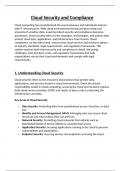
Cloud Security and Compliance
Cloud computing has revolutionized the way businesses and individuals interact
with IT infrastructure. With cloud environments storing and processing vast
amounts of sensitive data, ensuring robust security and compliance becomes
paramount. Cloud security refers to the strategies, technologies, and policies that
protect cloud data, applications, and infrastructure from threats. Cloud
compliance, on the other hand, ensures that cloud services and solutions adhere
to industry standards, legal requirements, and regulatory frameworks. This
section explores both cloud security and compliance in detail, discussing
challenges, best practices, tools, and regulatory frameworks that help
organizations secure their cloud environments and comply with legal
requirements.
1. Understanding Cloud Security
Cloud security refers to the measures and practices that protect data,
applications, and services hosted in cloud environments. Given the shared
responsibility model in cloud computing, securing the cloud environment requires
both cloud service providers (CSPs) and clients to play a role in protecting the
infrastructure and data.
Key Areas of Cloud Security:
Data Security: Protecting data from unauthorized access, breaches, or data
loss.
Identity and Access Management (IAM): Managing who can access cloud
resources and what actions they can perform.
Network Security: Protecting cloud networks from attacks such as
Distributed Denial of Service (DDoS) or unauthorized access.
Application Security: Securing applications running in the cloud to prevent
vulnerabilities and exploitation.
Endpoint Security: Securing devices and endpoints accessing the cloud.
, 2. Cloud Security Models
Cloud security is organized according to several key models that define how
security responsibilities are shared between the cloud service provider and the
customer. These models are critical in determining the scope of security measures
that must be taken.
a) The Shared Responsibility Model: The shared responsibility model defines the
security responsibilities between the cloud provider and the customer. In general:
Cloud Provider's Responsibilities: Includes the security of the
infrastructure, such as physical security of data centers, network
infrastructure, and hypervisors.
Customer's Responsibilities: Includes securing data, applications, and user
access to the cloud services, as well as configuring security settings.
b) Security as a Service: This model allows customers to leverage third-party
security services to protect their cloud environments. These services include
threat detection, vulnerability scanning, encryption, and security monitoring.
3. Key Security Threats in the Cloud
Several security threats exist in the cloud that businesses need to mitigate. These
threats range from data breaches to more sophisticated attacks targeting cloud
infrastructure.
a) Data Breaches: Data breaches occur when unauthorized users gain access to
sensitive information. These breaches can result in data theft, financial loss, and
reputational damage. Common causes of data breaches include weak encryption,
misconfigured cloud settings, or insider threats.
b) Insufficient Identity and Access Management (IAM): Improper IAM
configuration can lead to unauthorized access to critical cloud resources. This
includes weak password policies, excessive privileges granted to users, and failure
to implement multi-factor authentication (MFA).
Cloud computing has revolutionized the way businesses and individuals interact
with IT infrastructure. With cloud environments storing and processing vast
amounts of sensitive data, ensuring robust security and compliance becomes
paramount. Cloud security refers to the strategies, technologies, and policies that
protect cloud data, applications, and infrastructure from threats. Cloud
compliance, on the other hand, ensures that cloud services and solutions adhere
to industry standards, legal requirements, and regulatory frameworks. This
section explores both cloud security and compliance in detail, discussing
challenges, best practices, tools, and regulatory frameworks that help
organizations secure their cloud environments and comply with legal
requirements.
1. Understanding Cloud Security
Cloud security refers to the measures and practices that protect data,
applications, and services hosted in cloud environments. Given the shared
responsibility model in cloud computing, securing the cloud environment requires
both cloud service providers (CSPs) and clients to play a role in protecting the
infrastructure and data.
Key Areas of Cloud Security:
Data Security: Protecting data from unauthorized access, breaches, or data
loss.
Identity and Access Management (IAM): Managing who can access cloud
resources and what actions they can perform.
Network Security: Protecting cloud networks from attacks such as
Distributed Denial of Service (DDoS) or unauthorized access.
Application Security: Securing applications running in the cloud to prevent
vulnerabilities and exploitation.
Endpoint Security: Securing devices and endpoints accessing the cloud.
, 2. Cloud Security Models
Cloud security is organized according to several key models that define how
security responsibilities are shared between the cloud service provider and the
customer. These models are critical in determining the scope of security measures
that must be taken.
a) The Shared Responsibility Model: The shared responsibility model defines the
security responsibilities between the cloud provider and the customer. In general:
Cloud Provider's Responsibilities: Includes the security of the
infrastructure, such as physical security of data centers, network
infrastructure, and hypervisors.
Customer's Responsibilities: Includes securing data, applications, and user
access to the cloud services, as well as configuring security settings.
b) Security as a Service: This model allows customers to leverage third-party
security services to protect their cloud environments. These services include
threat detection, vulnerability scanning, encryption, and security monitoring.
3. Key Security Threats in the Cloud
Several security threats exist in the cloud that businesses need to mitigate. These
threats range from data breaches to more sophisticated attacks targeting cloud
infrastructure.
a) Data Breaches: Data breaches occur when unauthorized users gain access to
sensitive information. These breaches can result in data theft, financial loss, and
reputational damage. Common causes of data breaches include weak encryption,
misconfigured cloud settings, or insider threats.
b) Insufficient Identity and Access Management (IAM): Improper IAM
configuration can lead to unauthorized access to critical cloud resources. This
includes weak password policies, excessive privileges granted to users, and failure
to implement multi-factor authentication (MFA).