Module 1
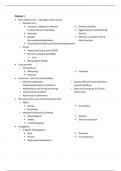
• Pain assessment – vital signs when in pain
o Assessment:
§ Location, radiates or referred § Onset & duration
to other areas of the body. § Aggravating or precipitating
§ Intensity factors
§ Quality § EFects on quality of life &
(burning/stabbing/sharp) daily function
§ Psychosocial eFects (anxiety/fear/depression
o Scale:
§ Verbal descriptor scale (VDS)
§ Numeric rating scale (NRS)
• 0-10
§ Wong-Baker FACES
• Lung sounds
o Adventitious
§ Wheezing § Crackles
§ Rhonchi
• Insomnia – how to promote sleep
o Identify underlying o Avoid caFeine/nicotine/alcohol
medical/psychiatric conditions. close to bedtime
o Medications can be habit forming o Exercise during day 5-6 hours
o Create sleep schedule before bed.
o Avoid naps in afternoon
• Priority of who nurse who should see first
o ABCs
§ Airway § Circulation
§ Breathing
o Maslow’s Hierarchy of Needs
§ Physiological § Esteem
§ Safety § Self-actualization
§ Love/belonging
• Delegation
o 5 Rights of Delegation
§ Task § Direction
§ Person § Circumstance
§ Supervision/evaluation
, o Cannot delegate any activity that requires clinical reasoning, nursing judgement, or
critical decision-making.
• Phases of nursing process
o Assessment o Diagnosis
§ Data gathering § Identify health needs of client
based on assessment data.
o Planning o Implementation
§ Planning a holistic nursing § Carry out or delegate actions
care plan individualized to planned.
reflect problems & strengths
of client.
o Evaluation
§ Determine if desired outcomes have been achieved.
Module 2
• Complimentary vs alternative vs holistic therapy
o Complimentary
§ Used alongside conventional medicine.
• Acupuncture
o Alternative
§ Used instead of conventional medicine.
• Special diet/aromatherapy
o Holistic
§ Focuses on whole person.
• Spiritual, physical, mental & emotional well-being.
• Therapy communication
o Involves face-to-face communication between nurse and patient to establish a
relationship of trust and rapport, and to facilitate the healing process.
§ Patient centered § Open-ended questions
§ Sensitive § Silence
§ Self-aware § Summarize
§ Active listening § Reflect
• Herbal supplements
o About
§ Derived from plant sources and are oldest form of medicine.
§ Not regulated by FDA
o Types
§ Aloe: wound healing
, § Chamomile: anti- § Ginkgo biloba: improves
inflammatory/calming memory
§ Echinacea: enhances § Ginseng: increases physical
immunity endurance
§ Garlic: inhibits platelet § Valerian: promotes
aggregation. sleep/reduces anxiety
§ Ginger: antiemetic
• Phases of relationship
o Pre-interaction
§ Before meeting client
• Groundwork for communication, gather information about client.
o Orientation
§ When meeting the client
• Introducing self and role in relationship
o Working
§ Most therapeutic communication
o Termination
§ Conclusion
• End of shift or client discharges
• Active listening
o Shows patients you care o “Listen” to nonverbal cues
o Establishes foundation of trust o Do not interrupt
o Face speaker with eye contact
• Communication with a patient who speaks another language
o Professional interpreter o Use pictures/gestures
o Speak slowly & clearly o Be patient & respectful
o Keep it simple
• Passive vs assertive vs aggressive communication
o Passive:
§ Allow others to take the lead
§ May exhibit timid posture/negative body language
• Example: “Whatever you want.”
o Aggressive:
§ Goal is to win & be in control
§ Try to dominate others, use intimidation & humiliation to control
§ Poor listeners, impulsive, low tolerance for frustration.
• Example: “My way is the correct way.”
o Assertive:
• Pain assessment – vital signs when in pain
o Assessment:
§ Location, radiates or referred § Onset & duration
to other areas of the body. § Aggravating or precipitating
§ Intensity factors
§ Quality § EFects on quality of life &
(burning/stabbing/sharp) daily function
§ Psychosocial eFects (anxiety/fear/depression
o Scale:
§ Verbal descriptor scale (VDS)
§ Numeric rating scale (NRS)
• 0-10
§ Wong-Baker FACES
• Lung sounds
o Adventitious
§ Wheezing § Crackles
§ Rhonchi
• Insomnia – how to promote sleep
o Identify underlying o Avoid caFeine/nicotine/alcohol
medical/psychiatric conditions. close to bedtime
o Medications can be habit forming o Exercise during day 5-6 hours
o Create sleep schedule before bed.
o Avoid naps in afternoon
• Priority of who nurse who should see first
o ABCs
§ Airway § Circulation
§ Breathing
o Maslow’s Hierarchy of Needs
§ Physiological § Esteem
§ Safety § Self-actualization
§ Love/belonging
• Delegation
o 5 Rights of Delegation
§ Task § Direction
§ Person § Circumstance
§ Supervision/evaluation
, o Cannot delegate any activity that requires clinical reasoning, nursing judgement, or
critical decision-making.
• Phases of nursing process
o Assessment o Diagnosis
§ Data gathering § Identify health needs of client
based on assessment data.
o Planning o Implementation
§ Planning a holistic nursing § Carry out or delegate actions
care plan individualized to planned.
reflect problems & strengths
of client.
o Evaluation
§ Determine if desired outcomes have been achieved.
Module 2
• Complimentary vs alternative vs holistic therapy
o Complimentary
§ Used alongside conventional medicine.
• Acupuncture
o Alternative
§ Used instead of conventional medicine.
• Special diet/aromatherapy
o Holistic
§ Focuses on whole person.
• Spiritual, physical, mental & emotional well-being.
• Therapy communication
o Involves face-to-face communication between nurse and patient to establish a
relationship of trust and rapport, and to facilitate the healing process.
§ Patient centered § Open-ended questions
§ Sensitive § Silence
§ Self-aware § Summarize
§ Active listening § Reflect
• Herbal supplements
o About
§ Derived from plant sources and are oldest form of medicine.
§ Not regulated by FDA
o Types
§ Aloe: wound healing
, § Chamomile: anti- § Ginkgo biloba: improves
inflammatory/calming memory
§ Echinacea: enhances § Ginseng: increases physical
immunity endurance
§ Garlic: inhibits platelet § Valerian: promotes
aggregation. sleep/reduces anxiety
§ Ginger: antiemetic
• Phases of relationship
o Pre-interaction
§ Before meeting client
• Groundwork for communication, gather information about client.
o Orientation
§ When meeting the client
• Introducing self and role in relationship
o Working
§ Most therapeutic communication
o Termination
§ Conclusion
• End of shift or client discharges
• Active listening
o Shows patients you care o “Listen” to nonverbal cues
o Establishes foundation of trust o Do not interrupt
o Face speaker with eye contact
• Communication with a patient who speaks another language
o Professional interpreter o Use pictures/gestures
o Speak slowly & clearly o Be patient & respectful
o Keep it simple
• Passive vs assertive vs aggressive communication
o Passive:
§ Allow others to take the lead
§ May exhibit timid posture/negative body language
• Example: “Whatever you want.”
o Aggressive:
§ Goal is to win & be in control
§ Try to dominate others, use intimidation & humiliation to control
§ Poor listeners, impulsive, low tolerance for frustration.
• Example: “My way is the correct way.”
o Assertive: