1
SPRAAK: VERWORVEN STOORNISSEN: THERAPIE
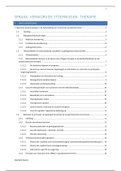
1 INHOUDSOPGAVE
1. Algemene beschouwingen in de behandeling van motorische spraakstoornissen ............................................ 4
1.1 Inleiding ................................................................................................................................................. 4
1.2 Managementbenaderingen ................................................................................................................... 5
1.2.1 Medische benadering ........................................................................................................................ 5
1.2.2 Prothetische benaderning ................................................................................................................. 6
1.2.3 Gedragsinterventie ............................................................................................................................ 6
1.3 Therapiedoelen en beïnvloedende variabelen in gedragsinterventie bij MSS ...................................... 6
1.3.1 Therapiedoelen ................................................................................................................................. 6
1.3.2 Beïnvloedende factoren in de keuze voor of tegen therapie en de doeltreffendheid van de
spraakmotorische therapie ............................................................................................................................. 7
1.3.2.1 De medische diagnose of prognose.......................................................................................... 7
1.3.2.2 De ernst en aard vd stoornis, beperkingen in activiteiten en restricties in participatie,
omgevingsfactoren...................................................................................................................................... 8
1.3.2.3 Therapieduur en intensiteit van training .................................................................................. 9
1.3.2.4 Demografische karakteristieken ............................................................................................... 9
1.3.2.5 Organisatie vd therapiesetting ............................................................................................... 10
1.3.3 Concreet therapiekader voor personen met een MSS (Rosenbek) ................................................. 10
1.3.3.1 verschillen herkennen ............................................................................................................ 10
1.3.3.2 Bereidheid om te veranderen ................................................................................................ 10
1.3.3.3 Therapiedoelen stellen ........................................................................................................... 10
1.3.3.4 Therapeutisch spreken ........................................................................................................... 10
1.3.3.5 Leren luisteren, evalueren en zichzelf corrigeren .................................................................. 11
1.3.3.6 Voer de cognitief- linguïstische belasting op .......................................................................... 11
1.4 Rationale en principes van gedragsinterventies bij spraakmotorische stoornissen............................ 11
1.4.1 Inleiding ........................................................................................................................................... 11
1.4.2 Neurale herstelmechanismen ......................................................................................................... 11
1.4.2.1 Neurale plasticiteit en gedragsplasticiteit .............................................................................. 12
1.4.2.2 neurale reactivatie (= restitutie= herstel)............................................................................... 12
1.4.2.3 Neurale aanpassing ................................................................................................................ 13
1.4.3 Therapeutische benaderingswijzen ................................................................................................. 14
1.4.3.1 Directe thx: Impliciet leren (stimulatietherapie(/ reactivatietherapie/facilitatietherapie )... 14
1.4.3.2 Directe thx: Expliciet leren (strategietraining)........................................................................ 15
1.4.3.3 Indirecte thx: gericht op omgeving ........................................................................................ 16
1.4.4 Principes van motorisch leren (PML) in spraakmotorisch leren...................................................... 16
Machteld Daems
, 2
1.4.4.1 Duidelijk voorafgaande instructie .......................................................................................... 17
1.4.4.2 veel oef weinig oefenen ......................................................................................................... 17
1.4.4.3 intensief of gespreid ............................................................................................................... 18
1.4.4.4 Constant of variabel ............................................................................................................... 18
1.4.4.5 geblokt of gemengd (random) ................................................................................................ 18
1.4.4.6 interne of externe aandachtsfocus......................................................................................... 19
1.4.4.7 feedback: kennis van uitvoering of van resulataat ................................................................. 19
1.4.4.8 veel of weinig feedback .......................................................................................................... 19
1.4.4.9 onmiddelijke of uitgestelde feedback .................................................................................... 20
1.5 EXTRA: learned disuse/ non- use ......................................................................................................... 20
2 De behandeling van spraakapraxie ............................................................................................................... 20
2.1 Doelstellingen van de (stoornisgerichte) behandeling ........................................................................ 21
2.2 Overzicht van bestaande therapiemethodes ...................................................................................... 22
2.2.1 De Integrale Stimulatiemethode ..................................................................................................... 23
2.2.1.1 Eight step continuüm ............................................................................................................. 23
2.2.2 De articulatorisch- motorische methode ........................................................................................ 24
2.2.2.1 Sound production treatment (SPT) ........................................................................................ 25
2.2.3 CUE: Prompts for restructuring oral muscular targets (PROMPT) .................................................. 26
2.2.4 Prosodie en muziek ......................................................................................................................... 26
2.2.4.1 Tempovertragende methoden ............................................................................................... 26
2.2.4.2 Melodic intonation therapy (MIT) .......................................................................................... 27
2.2.4.3 Speech- music therapy for aphasia (SMTA) ............................................................................ 29
2.3 TIAS: therapeutisch instrument van de spraak .................................................................................... 30
2.3.1 Rationale, materiaal en methodiek ................................................................................................. 30
2.3.2 Methodiek 1: articulatorisch- motorische thx................................................................................. 31
2.3.3 Methodiek 2: adaptatietherapie ..................................................................................................... 32
2.3.4 Fase 1: diagnostische fase ............................................................................................................... 33
2.3.5 Fase 2: oriënteringsfase .................................................................................................................. 33
2.3.6 Fase 3: oefenfase............................................................................................................................. 33
2.3.7 Fase 4: automatiserings- en transferfase ........................................................................................ 33
2.4 De behandeling van spraakapraxie met afasie .................................................................................... 34
3 De behandeling van dysratrie ....................................................................................................................... 34
3.1 Managing the Dysarthrias.................................................................................................................... 34
3.2 Materiaal ............................................................................................................................................. 34
3.2.1 Dysamix ........................................................................................................................................... 34
3.2.2 Prosodietrainer................................................................................................................................ 35
4 Behandeling van (hypokinetische) dysartrie bij personen met ziekte van Parkinson .................................. 35
Machteld Daems
, 3
4.1 het is niet wat je doet, maar hoe je het doet ...................................................................................... 35
4.1.1 Persoon met P is stressgevoeliger ................................................................................................... 35
4.1.2 Stress: effect op functioneren met Parkinson ................................................................................. 36
4.1.3 Leven met PD is stresserender ........................................................................................................ 37
4.1.3.1 Grotere latentietijd tussen prikkel en respons ....................................................................... 37
4.1.3.2 Onvoorspelbaarheid vh lichaam ............................................................................................. 37
4.1.3.3 Medicatiecyclus ...................................................................................................................... 37
4.1.4 Stressinductie door interpersoonlijk contact .................................................................................. 38
4.1.4.1 Rol van therapeut ................................................................................................................... 38
4.2 Internaliseren om te kunnen automatiseren ...................................................................................... 38
4.3 Verdieping ........................................................................................................................................... 40
5 Specifieke behandelingen en nieuwe ontwikkelingen in de behandeling van motorische spraakstoornissen
42
5.1 Neuromodulatie en spraaktherapie .................................................................................................... 42
5.1.1 Transcranial direct current stimulation (tDCS) & spraaktherapie ................................................... 42
5.1.1.1 tDCS en spraakmotoriek in een gezonde populatie ............................................................... 43
5.1.1.2 tDCS en spraakmotoriek in populatie met MSS ..................................................................... 45
5.2 Transcraniële Magnetische stimulatie (TMS) ...................................................................................... 46
Machteld Daems
, 4
1. ALGEMENE BESCHOUWINGEN IN DE BEHANDELING VAN MOTORISCHE
SPRAAKSTOORNISSEN
PMMS= persoon met motorische spraakstoornis
1.1 INLEIDING
• Spreken is een complex gedrag dat de betrokkenheid van een netwerk van concurrerende
verwerkingsprocessen in onze hersenen integreert
o Talige processen
▪ ideeën omzetten in woorden, zinnen, verhaal
▪ afasie
o Cognitieve processen
▪ executieve vaardigheden, geheugen, aandacht en concentratie
▪ cognitieve communicatiestoornissen
o Sensori-motorische processen
▪ de zintuigelijke verwerking van spraakklanken, de motorische verwerking van spraak
(planning en programmering)
▪ sensorimotorisch= interactie tussen zintuigen, proprioceptie en gehoor
▪ Spraakapraxie en dysartrie
Machteld Daems
SPRAAK: VERWORVEN STOORNISSEN: THERAPIE
1 INHOUDSOPGAVE
1. Algemene beschouwingen in de behandeling van motorische spraakstoornissen ............................................ 4
1.1 Inleiding ................................................................................................................................................. 4
1.2 Managementbenaderingen ................................................................................................................... 5
1.2.1 Medische benadering ........................................................................................................................ 5
1.2.2 Prothetische benaderning ................................................................................................................. 6
1.2.3 Gedragsinterventie ............................................................................................................................ 6
1.3 Therapiedoelen en beïnvloedende variabelen in gedragsinterventie bij MSS ...................................... 6
1.3.1 Therapiedoelen ................................................................................................................................. 6
1.3.2 Beïnvloedende factoren in de keuze voor of tegen therapie en de doeltreffendheid van de
spraakmotorische therapie ............................................................................................................................. 7
1.3.2.1 De medische diagnose of prognose.......................................................................................... 7
1.3.2.2 De ernst en aard vd stoornis, beperkingen in activiteiten en restricties in participatie,
omgevingsfactoren...................................................................................................................................... 8
1.3.2.3 Therapieduur en intensiteit van training .................................................................................. 9
1.3.2.4 Demografische karakteristieken ............................................................................................... 9
1.3.2.5 Organisatie vd therapiesetting ............................................................................................... 10
1.3.3 Concreet therapiekader voor personen met een MSS (Rosenbek) ................................................. 10
1.3.3.1 verschillen herkennen ............................................................................................................ 10
1.3.3.2 Bereidheid om te veranderen ................................................................................................ 10
1.3.3.3 Therapiedoelen stellen ........................................................................................................... 10
1.3.3.4 Therapeutisch spreken ........................................................................................................... 10
1.3.3.5 Leren luisteren, evalueren en zichzelf corrigeren .................................................................. 11
1.3.3.6 Voer de cognitief- linguïstische belasting op .......................................................................... 11
1.4 Rationale en principes van gedragsinterventies bij spraakmotorische stoornissen............................ 11
1.4.1 Inleiding ........................................................................................................................................... 11
1.4.2 Neurale herstelmechanismen ......................................................................................................... 11
1.4.2.1 Neurale plasticiteit en gedragsplasticiteit .............................................................................. 12
1.4.2.2 neurale reactivatie (= restitutie= herstel)............................................................................... 12
1.4.2.3 Neurale aanpassing ................................................................................................................ 13
1.4.3 Therapeutische benaderingswijzen ................................................................................................. 14
1.4.3.1 Directe thx: Impliciet leren (stimulatietherapie(/ reactivatietherapie/facilitatietherapie )... 14
1.4.3.2 Directe thx: Expliciet leren (strategietraining)........................................................................ 15
1.4.3.3 Indirecte thx: gericht op omgeving ........................................................................................ 16
1.4.4 Principes van motorisch leren (PML) in spraakmotorisch leren...................................................... 16
Machteld Daems
, 2
1.4.4.1 Duidelijk voorafgaande instructie .......................................................................................... 17
1.4.4.2 veel oef weinig oefenen ......................................................................................................... 17
1.4.4.3 intensief of gespreid ............................................................................................................... 18
1.4.4.4 Constant of variabel ............................................................................................................... 18
1.4.4.5 geblokt of gemengd (random) ................................................................................................ 18
1.4.4.6 interne of externe aandachtsfocus......................................................................................... 19
1.4.4.7 feedback: kennis van uitvoering of van resulataat ................................................................. 19
1.4.4.8 veel of weinig feedback .......................................................................................................... 19
1.4.4.9 onmiddelijke of uitgestelde feedback .................................................................................... 20
1.5 EXTRA: learned disuse/ non- use ......................................................................................................... 20
2 De behandeling van spraakapraxie ............................................................................................................... 20
2.1 Doelstellingen van de (stoornisgerichte) behandeling ........................................................................ 21
2.2 Overzicht van bestaande therapiemethodes ...................................................................................... 22
2.2.1 De Integrale Stimulatiemethode ..................................................................................................... 23
2.2.1.1 Eight step continuüm ............................................................................................................. 23
2.2.2 De articulatorisch- motorische methode ........................................................................................ 24
2.2.2.1 Sound production treatment (SPT) ........................................................................................ 25
2.2.3 CUE: Prompts for restructuring oral muscular targets (PROMPT) .................................................. 26
2.2.4 Prosodie en muziek ......................................................................................................................... 26
2.2.4.1 Tempovertragende methoden ............................................................................................... 26
2.2.4.2 Melodic intonation therapy (MIT) .......................................................................................... 27
2.2.4.3 Speech- music therapy for aphasia (SMTA) ............................................................................ 29
2.3 TIAS: therapeutisch instrument van de spraak .................................................................................... 30
2.3.1 Rationale, materiaal en methodiek ................................................................................................. 30
2.3.2 Methodiek 1: articulatorisch- motorische thx................................................................................. 31
2.3.3 Methodiek 2: adaptatietherapie ..................................................................................................... 32
2.3.4 Fase 1: diagnostische fase ............................................................................................................... 33
2.3.5 Fase 2: oriënteringsfase .................................................................................................................. 33
2.3.6 Fase 3: oefenfase............................................................................................................................. 33
2.3.7 Fase 4: automatiserings- en transferfase ........................................................................................ 33
2.4 De behandeling van spraakapraxie met afasie .................................................................................... 34
3 De behandeling van dysratrie ....................................................................................................................... 34
3.1 Managing the Dysarthrias.................................................................................................................... 34
3.2 Materiaal ............................................................................................................................................. 34
3.2.1 Dysamix ........................................................................................................................................... 34
3.2.2 Prosodietrainer................................................................................................................................ 35
4 Behandeling van (hypokinetische) dysartrie bij personen met ziekte van Parkinson .................................. 35
Machteld Daems
, 3
4.1 het is niet wat je doet, maar hoe je het doet ...................................................................................... 35
4.1.1 Persoon met P is stressgevoeliger ................................................................................................... 35
4.1.2 Stress: effect op functioneren met Parkinson ................................................................................. 36
4.1.3 Leven met PD is stresserender ........................................................................................................ 37
4.1.3.1 Grotere latentietijd tussen prikkel en respons ....................................................................... 37
4.1.3.2 Onvoorspelbaarheid vh lichaam ............................................................................................. 37
4.1.3.3 Medicatiecyclus ...................................................................................................................... 37
4.1.4 Stressinductie door interpersoonlijk contact .................................................................................. 38
4.1.4.1 Rol van therapeut ................................................................................................................... 38
4.2 Internaliseren om te kunnen automatiseren ...................................................................................... 38
4.3 Verdieping ........................................................................................................................................... 40
5 Specifieke behandelingen en nieuwe ontwikkelingen in de behandeling van motorische spraakstoornissen
42
5.1 Neuromodulatie en spraaktherapie .................................................................................................... 42
5.1.1 Transcranial direct current stimulation (tDCS) & spraaktherapie ................................................... 42
5.1.1.1 tDCS en spraakmotoriek in een gezonde populatie ............................................................... 43
5.1.1.2 tDCS en spraakmotoriek in populatie met MSS ..................................................................... 45
5.2 Transcraniële Magnetische stimulatie (TMS) ...................................................................................... 46
Machteld Daems
, 4
1. ALGEMENE BESCHOUWINGEN IN DE BEHANDELING VAN MOTORISCHE
SPRAAKSTOORNISSEN
PMMS= persoon met motorische spraakstoornis
1.1 INLEIDING
• Spreken is een complex gedrag dat de betrokkenheid van een netwerk van concurrerende
verwerkingsprocessen in onze hersenen integreert
o Talige processen
▪ ideeën omzetten in woorden, zinnen, verhaal
▪ afasie
o Cognitieve processen
▪ executieve vaardigheden, geheugen, aandacht en concentratie
▪ cognitieve communicatiestoornissen
o Sensori-motorische processen
▪ de zintuigelijke verwerking van spraakklanken, de motorische verwerking van spraak
(planning en programmering)
▪ sensorimotorisch= interactie tussen zintuigen, proprioceptie en gehoor
▪ Spraakapraxie en dysartrie
Machteld Daems