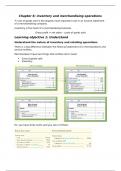
Chapter 6: inventory and merchandising operations
cost of goods sold is the largest/ most important cost in an income statement
of a merchandising company
Inventory is the heart of a merchandising business
Gross profit = net sales – costs of goods sold
Learning objective 1: Understand
Understand the nature of inventory and retailing operations
There is a big difference between the financial statement of a merchandisers and
service entities.
Merchandisers have two things that entities don’t need:
Cost of goods sold
inventory
Ex: you have three shirts and you sell 2 of them
, The cost of inventory shifts to
an expense when the product
is sold
Sale price versus cost of inventory
Income statement:
Sales revenue: based on the sales price of the good sold
Cost of goods sold: based on the cost of inventory sold
Balance sheet
inventory: based on the cost of the inventory still on hand
gross profit= gross margin
= excess sales revenue over cost of goods sold
it’s called gross profit because the operating expenses haven’t been
subtracted yet
Inventory (balance sheet) = number of units of inventory on hand X cost per
unit of inventory
COGS (income statement)= number of units of inventory sold X cost per unit of
inventory
Number of units of inventory
determined from accounting records
there will be a physical count at the end of the year
consigned goods
o hold on consignment: goods that belong the another company
these are not included in the inventory
o out on consignment: own inventory that is held by another company
included in the inventory
depending on your shipping terms transit (goods that are still being
shipped) are added in your invent
o The shipping terms determine who own the goods at a specific time
o Shipping terms = FOB terms
FOB= free on board
FOB shipping point FOB shipping destination
Ownership of goods changes at the Ownership of goods changes at the
shipping point (sellers place of destination (buyers place of business)
business)
The buyer pays for shipping The seller pays for shipping
The buyer includes it in their inventory The seller includes it in their inventory
Cost per unit of inventory
cost of goods sold is the largest/ most important cost in an income statement
of a merchandising company
Inventory is the heart of a merchandising business
Gross profit = net sales – costs of goods sold
Learning objective 1: Understand
Understand the nature of inventory and retailing operations
There is a big difference between the financial statement of a merchandisers and
service entities.
Merchandisers have two things that entities don’t need:
Cost of goods sold
inventory
Ex: you have three shirts and you sell 2 of them
, The cost of inventory shifts to
an expense when the product
is sold
Sale price versus cost of inventory
Income statement:
Sales revenue: based on the sales price of the good sold
Cost of goods sold: based on the cost of inventory sold
Balance sheet
inventory: based on the cost of the inventory still on hand
gross profit= gross margin
= excess sales revenue over cost of goods sold
it’s called gross profit because the operating expenses haven’t been
subtracted yet
Inventory (balance sheet) = number of units of inventory on hand X cost per
unit of inventory
COGS (income statement)= number of units of inventory sold X cost per unit of
inventory
Number of units of inventory
determined from accounting records
there will be a physical count at the end of the year
consigned goods
o hold on consignment: goods that belong the another company
these are not included in the inventory
o out on consignment: own inventory that is held by another company
included in the inventory
depending on your shipping terms transit (goods that are still being
shipped) are added in your invent
o The shipping terms determine who own the goods at a specific time
o Shipping terms = FOB terms
FOB= free on board
FOB shipping point FOB shipping destination
Ownership of goods changes at the Ownership of goods changes at the
shipping point (sellers place of destination (buyers place of business)
business)
The buyer pays for shipping The seller pays for shipping
The buyer includes it in their inventory The seller includes it in their inventory
Cost per unit of inventory