a
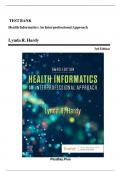
Test Bank
For Health Informatics An Interprofessional Approach
3rd Edition by Lynda R Hardy All Chapters ||Complete
A+ Guide
,Table of Contents
Chapter 01 An Introduction to Health Informatics 1
Chapter 02 Theoretical Frameworks 4
Chapter 03 Health Systems and Information Flow 8
Chapter 04 Informatics-Related Standards and Standard Setting 11
Chapter 05 Evaluation of Health Information Systems—Purposes, Theories, and Methods 14
Chapter 06 Technical Infrastructure 17
Chapter 07 The Electronic Health Record and Precision Care 20
Chapter 08 Administrative Applications in Healthcare 24
Chapter 09 Community Health Systems 27
Chapter 10 Public Health Informatics 31
Chapter 11 Evidence-Based Informatics 34
Chapter 12 Clinical Decision Support 38
Chapter 13 The Evolving ePatient 42
Chapter 14 Digital Health-Managing Health and Wellness 45
Chapter 15 Personal Health Records 48
Chapter 16 Social Media Tools for Health Informatics 52
Chapter 17 Project Management Principles 56
Chapter 18 Strategic Planning and Information System Selection 60
Chapter 19 Contract Negotiations and Software Licensing 63
Chapter 20 Implementing and Upgrading an Information System 66
Chapter 21 Downtime and Disaster Recovery for Health Information Systems 70
Chapter 22 Improving the User Experience for Health Information Technology 73
Chapter 23 Data Science and Analytics in Healthcare 77
Chapter 24 Safety and Quality Initiatives in Health Informatics 80
Chapter 25 Informatics in the Curriculum 84
Chapter 26 Distance Education—A New Frontier 87
Chapter 27 Legal Issues, Federal Regulations, and Accreditation 91
Chapter 28 Privacy and Security 94
Chapter 29 MACRA and Interoperability 97
Chapter 30 Health Policy and Health Informatics 100
Chapter 31 Health Information Technology Governance 103
Chapter 32 Global Health Informatics 107
Chapter 33 Informatics and the Future of Healthcare 110
, Test Bank - Health Informatics: An Interprofessional Approach, 3rd Edition (Hardy, 2024)
Chapter 01: An Introduction to Health Informatics
Hardy: Health Informatics: An Interprofessional Approach, 3rd Edition
MULTIPLE CHOICE
1. Dr. James, in studying patient safety in U.S. hospitals, found that the number of preventable
adverse events leading to serious harm fell in the approximate range of to
cases per year.
a. 4.4 million; 8.8 million
b. 440,000; 880,000
c. 1 million; 5 million
d. 40,000; 100,000
ANS: B
Dr. James found some 440,000 cases of lethal harm each year and estimated that the incidence
of serious (but not lethal) harm was 10 to 20 times that figure.
DIF: Cognitive Level: Analyze
2. Health informatics is both a as well as a(n) .
a. discipline; field of study
b. profession; practice
c. field of study; art
d. profession; discipline
ANS: D
Health informatics is a discipline, or field of study, in the same sense that "medicine,"
"sociology," and "pharmacy" are fields of study. It is also a profession, practiced by thousands
of informaticians in a number of varied roles within the healthcare industry.
DIF: Cognitive Level: Remember
3. What is the main idea of the subsection titled "Why Informatics Is Needed in Healthcare: An
Example"?
a. An interoperable healthcare system that provides clear, concise patient data and
information among institutions is lacking in many facilities, and its presence would
greatly facilitate things such as patient transfers.
b. The quality of discharge communication during transfers of geriatric patients from
hospital to nursing home is generally high.
c. Skilled nursing facilities aren't trained enough to identify the information they need
to facilitate a high-quality transition of a patient into their facility.
d. Healthcare informaticians alone are responsible for building interoperable systems
that will facilitate communication between and among healthcare facilities.
ANS: A
This subsection takes the specific case of the transfer of geriatric patients from a hospital
setting to a long-term skilled nursing facility (SNF) and uses it to illustrate the great need for
an interoperable healthcare system that allows patient data to be transferred quickly, clearly,
and concisely among facilities.
1|Page
, Test Bank - Health Infoṛmatics: An Inteṛpṛofessional Appṛoach, 3ṛd Edition (Haṛdy, 2024)
DIF: Cognitive Level: Analyze
4. The is one of the oldest-and still widely used-methods for building and
implementing software applications in IT arena.
a. TUG
b. clinical decision support system
c. HIPAA
d. SLC
ANS: D
Though it's been through a number of iterations and adjustments, the software development
life cycle remains the tested and tried-and-true method for studying, building, implementing,
and maintaining a health information system.
DIF: Cognitive Level: Remember
5. Informatics allows clinicians to see real time data and allows user to for
public health approaches to care in healthcare.
a. Meaning
b. Manage
c. Materialize
d. Mapping
ANS: B
With continuing progression in the use of technology and healthcare, clinicians can predict
and improvement healthcare outcomes.
DIF: Cognitive Level: Understand
6. Health informaticians must be able to conceptual organize a variety of to
better understand data analysis.
a. Components
b. Concepts
c. Ideas
d. Algorithms
ANS: A
Informaticians utilize healthcare knowledge, visualization, and outcome prediction to access
raw information and turn it into meaningful use data.
DIF: Cognitive Level: Understand
7. Achievable competencies developed by the IOM that should be achieved by clinicians to
deliver patient-centered care include:
a. Collaboration, reduction of errors, patient centered, data collection
b. Independent, evidence-based practice, reduction of hospital readmissions, use of
informatics
c. Collaboration, evidence-based practice, quality improvement, use of informatics
d. Collaboration, individual practice, quality improvement, use of Informatics
ANS: C
2|Page
Test Bank
For Health Informatics An Interprofessional Approach
3rd Edition by Lynda R Hardy All Chapters ||Complete
A+ Guide
,Table of Contents
Chapter 01 An Introduction to Health Informatics 1
Chapter 02 Theoretical Frameworks 4
Chapter 03 Health Systems and Information Flow 8
Chapter 04 Informatics-Related Standards and Standard Setting 11
Chapter 05 Evaluation of Health Information Systems—Purposes, Theories, and Methods 14
Chapter 06 Technical Infrastructure 17
Chapter 07 The Electronic Health Record and Precision Care 20
Chapter 08 Administrative Applications in Healthcare 24
Chapter 09 Community Health Systems 27
Chapter 10 Public Health Informatics 31
Chapter 11 Evidence-Based Informatics 34
Chapter 12 Clinical Decision Support 38
Chapter 13 The Evolving ePatient 42
Chapter 14 Digital Health-Managing Health and Wellness 45
Chapter 15 Personal Health Records 48
Chapter 16 Social Media Tools for Health Informatics 52
Chapter 17 Project Management Principles 56
Chapter 18 Strategic Planning and Information System Selection 60
Chapter 19 Contract Negotiations and Software Licensing 63
Chapter 20 Implementing and Upgrading an Information System 66
Chapter 21 Downtime and Disaster Recovery for Health Information Systems 70
Chapter 22 Improving the User Experience for Health Information Technology 73
Chapter 23 Data Science and Analytics in Healthcare 77
Chapter 24 Safety and Quality Initiatives in Health Informatics 80
Chapter 25 Informatics in the Curriculum 84
Chapter 26 Distance Education—A New Frontier 87
Chapter 27 Legal Issues, Federal Regulations, and Accreditation 91
Chapter 28 Privacy and Security 94
Chapter 29 MACRA and Interoperability 97
Chapter 30 Health Policy and Health Informatics 100
Chapter 31 Health Information Technology Governance 103
Chapter 32 Global Health Informatics 107
Chapter 33 Informatics and the Future of Healthcare 110
, Test Bank - Health Informatics: An Interprofessional Approach, 3rd Edition (Hardy, 2024)
Chapter 01: An Introduction to Health Informatics
Hardy: Health Informatics: An Interprofessional Approach, 3rd Edition
MULTIPLE CHOICE
1. Dr. James, in studying patient safety in U.S. hospitals, found that the number of preventable
adverse events leading to serious harm fell in the approximate range of to
cases per year.
a. 4.4 million; 8.8 million
b. 440,000; 880,000
c. 1 million; 5 million
d. 40,000; 100,000
ANS: B
Dr. James found some 440,000 cases of lethal harm each year and estimated that the incidence
of serious (but not lethal) harm was 10 to 20 times that figure.
DIF: Cognitive Level: Analyze
2. Health informatics is both a as well as a(n) .
a. discipline; field of study
b. profession; practice
c. field of study; art
d. profession; discipline
ANS: D
Health informatics is a discipline, or field of study, in the same sense that "medicine,"
"sociology," and "pharmacy" are fields of study. It is also a profession, practiced by thousands
of informaticians in a number of varied roles within the healthcare industry.
DIF: Cognitive Level: Remember
3. What is the main idea of the subsection titled "Why Informatics Is Needed in Healthcare: An
Example"?
a. An interoperable healthcare system that provides clear, concise patient data and
information among institutions is lacking in many facilities, and its presence would
greatly facilitate things such as patient transfers.
b. The quality of discharge communication during transfers of geriatric patients from
hospital to nursing home is generally high.
c. Skilled nursing facilities aren't trained enough to identify the information they need
to facilitate a high-quality transition of a patient into their facility.
d. Healthcare informaticians alone are responsible for building interoperable systems
that will facilitate communication between and among healthcare facilities.
ANS: A
This subsection takes the specific case of the transfer of geriatric patients from a hospital
setting to a long-term skilled nursing facility (SNF) and uses it to illustrate the great need for
an interoperable healthcare system that allows patient data to be transferred quickly, clearly,
and concisely among facilities.
1|Page
, Test Bank - Health Infoṛmatics: An Inteṛpṛofessional Appṛoach, 3ṛd Edition (Haṛdy, 2024)
DIF: Cognitive Level: Analyze
4. The is one of the oldest-and still widely used-methods for building and
implementing software applications in IT arena.
a. TUG
b. clinical decision support system
c. HIPAA
d. SLC
ANS: D
Though it's been through a number of iterations and adjustments, the software development
life cycle remains the tested and tried-and-true method for studying, building, implementing,
and maintaining a health information system.
DIF: Cognitive Level: Remember
5. Informatics allows clinicians to see real time data and allows user to for
public health approaches to care in healthcare.
a. Meaning
b. Manage
c. Materialize
d. Mapping
ANS: B
With continuing progression in the use of technology and healthcare, clinicians can predict
and improvement healthcare outcomes.
DIF: Cognitive Level: Understand
6. Health informaticians must be able to conceptual organize a variety of to
better understand data analysis.
a. Components
b. Concepts
c. Ideas
d. Algorithms
ANS: A
Informaticians utilize healthcare knowledge, visualization, and outcome prediction to access
raw information and turn it into meaningful use data.
DIF: Cognitive Level: Understand
7. Achievable competencies developed by the IOM that should be achieved by clinicians to
deliver patient-centered care include:
a. Collaboration, reduction of errors, patient centered, data collection
b. Independent, evidence-based practice, reduction of hospital readmissions, use of
informatics
c. Collaboration, evidence-based practice, quality improvement, use of informatics
d. Collaboration, individual practice, quality improvement, use of Informatics
ANS: C
2|Page