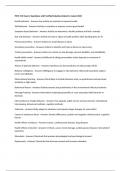
PSYC 515 Exam 2 Questions with Verified Solutions Rated A+ Latest 2025
Health behavior - Answers Any activity to maintain or improve health
Well behavior - Answers Activity to maintain or improve current good health
Symptom-based behavior - Answers Activity to determine a health problem and find a remedy
Sick-role behavior - Answers Activity to treat or adjust a health problem after deciding they are ill
Primary prevention - Answers Actions to avoid disease or injury
Secondary prevention - Answers Actions to identify and treat an illness or injury early
Tertiary prevention - Answers Actions to contain or stop damage, prevent disability, and rehabilitate
Health belief model - Answers Likelihood of taking preventative action depends on outcome of
assessments
Theory of planned behavior - Answers Intentions are best predictors of what people will do
Behavior willingness - Answers Willingness to engage in risky behavior influenced by positive subject
norms and attitudes
Observational learning - Answers More likely to imitate behavior when no punishment and perceived
similarity or high status
Behavioral theory - Answers Reinforcements and punishments in the environment influence behavior
Message-framing - Answers Information emphasizing benefits or costs associated with behavior or
decisions
Interventions to change behavior - Answers Fear appeals, public service announcements, motivational
interviewing, behavioral methods, cognitive methods
Tolerance - Answers Body adapts to substance and requires larger dosages for same effect
Causes of substance abuse - Answers Genetic differences, positive and negative reinforcement, cognitive
factors
Health effects of tobacco - Answers Cancer, cardiovascular disease, lung diseases
Health effects of alcohol - Answers Cirrhosis, cancer, brain damage, cardiovascular diseases, fetal alcohol
syndrome
Stimulants - Answers Chemicals that produce physiological and psychological arousal
Depressants - Answers Chemicals that decrease arousal and increase relaxation
Health behavior - Answers Any activity to maintain or improve health
Well behavior - Answers Activity to maintain or improve current good health
Symptom-based behavior - Answers Activity to determine a health problem and find a remedy
Sick-role behavior - Answers Activity to treat or adjust a health problem after deciding they are ill
Primary prevention - Answers Actions to avoid disease or injury
Secondary prevention - Answers Actions to identify and treat an illness or injury early
Tertiary prevention - Answers Actions to contain or stop damage, prevent disability, and rehabilitate
Health belief model - Answers Likelihood of taking preventative action depends on outcome of
assessments
Theory of planned behavior - Answers Intentions are best predictors of what people will do
Behavior willingness - Answers Willingness to engage in risky behavior influenced by positive subject
norms and attitudes
Observational learning - Answers More likely to imitate behavior when no punishment and perceived
similarity or high status
Behavioral theory - Answers Reinforcements and punishments in the environment influence behavior
Message-framing - Answers Information emphasizing benefits or costs associated with behavior or
decisions
Interventions to change behavior - Answers Fear appeals, public service announcements, motivational
interviewing, behavioral methods, cognitive methods
Tolerance - Answers Body adapts to substance and requires larger dosages for same effect
Causes of substance abuse - Answers Genetic differences, positive and negative reinforcement, cognitive
factors
Health effects of tobacco - Answers Cancer, cardiovascular disease, lung diseases
Health effects of alcohol - Answers Cirrhosis, cancer, brain damage, cardiovascular diseases, fetal alcohol
syndrome
Stimulants - Answers Chemicals that produce physiological and psychological arousal
Depressants - Answers Chemicals that decrease arousal and increase relaxation