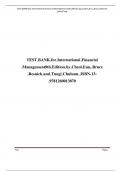
,SOLUTION MANUAL FOR z z
International Financial Management, 10th Edition EUN
z z z z z
z Chapter 1-21 z
CHAPTER 1 z
GLOBALIZATION z AND z THE z MULTINATIONAL z FIRM
QUESTIONS
1. Why z is z it z important z to z study z international z financial z management?
Answer: z We zare znow zliving zin za zworld zwhere zall zthe zmajor zeconomic zfunctions, zsuch zas
z consumption, z production, z investment, z and z financing, z are z highly z globalized. z It z is z thus
z essential z for z financial z managers z to z fully z understand z vital z international z dimensions z of
z financial z management. z This z global z shift z is z in z marked z contrast z to z a z situation z that
z existed zwhen z the z authors z of z this z book z were z learning z finance z a z few z decades z ago.
z At z that z time, zmost zprofessors zcustomarily z(and zsafely, zto zsome zextent) zignored zinternational
z aspects zof zfinance. z z This z mode z of z operation z has z become z untenable z since z then.
2. How z is z international z financial z management z different z from z domestic z financial z management?
Answer: z There z are z three z major z dimensions z that z set z apart z international z finance z from
z domestic z finance. z They z are:
1. foreign z exchange z and z political z risks,
2. market z imperfections, z and
3. expanded z opportunity z set.
3. Discuss z the z major z trends z that z have z prevailed z in z international z business
z during z the zlast ztwo z decades.
Answer: z The z 2000s z brought z a z rapid z integration z of z international z capital z and z financial
z markets. z Impetus z for z globalized z financial z markets z initially z came z from z the
z governments z of zmajor z countries z that z had z begun z to z deregulate z their z foreign
z exchange z and z capital z markets. zThe z economic
,integration z and z globalization z that z began z in z the z eighties z and z nineties z are z picking z up
z speed zin z the z 2000s. z Trade z liberalization z and z economic z integration z continued z to
z proceed z at z both zthe z regional z and z global z levels. z Despite z sovereign z debt z crisis z in
z Europe, z more z EU z member zcountries z have z adopted z the z common z currency, z the z euro,
z that z effectively z became z the zsecond z global z currency z after z the z U.S. z dollar. z In z the
z last z few z years, z however, z economic znationalism z has z been z gaining z some z popularity,
z as z exemplified z by z the z Brexit z decision z of zthe z United zKingdom z and zthe zso-called
―America zFirst‖ z policies z of z the zTrump zAdministration. z To zthe zextent z that z economic
znationalism z is z a z populist z response z to z the z global z financial z crisis z and z Great
z Recession, z it zmay z subside z as z the z world z economy z continues z to z recover.
4. How z is z a z country‘s z economic z well-being z enhanced z through z free z international
z trade z in zgoods z and z services?
Answer: z According z to z David z Ricardo, z with z free z international z trade, z it z is z mutually
z beneficial zfor z two z countries z to z each z specialize z in z the z production z of z the z goods z that
z it z can z produce zrelatively z most z efficiently z and z then z trade z those z goods. z z By z doing
z so, z the z two z countries z can z increase z their z combined z production, z which z allows z both
z countries z to z consume z more z of zboth z goods. z This z argument z remains z valid z even z if z a
z country z can z produce z both z goods z more zefficiently z in z absolute z terms z than z the z other
z country. z z International z trade z is z not z a z ‗zero-sum‘
game z in z which z one z country z benefits z at z the z expense z of z another z country. z Rather,
z international z trade z could z be z an z ‗increasing- z sum‘ z game z from z which z all z players
z become zwinners.
5. What z considerations z might z limit z the z extent z to z which z the z theory z of
z comparative zadvantage z is z realistic?
Answer: z The z theory z of z comparative z advantage z was z originally z advanced z by z the
z nineteenth zcentury z economist z David z Ricardo z as z an z explanation z for z why z nations
z trade z with z one zanother. z The z theory z claims z that z economic z well-being z is z enhanced
z if z each z country zproduces z what z it z has z a z comparative z advantage z in z producing
z relative z to z other z countries, zand z then z trade z products.
Underlying z the z theory z are z the z assumptions z of z free z trade z between z nations z and z that
z the zfactors z of z production z (labor, z technological z know-how, z and z capital) z are z relatively
z immobile. zTo z the z extent z that z these z assumptions z do z not z hold, z the z theory z of
z comparative z advantage zmay z not z realistically z describe z international z trade. z In z addition,
z free z trade z produces z winners zand z losers z and z if z the z losers z are z not z compensated,
z free z trade z may z faces z political zopposition z from z them.
, 6. What z are z multinational z corporations z (MNCs) z and z what z economic z roles z do z they z play?
International Financial Management, 10th Edition EUN
z z z z z
z Chapter 1-21 z
CHAPTER 1 z
GLOBALIZATION z AND z THE z MULTINATIONAL z FIRM
QUESTIONS
1. Why z is z it z important z to z study z international z financial z management?
Answer: z We zare znow zliving zin za zworld zwhere zall zthe zmajor zeconomic zfunctions, zsuch zas
z consumption, z production, z investment, z and z financing, z are z highly z globalized. z It z is z thus
z essential z for z financial z managers z to z fully z understand z vital z international z dimensions z of
z financial z management. z This z global z shift z is z in z marked z contrast z to z a z situation z that
z existed zwhen z the z authors z of z this z book z were z learning z finance z a z few z decades z ago.
z At z that z time, zmost zprofessors zcustomarily z(and zsafely, zto zsome zextent) zignored zinternational
z aspects zof zfinance. z z This z mode z of z operation z has z become z untenable z since z then.
2. How z is z international z financial z management z different z from z domestic z financial z management?
Answer: z There z are z three z major z dimensions z that z set z apart z international z finance z from
z domestic z finance. z They z are:
1. foreign z exchange z and z political z risks,
2. market z imperfections, z and
3. expanded z opportunity z set.
3. Discuss z the z major z trends z that z have z prevailed z in z international z business
z during z the zlast ztwo z decades.
Answer: z The z 2000s z brought z a z rapid z integration z of z international z capital z and z financial
z markets. z Impetus z for z globalized z financial z markets z initially z came z from z the
z governments z of zmajor z countries z that z had z begun z to z deregulate z their z foreign
z exchange z and z capital z markets. zThe z economic
,integration z and z globalization z that z began z in z the z eighties z and z nineties z are z picking z up
z speed zin z the z 2000s. z Trade z liberalization z and z economic z integration z continued z to
z proceed z at z both zthe z regional z and z global z levels. z Despite z sovereign z debt z crisis z in
z Europe, z more z EU z member zcountries z have z adopted z the z common z currency, z the z euro,
z that z effectively z became z the zsecond z global z currency z after z the z U.S. z dollar. z In z the
z last z few z years, z however, z economic znationalism z has z been z gaining z some z popularity,
z as z exemplified z by z the z Brexit z decision z of zthe z United zKingdom z and zthe zso-called
―America zFirst‖ z policies z of z the zTrump zAdministration. z To zthe zextent z that z economic
znationalism z is z a z populist z response z to z the z global z financial z crisis z and z Great
z Recession, z it zmay z subside z as z the z world z economy z continues z to z recover.
4. How z is z a z country‘s z economic z well-being z enhanced z through z free z international
z trade z in zgoods z and z services?
Answer: z According z to z David z Ricardo, z with z free z international z trade, z it z is z mutually
z beneficial zfor z two z countries z to z each z specialize z in z the z production z of z the z goods z that
z it z can z produce zrelatively z most z efficiently z and z then z trade z those z goods. z z By z doing
z so, z the z two z countries z can z increase z their z combined z production, z which z allows z both
z countries z to z consume z more z of zboth z goods. z This z argument z remains z valid z even z if z a
z country z can z produce z both z goods z more zefficiently z in z absolute z terms z than z the z other
z country. z z International z trade z is z not z a z ‗zero-sum‘
game z in z which z one z country z benefits z at z the z expense z of z another z country. z Rather,
z international z trade z could z be z an z ‗increasing- z sum‘ z game z from z which z all z players
z become zwinners.
5. What z considerations z might z limit z the z extent z to z which z the z theory z of
z comparative zadvantage z is z realistic?
Answer: z The z theory z of z comparative z advantage z was z originally z advanced z by z the
z nineteenth zcentury z economist z David z Ricardo z as z an z explanation z for z why z nations
z trade z with z one zanother. z The z theory z claims z that z economic z well-being z is z enhanced
z if z each z country zproduces z what z it z has z a z comparative z advantage z in z producing
z relative z to z other z countries, zand z then z trade z products.
Underlying z the z theory z are z the z assumptions z of z free z trade z between z nations z and z that
z the zfactors z of z production z (labor, z technological z know-how, z and z capital) z are z relatively
z immobile. zTo z the z extent z that z these z assumptions z do z not z hold, z the z theory z of
z comparative z advantage zmay z not z realistically z describe z international z trade. z In z addition,
z free z trade z produces z winners zand z losers z and z if z the z losers z are z not z compensated,
z free z trade z may z faces z political zopposition z from z them.
, 6. What z are z multinational z corporations z (MNCs) z and z what z economic z roles z do z they z play?