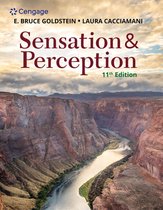
Test Bank For Sensation and Perception 11th Edition by E. Bruce
q q q q q q q q q qq
Goldstein, Laura Cacciamani All Chapters ||Complete A+ Guide
q q q q q q q q
,Description
Test Bank for Sensation and Perception, 11th Edition, E. Bruce Goldstein
q q q q q q q q q q
Table of Content
q q
1. Introduction to Perception. q q
2. The Physiological Beginnings of Perception.
q q q q
3. Neural Processing and Coding.
q q q
4. Cortical Organization.q
5. Perceiving Objects and Scenes.q q q
6. Visual Attention.
q
7. Taking Action. q
8. Perceiving Motion. q
9. Perceiving Color. q
10. Perceiving Depth and Size. q q q
11. Sound and the Perception of Pitch.
q q q q q
12. Auditory Localization, the Auditory Scene, and Music.
q q q q q q
13. Speech Perception. q
14. The Cutaneous Senses.
q q
15. The Chemical Senses.
q q
,Test Bank—Chapter 1: Introduction to Perception
q q q q q
MULTIPLE CHOICE q
1. “Perceiving machines” that can negotiate the environment with humanlike ease
q q q q q q q q q
a. were developed by computer scientists in the
q q q q q q
1960s. q
b. were developed by computer scientists in the
q q q q q q
1970s. q
c. were developed by computer scientists in the
q q q q q q
1990s. q
d. have yet to be developed. q q q q
2. Which of the following is an application of perception research?
q q q q q q q q q
a. Developing speech recognition c. Devising robots that can q q q q q
systems. q “see.” q
b. Treating hearing problems. d. All of these.
q q q q
3. Which of the following is a reason for studying perception?
q q q q q q q q q
a. To become more aware of your own perceptual experiences.
q q q q q q q q
b. To provide information that may help with a future career.
q q q q q q q q q
c. To apply perception to everyday problems, such as highway sign
q q q q q q q q q
visibility. q
d. All of these. q q
4. The study of perception can overlap with
q q q q q q
a. medicine. c. philosophy.
b. computer science. q d. all of these. q q
5. Which of the following is NOT a category of the stages in the perceptual process?
q q q q q q q q q q q q q q
a. Stimuli c. Serendipity
b. Neural Processing d. Behavioral Responses
q q
6. The process of transforming energy in the environment into electrical energy in the
q q q q q q q q q q q q
neurons is called
q q q
a. refraction. c. reduction.
b. transduction. d. construction.
7. qis the step in the perceptual process that is analogous to an ATM withdrawal
q q q q q q q q q q q q q
q(pressure from button press becomes electrical energy then becomes a mechanical response
q q q q q q q q q q q
qresulting in the dispensing of money).
q q q q q
a. Knowledge c. Action
b. Transference d. Transduction
8
, 8. The specific term for the “stimulus on the receptors” in visual processing is the
q q q q q q q q q q q q q
a. transduced image.
q c. visual image.
q
b. environmental stimulus.
q d. perception.
9
q q q q q q q q q qq
Goldstein, Laura Cacciamani All Chapters ||Complete A+ Guide
q q q q q q q q
,Description
Test Bank for Sensation and Perception, 11th Edition, E. Bruce Goldstein
q q q q q q q q q q
Table of Content
q q
1. Introduction to Perception. q q
2. The Physiological Beginnings of Perception.
q q q q
3. Neural Processing and Coding.
q q q
4. Cortical Organization.q
5. Perceiving Objects and Scenes.q q q
6. Visual Attention.
q
7. Taking Action. q
8. Perceiving Motion. q
9. Perceiving Color. q
10. Perceiving Depth and Size. q q q
11. Sound and the Perception of Pitch.
q q q q q
12. Auditory Localization, the Auditory Scene, and Music.
q q q q q q
13. Speech Perception. q
14. The Cutaneous Senses.
q q
15. The Chemical Senses.
q q
,Test Bank—Chapter 1: Introduction to Perception
q q q q q
MULTIPLE CHOICE q
1. “Perceiving machines” that can negotiate the environment with humanlike ease
q q q q q q q q q
a. were developed by computer scientists in the
q q q q q q
1960s. q
b. were developed by computer scientists in the
q q q q q q
1970s. q
c. were developed by computer scientists in the
q q q q q q
1990s. q
d. have yet to be developed. q q q q
2. Which of the following is an application of perception research?
q q q q q q q q q
a. Developing speech recognition c. Devising robots that can q q q q q
systems. q “see.” q
b. Treating hearing problems. d. All of these.
q q q q
3. Which of the following is a reason for studying perception?
q q q q q q q q q
a. To become more aware of your own perceptual experiences.
q q q q q q q q
b. To provide information that may help with a future career.
q q q q q q q q q
c. To apply perception to everyday problems, such as highway sign
q q q q q q q q q
visibility. q
d. All of these. q q
4. The study of perception can overlap with
q q q q q q
a. medicine. c. philosophy.
b. computer science. q d. all of these. q q
5. Which of the following is NOT a category of the stages in the perceptual process?
q q q q q q q q q q q q q q
a. Stimuli c. Serendipity
b. Neural Processing d. Behavioral Responses
q q
6. The process of transforming energy in the environment into electrical energy in the
q q q q q q q q q q q q
neurons is called
q q q
a. refraction. c. reduction.
b. transduction. d. construction.
7. qis the step in the perceptual process that is analogous to an ATM withdrawal
q q q q q q q q q q q q q
q(pressure from button press becomes electrical energy then becomes a mechanical response
q q q q q q q q q q q
qresulting in the dispensing of money).
q q q q q
a. Knowledge c. Action
b. Transference d. Transduction
8
, 8. The specific term for the “stimulus on the receptors” in visual processing is the
q q q q q q q q q q q q q
a. transduced image.
q c. visual image.
q
b. environmental stimulus.
q d. perception.
9