EDU 120 UNIT 1 WITH 100% VERIFIED DETAILED SOLUTIONS!!
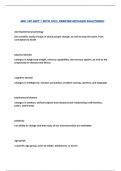
developmental psychology
the scientific study of ways in which people change, as well as stay the same, from
conception to death
physical domain
changes in height and weight, sensory capabilities, the nervous system, as well as the
propensity for disease and illness
cognitive domain
changes in intelligence, wisdom, perception, problem-solving, memory, and language
psychosocial domain
changes in emotion, self-perception and interpersonal relationships with families,
peers, and friends
plasticity
our ability to change and that many of our characteristics are malleable
age-grade
a specific age group, such as toddle, adolescent, or senior
, cohort
a group of people who are born at roughly the same period in a particular society
socioeconomic statues (SES)
a way to identify families and households based on their shared levels of education,
income, and occupation
culture
the totality of our shared language, knowledge, material objects, and behavior
ethnocentrism
belief that our own culture is superior
cultural relativity
an appreciation for cultural differences and the understanding that cultural practices
are best understood from the standpoint of that particular culture
lifespan
refers to length of time a species can exist under the most optimal conditions
developmental psychology
the scientific study of ways in which people change, as well as stay the same, from
conception to death
physical domain
changes in height and weight, sensory capabilities, the nervous system, as well as the
propensity for disease and illness
cognitive domain
changes in intelligence, wisdom, perception, problem-solving, memory, and language
psychosocial domain
changes in emotion, self-perception and interpersonal relationships with families,
peers, and friends
plasticity
our ability to change and that many of our characteristics are malleable
age-grade
a specific age group, such as toddle, adolescent, or senior
, cohort
a group of people who are born at roughly the same period in a particular society
socioeconomic statues (SES)
a way to identify families and households based on their shared levels of education,
income, and occupation
culture
the totality of our shared language, knowledge, material objects, and behavior
ethnocentrism
belief that our own culture is superior
cultural relativity
an appreciation for cultural differences and the understanding that cultural practices
are best understood from the standpoint of that particular culture
lifespan
refers to length of time a species can exist under the most optimal conditions