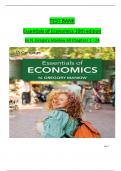
TEST BANK
ESSENTIALS OF ECONOMICS 9TH EDITION BY N.
GREGORY MANKIW ALL CHAPTERS COVERED
GRADED A+
Pageq 1
, h h
Part I: INTRODUCTION.
q q
1. Ten Principles of Economics.
q q q
2. Thinking Like an Economist.
q q q
3. Interdependence and the Gains from Trade. q q q q q
Part II: HOW MARKETS WORK.
q q q q
4. The Market Forces of Supply and Demand.
q q q q q q
5. Elasticity and Its Application.
q q q
6. Supply, Demand, and Government Policies.
q q q q
Part III: MARKETS AND WELFARE.
q q q q
7. Consumers, Producers, and the Efficiency of Markets.
q q q q q q
8. Application: The Costs of Taxation. q q q q
9. Application: International Trade. q q
Part IV: THE ECONOMICS OF THE PUBLIC SECTOR.
q q q q q q q
10. Externalities.
11. Public Goods and Common Resources.
q q q q
Part V: Firm Behavior and the Organization of Industry.
q q q q q q q q
Pageq 2
,12. The Costs of Production.
q q q
13. Firms in Competitive Markets.
q q q
14. Monopoly.
Part VI: THE DATA OF MACROECONOMICS.
q q q q q
15. Measuring a Nation’s Income. q q q
16. Measuring the Cost of Living. q q q q
Part VII: THE REAL ECONOMY IN THE LONG RUN.
q q q q q q q q
17. Production and Growth. q q
18. Saving, Investment, and the Financial System.
q q q q q
19. The Basic Tools of Finance.
q q q q
20. Unemployment and Its Natural Rate. q q q q
Part VIII: MONEY AND PRICES IN THE LONG RUN.
q q q q q q q q
21. The Monetary System.
q q
22. Money Growth and Inflation.
q q q
Part IX: SHORT-RUN ECONOMIC FLUCTUATIONS.
q q q q
23. Aggregate Demand and Aggregate Supply.
q q q q
24. The Influence of Monetary and Fiscal Policy on Aggregate Demand.
q q q q q q q q q
Pageq 3
, 1. Ten Principles of Economics.
q q q
1. TheqEnglishqwordqthatqcomesqfromqtheqGreekqwordqforq"oneqwhoqmanagesqaqhousehold"qis
a. market.
b. consumer.
c. producer.
d. economy.
ANSWER: d
DIFFICULTY: Easy
LEARNINGqOBJECTIVES:q ECON.MANK.012q-
Applyqbasic,qeconomicqprinciplesqofqindividualqdecisionq makingqthatqdetermi
qneqhowqanqeconomyqgenerallyqworks.
TOPICS: Economicqthinking
KEYWORDS: BLOOM'S:qKnowledge
CUSTOMqID: 001.01.0q-qMCq-qMANK08
2. Theqwordq“economy”qcomesqfromqtheqGreekqwordqoikonomos,qwhichqmeans
a. “environment.”
b. “production.”
c. “oneqwhoqmanagesqaqhousehold.”
d. “oneqwhoqmakesqdecisions.”
ANSWER: c
DIFFICULTY: Easy
LEARNINGqOBJECTIVES:q ECON.MANK.012q-
Applyqbasic,qeconomicqprinciplesqofqindividualqdecisionq makingqthatqdetermi
qneqhowqanqeconomyqgenerallyqworks.
TOPICS: Economicqthinking
KEYWORDS: BLOOM'S:qKnowledge
CUSTOMqID: 002.01.0q-qMCq-qMANK08
3. Resourcesqare
a. scarceqforqhouseholdsqbutqplentifulqforqeconomies.
b. plentifulqforqhouseholdsqbutqscarceqforqeconomies.
c. scarceqforqhouseholdsqandqscarceqforqeconomies.
d. plentifulqforqhouseholdsqandqplentifulqforqeconomies.
ANSWER: c
DIFFICULTY: Easy
LEARNINGqOBJECTIVES:q ECON.MANK.012q-
Applyqbasic,qeconomicqprinciplesqofqindividualqdecisionq makingqthatqdetermi
qneqhowqanqeconomyqgenerallyqworks.
TOPICS:
Pageq 4
ESSENTIALS OF ECONOMICS 9TH EDITION BY N.
GREGORY MANKIW ALL CHAPTERS COVERED
GRADED A+
Pageq 1
, h h
Part I: INTRODUCTION.
q q
1. Ten Principles of Economics.
q q q
2. Thinking Like an Economist.
q q q
3. Interdependence and the Gains from Trade. q q q q q
Part II: HOW MARKETS WORK.
q q q q
4. The Market Forces of Supply and Demand.
q q q q q q
5. Elasticity and Its Application.
q q q
6. Supply, Demand, and Government Policies.
q q q q
Part III: MARKETS AND WELFARE.
q q q q
7. Consumers, Producers, and the Efficiency of Markets.
q q q q q q
8. Application: The Costs of Taxation. q q q q
9. Application: International Trade. q q
Part IV: THE ECONOMICS OF THE PUBLIC SECTOR.
q q q q q q q
10. Externalities.
11. Public Goods and Common Resources.
q q q q
Part V: Firm Behavior and the Organization of Industry.
q q q q q q q q
Pageq 2
,12. The Costs of Production.
q q q
13. Firms in Competitive Markets.
q q q
14. Monopoly.
Part VI: THE DATA OF MACROECONOMICS.
q q q q q
15. Measuring a Nation’s Income. q q q
16. Measuring the Cost of Living. q q q q
Part VII: THE REAL ECONOMY IN THE LONG RUN.
q q q q q q q q
17. Production and Growth. q q
18. Saving, Investment, and the Financial System.
q q q q q
19. The Basic Tools of Finance.
q q q q
20. Unemployment and Its Natural Rate. q q q q
Part VIII: MONEY AND PRICES IN THE LONG RUN.
q q q q q q q q
21. The Monetary System.
q q
22. Money Growth and Inflation.
q q q
Part IX: SHORT-RUN ECONOMIC FLUCTUATIONS.
q q q q
23. Aggregate Demand and Aggregate Supply.
q q q q
24. The Influence of Monetary and Fiscal Policy on Aggregate Demand.
q q q q q q q q q
Pageq 3
, 1. Ten Principles of Economics.
q q q
1. TheqEnglishqwordqthatqcomesqfromqtheqGreekqwordqforq"oneqwhoqmanagesqaqhousehold"qis
a. market.
b. consumer.
c. producer.
d. economy.
ANSWER: d
DIFFICULTY: Easy
LEARNINGqOBJECTIVES:q ECON.MANK.012q-
Applyqbasic,qeconomicqprinciplesqofqindividualqdecisionq makingqthatqdetermi
qneqhowqanqeconomyqgenerallyqworks.
TOPICS: Economicqthinking
KEYWORDS: BLOOM'S:qKnowledge
CUSTOMqID: 001.01.0q-qMCq-qMANK08
2. Theqwordq“economy”qcomesqfromqtheqGreekqwordqoikonomos,qwhichqmeans
a. “environment.”
b. “production.”
c. “oneqwhoqmanagesqaqhousehold.”
d. “oneqwhoqmakesqdecisions.”
ANSWER: c
DIFFICULTY: Easy
LEARNINGqOBJECTIVES:q ECON.MANK.012q-
Applyqbasic,qeconomicqprinciplesqofqindividualqdecisionq makingqthatqdetermi
qneqhowqanqeconomyqgenerallyqworks.
TOPICS: Economicqthinking
KEYWORDS: BLOOM'S:qKnowledge
CUSTOMqID: 002.01.0q-qMCq-qMANK08
3. Resourcesqare
a. scarceqforqhouseholdsqbutqplentifulqforqeconomies.
b. plentifulqforqhouseholdsqbutqscarceqforqeconomies.
c. scarceqforqhouseholdsqandqscarceqforqeconomies.
d. plentifulqforqhouseholdsqandqplentifulqforqeconomies.
ANSWER: c
DIFFICULTY: Easy
LEARNINGqOBJECTIVES:q ECON.MANK.012q-
Applyqbasic,qeconomicqprinciplesqofqindividualqdecisionq makingqthatqdetermi
qneqhowqanqeconomyqgenerallyqworks.
TOPICS:
Pageq 4