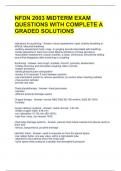
NFDN 2003 MIDTERM EXAM
QUESTIONS WITH COMPLETE A
GRADED SOLUTIONS
indications for suctioning - Answer--visual assessment: rapid, shallow breathing or
difficult, laboured breathing
-auditory assessment:moist, noisy, or gurgling sounds associated with breathing
-tactile assessment: hand over chest detects vibrations of loose secretions
-auscultation assessment: coarse crackles, a loose, continuous, low pitched rattling
sound that disappears after suctioning or coughing
Suctioning - Answer--wet cough, crackles, rhonchi, cyanosis, desaturation
-irritates bronchus and stimulates coughing reflex (normal)
-explain procedure
-sterile gloves/suction tubing/saline
-suction 5-10 seconds, 3 mins between suctions
-use intermittent suction to remove secretions; no suction when inserting catheter
-rinse suction catheter
-provide oral care
Chest physiotherapy - Answer--chest percussion
-vibration
-different postural drainage system
Oxygen therapy - Answer--normal ABG Pa02 80-100 mmHm; Sa02 95-100%
-humidity
oxygen delivery systems - Answer--nasal cannula: 1-6L/min
-simple oxygen mask: 6-8L/min
-non rebreather 12-15L/min (80-100%)
-high flow: noisy, can receive 100%
chest tube drainage systems - Answer--pleural chest tubes inserted into pleural cavity to
drain fluid
-serous, sanguineous, purulent drainage
Heimlich Valve - Answer--used to evacuate air from the pleural space
-has rubber flutter, one way valve, within a rigid plastic tube
-attached to the external end of the chest tube
-valve opens when pressure is greater that atmospheric pressure
,Drainage: Wet - Answer--3 Chambers: collection chamber, water seal chamber, and wet
suction control chamber
Drainage: Dry - Answer--suction with or without water seal
-one way valve to allow air to leave chest be setting the suction control valve
Assessment of chest tubes - Answer--tidaling in water seal noted with breathing (fluid
will rise and fall)
-no tidaling- lungs expanded or tubing kinked
-intermittent bubbling is ok
-should not be excessive bubbling-indicates a leak
-may need to refill water seal chamber
monitoring chest tube/output - Answer-
tracheostomy - Answer--artificial opening made into trachea through which a curved
tube is inside
-replaces endotracheal tube
-method for mechanical ventilation
-to bypass an upper airway obstruction
-to remove tracheobronchial secretions
Cuffed tracheostomy - Answer--seals opening around tube against air leakage
-prevents aspirations
-permits mechanical ventilation
-as a general rule, the cuff should be inflated
uncuffed tracheostomy - Answer--unusually established stoma
-low risk for aspiration
-can eat/talk
tracheostomy care - Answer--sterile procedure
-pre oxygenation prior to suctioning if doing deep suctioning
-suctioning no more than 10 seconds
-cleaning inner annular/ or replace
-clean outer cannula with separation applicator
changing dressings and ties (tracheostomy care) - Answer--have assistance to hold
tube in place to prevent dislodgement/decannulation of tube
-do not use tires that fray
-do not cut gauze, use pre cut non ravelling dressings, flaps pointing up, to prevent
fibres from entering the tract tube
-tie not to side of the neck
-clean around tracheostomy to prevent build up of dried secretions and skin breakdown
-assess and clean stoma under face plate
-document
, monitoring chest tube/output - Answer--mark q shift and hourly if necessary
-intake and output form
-notify doctor if greater than 100ml/h
-never clamp the tubing
-if going for tests, may discontinue suction but leave suction vent open
Urge incontinence - Answer-sudden desire to urinate
Relax urinary incontinence - Answer-unexpected voiding without awareness of the need
to void.
-Spinal cord injury
Functional incontinence - Answer-unpredictable, involuntary passage or urine in the
presence of normal bladder and urethral function
Stress incontinence - Answer-dribbling of urine with increased abdominal pressure
What do X-rays show us? (urinary) - Answer--kidney
-ureter
-bladder
-stones
-enlarged kidney
-tumours
What does ultrasounds show? (urinary) - Answer--bladder scans
What does CT/MRI scans show? - Answer--cross sectional views
Urinalysis - Answer--shows kidney function
-helps diagnose disease
-determines if bacteria are present and if so, what kind and how much
-urinee culture and sensitivity: show which antibiotics would be most effective to the
strain of bacteria for pharmacological treatment
urine examination - Answer--colour
-clarity
-odour
-pH and specific gravity
-protein, glucose and ketones
-microscopic examination: detect RBC's, WBC's, pus, bacteria, crystals, and casts
factors that affect urinary elimination - Answer--lifestyle
-cultural factors
-developmental factors
-physiological factors
QUESTIONS WITH COMPLETE A
GRADED SOLUTIONS
indications for suctioning - Answer--visual assessment: rapid, shallow breathing or
difficult, laboured breathing
-auditory assessment:moist, noisy, or gurgling sounds associated with breathing
-tactile assessment: hand over chest detects vibrations of loose secretions
-auscultation assessment: coarse crackles, a loose, continuous, low pitched rattling
sound that disappears after suctioning or coughing
Suctioning - Answer--wet cough, crackles, rhonchi, cyanosis, desaturation
-irritates bronchus and stimulates coughing reflex (normal)
-explain procedure
-sterile gloves/suction tubing/saline
-suction 5-10 seconds, 3 mins between suctions
-use intermittent suction to remove secretions; no suction when inserting catheter
-rinse suction catheter
-provide oral care
Chest physiotherapy - Answer--chest percussion
-vibration
-different postural drainage system
Oxygen therapy - Answer--normal ABG Pa02 80-100 mmHm; Sa02 95-100%
-humidity
oxygen delivery systems - Answer--nasal cannula: 1-6L/min
-simple oxygen mask: 6-8L/min
-non rebreather 12-15L/min (80-100%)
-high flow: noisy, can receive 100%
chest tube drainage systems - Answer--pleural chest tubes inserted into pleural cavity to
drain fluid
-serous, sanguineous, purulent drainage
Heimlich Valve - Answer--used to evacuate air from the pleural space
-has rubber flutter, one way valve, within a rigid plastic tube
-attached to the external end of the chest tube
-valve opens when pressure is greater that atmospheric pressure
,Drainage: Wet - Answer--3 Chambers: collection chamber, water seal chamber, and wet
suction control chamber
Drainage: Dry - Answer--suction with or without water seal
-one way valve to allow air to leave chest be setting the suction control valve
Assessment of chest tubes - Answer--tidaling in water seal noted with breathing (fluid
will rise and fall)
-no tidaling- lungs expanded or tubing kinked
-intermittent bubbling is ok
-should not be excessive bubbling-indicates a leak
-may need to refill water seal chamber
monitoring chest tube/output - Answer-
tracheostomy - Answer--artificial opening made into trachea through which a curved
tube is inside
-replaces endotracheal tube
-method for mechanical ventilation
-to bypass an upper airway obstruction
-to remove tracheobronchial secretions
Cuffed tracheostomy - Answer--seals opening around tube against air leakage
-prevents aspirations
-permits mechanical ventilation
-as a general rule, the cuff should be inflated
uncuffed tracheostomy - Answer--unusually established stoma
-low risk for aspiration
-can eat/talk
tracheostomy care - Answer--sterile procedure
-pre oxygenation prior to suctioning if doing deep suctioning
-suctioning no more than 10 seconds
-cleaning inner annular/ or replace
-clean outer cannula with separation applicator
changing dressings and ties (tracheostomy care) - Answer--have assistance to hold
tube in place to prevent dislodgement/decannulation of tube
-do not use tires that fray
-do not cut gauze, use pre cut non ravelling dressings, flaps pointing up, to prevent
fibres from entering the tract tube
-tie not to side of the neck
-clean around tracheostomy to prevent build up of dried secretions and skin breakdown
-assess and clean stoma under face plate
-document
, monitoring chest tube/output - Answer--mark q shift and hourly if necessary
-intake and output form
-notify doctor if greater than 100ml/h
-never clamp the tubing
-if going for tests, may discontinue suction but leave suction vent open
Urge incontinence - Answer-sudden desire to urinate
Relax urinary incontinence - Answer-unexpected voiding without awareness of the need
to void.
-Spinal cord injury
Functional incontinence - Answer-unpredictable, involuntary passage or urine in the
presence of normal bladder and urethral function
Stress incontinence - Answer-dribbling of urine with increased abdominal pressure
What do X-rays show us? (urinary) - Answer--kidney
-ureter
-bladder
-stones
-enlarged kidney
-tumours
What does ultrasounds show? (urinary) - Answer--bladder scans
What does CT/MRI scans show? - Answer--cross sectional views
Urinalysis - Answer--shows kidney function
-helps diagnose disease
-determines if bacteria are present and if so, what kind and how much
-urinee culture and sensitivity: show which antibiotics would be most effective to the
strain of bacteria for pharmacological treatment
urine examination - Answer--colour
-clarity
-odour
-pH and specific gravity
-protein, glucose and ketones
-microscopic examination: detect RBC's, WBC's, pus, bacteria, crystals, and casts
factors that affect urinary elimination - Answer--lifestyle
-cultural factors
-developmental factors
-physiological factors