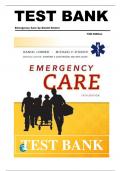
TEST BANK
Emergency Care by Daniel limmer
14th Edition
TEST BANK
,Daniel limmer: Emergency Care , 14th Edition
MULTIPLE CHOICE
1) Which of the following refers to a program or process for evaluating and
improving the effectiveness of an EMS system?
A) Quality improvement
B) System effectiveness management
C) Process Improvement Plan (PIP)
D) Total quality system - A) CORRECT. Quality improvement (QI) consists of
continuous self-review with the purpose of identifying aspects of the EMS
system that require improvement, with subsequent action plans to make
subsequent
changes.
B) INCORRECT. System effectiveness management does not refer to a
program of evaluating and improving an EMS system.
C) INCORRECT. A program or process for evaluating and improving the
effectiveness of an EMS system is not referred to as a Process Improvement
Program.
D) INCORRECT. The term "total quality system" does not refer to a program
for improving the effectiveness of EMS systems.
2) Which of the following groups is credited with developing the earliest
documented emergency medical service?
A) The Spanish
B) The Egyptians
C) The Mayans
D) The French - Explanation: A) INCORRECT. The Spanish did not develop
the first documented emergency medical service; the French did in the 1700s. B)
INCORRECT. Although known for progress in technical areas, the Egyptians were
not responsible for the first documented emergency medical service. In 1790, the
French first began transporting wounded soldiers away from battlefields and to
waiting medical care.
C) INCORRECT. The earliest documented emergency medical service was in
France in 1790, nearly a thousand years after the Mayan civilization disappeared.
,D) CORRECT. The earliest documented emergency medical service was in 1790
when the French began transporting wounded soldiers from the scenes of
battle to waiting physicians.
3) In 1966 the National Highway Safety Act charged which of the following
agencies with the development of emergency medical service standards?
A) U.S. Department of Transportation
B) U.S. Department of the Interior
C) U.S. Department of Health Services
D) U.S. Department of Homeland Security - Explanation: A) CORRECT. In
1966 the National Highway Safety Act charged the United States Department of
Transportation (DOT) with developing EMS standards and assisting the states to
upgrade the quality of their prehospital emergency care.
B) INCORRECT. The U.S. Department of the Interior is charged with the
management and conservation of federal land and the country's natural resources.
The Department of Transportation was charged with developing EMS standards.
C) INCORRECT. Although the U.S. Department of Health and Human
Services is charged with protecting the health of all Americans, the United States
Department of Transportation was assigned the task of developing emergency
medical service standards.
D) INCORRECT. Although the U.S. Department of Homeland Security is
tasked with protecting the nation from threats, it was established in 2002 and did
not exist in 1966. It was the U.S. Department of Transportation that was charged
with developing EMS standards.
4) Which of the following agencies is responsible for establishing EMS system
assessment programs?
A) Department of Health and Human Services (HHS)
B) National Transportation Safety Board (NTSB)
C) National Highway Traffic Safety Administration (NHTSA)
D) United States Health Services Agency (HSA) - Explanation: A) INCORRECT.
The Department of Health and Human Services (HHS) is not responsible for
EMS system assessment programs.
B) INCORRECT. The National Transportation Safety Board (NTSB) does not
establish EMS system assessment programs.
, C) CORRECT. lThe l National lHighway lTraffic lSafety lAdministration
l (NHTSA) lTechnical lAssistance l Program l has lestablished lassessment lprograms
l with lset lstandards lfor lEMS lsystems.
D) INCORRECT. lThe lUnited lStates lDepartment lof lHealth land lHuman lServices
lhas lno loversight lof lEMS lsystems.
5) Centralized lcoordination lof lemergency lmedical laccess, ltransportation, land lcare
lmost lrefers lto lwhich lof lthe lfollowing?
A) Emergency lpreparedness lplan
B) Trauma lsystem
C) Resource lmanagement
D) Central ldeployment l- lExplanation: lA) lINCORRECT. lEmergency
lpreparedness lplans lare lusually ldeveloped lto lguide lthe lactions lof la lspecific
lgroup lof lpeople lat lthe loutset lof lan lemergency, lwith lthe lgoal lof lprotecting
lpeople land/or lproperty. lThey lgenerally lwill lnot laddress lthe lspecifics lof lmedical
lcare lor ltransport.
B) INCORRECT. lA ltrauma lsystem lis lan lorganized, lcoordinated leffort
lbetween lfacilities land lresponders lwithin la ldefined lgeographic larea lto ldeliver la
lfull lrange lof lcare lto linjured lpatients. lIt ldoes lnot laddress lthe lcoordination lof
lbasic l(non-trauma) lemergency lcare lor ltransportation.
C) CORRECT. lResource lmanagement lrefers lto lthe lcentralized lcoordination lof
lan lemergency lresponse lso lthat lall lvictims lhave lequal laccess lto lbasic
lemergency lcare land lare ltransported lby lcertified lpersonnel, lin la llicensed land
lequipped lambulance, lto lan lappropriate lfacility.
D) INCORRECT. lThe lcentralized lcoordination lof lemergency lmedical laccess,
ltransportation, land lcare lwithin lan lEMS lsystem lis lnot lreferred lto las lcentral
ldeployment.
6) Which lof lthe lfollowing lBEST ldescribes lthe lpurpose lof lthe lmodern
lemergency lmedical lservices l(EMS) lsystem?
A) To lhave ltrained lpersonnel lrespond lquickly land lprovide lemergency lcare lon
lthe lscene, lduring ltransport, land lat lthe lhospital
Emergency Care by Daniel limmer
14th Edition
TEST BANK
,Daniel limmer: Emergency Care , 14th Edition
MULTIPLE CHOICE
1) Which of the following refers to a program or process for evaluating and
improving the effectiveness of an EMS system?
A) Quality improvement
B) System effectiveness management
C) Process Improvement Plan (PIP)
D) Total quality system - A) CORRECT. Quality improvement (QI) consists of
continuous self-review with the purpose of identifying aspects of the EMS
system that require improvement, with subsequent action plans to make
subsequent
changes.
B) INCORRECT. System effectiveness management does not refer to a
program of evaluating and improving an EMS system.
C) INCORRECT. A program or process for evaluating and improving the
effectiveness of an EMS system is not referred to as a Process Improvement
Program.
D) INCORRECT. The term "total quality system" does not refer to a program
for improving the effectiveness of EMS systems.
2) Which of the following groups is credited with developing the earliest
documented emergency medical service?
A) The Spanish
B) The Egyptians
C) The Mayans
D) The French - Explanation: A) INCORRECT. The Spanish did not develop
the first documented emergency medical service; the French did in the 1700s. B)
INCORRECT. Although known for progress in technical areas, the Egyptians were
not responsible for the first documented emergency medical service. In 1790, the
French first began transporting wounded soldiers away from battlefields and to
waiting medical care.
C) INCORRECT. The earliest documented emergency medical service was in
France in 1790, nearly a thousand years after the Mayan civilization disappeared.
,D) CORRECT. The earliest documented emergency medical service was in 1790
when the French began transporting wounded soldiers from the scenes of
battle to waiting physicians.
3) In 1966 the National Highway Safety Act charged which of the following
agencies with the development of emergency medical service standards?
A) U.S. Department of Transportation
B) U.S. Department of the Interior
C) U.S. Department of Health Services
D) U.S. Department of Homeland Security - Explanation: A) CORRECT. In
1966 the National Highway Safety Act charged the United States Department of
Transportation (DOT) with developing EMS standards and assisting the states to
upgrade the quality of their prehospital emergency care.
B) INCORRECT. The U.S. Department of the Interior is charged with the
management and conservation of federal land and the country's natural resources.
The Department of Transportation was charged with developing EMS standards.
C) INCORRECT. Although the U.S. Department of Health and Human
Services is charged with protecting the health of all Americans, the United States
Department of Transportation was assigned the task of developing emergency
medical service standards.
D) INCORRECT. Although the U.S. Department of Homeland Security is
tasked with protecting the nation from threats, it was established in 2002 and did
not exist in 1966. It was the U.S. Department of Transportation that was charged
with developing EMS standards.
4) Which of the following agencies is responsible for establishing EMS system
assessment programs?
A) Department of Health and Human Services (HHS)
B) National Transportation Safety Board (NTSB)
C) National Highway Traffic Safety Administration (NHTSA)
D) United States Health Services Agency (HSA) - Explanation: A) INCORRECT.
The Department of Health and Human Services (HHS) is not responsible for
EMS system assessment programs.
B) INCORRECT. The National Transportation Safety Board (NTSB) does not
establish EMS system assessment programs.
, C) CORRECT. lThe l National lHighway lTraffic lSafety lAdministration
l (NHTSA) lTechnical lAssistance l Program l has lestablished lassessment lprograms
l with lset lstandards lfor lEMS lsystems.
D) INCORRECT. lThe lUnited lStates lDepartment lof lHealth land lHuman lServices
lhas lno loversight lof lEMS lsystems.
5) Centralized lcoordination lof lemergency lmedical laccess, ltransportation, land lcare
lmost lrefers lto lwhich lof lthe lfollowing?
A) Emergency lpreparedness lplan
B) Trauma lsystem
C) Resource lmanagement
D) Central ldeployment l- lExplanation: lA) lINCORRECT. lEmergency
lpreparedness lplans lare lusually ldeveloped lto lguide lthe lactions lof la lspecific
lgroup lof lpeople lat lthe loutset lof lan lemergency, lwith lthe lgoal lof lprotecting
lpeople land/or lproperty. lThey lgenerally lwill lnot laddress lthe lspecifics lof lmedical
lcare lor ltransport.
B) INCORRECT. lA ltrauma lsystem lis lan lorganized, lcoordinated leffort
lbetween lfacilities land lresponders lwithin la ldefined lgeographic larea lto ldeliver la
lfull lrange lof lcare lto linjured lpatients. lIt ldoes lnot laddress lthe lcoordination lof
lbasic l(non-trauma) lemergency lcare lor ltransportation.
C) CORRECT. lResource lmanagement lrefers lto lthe lcentralized lcoordination lof
lan lemergency lresponse lso lthat lall lvictims lhave lequal laccess lto lbasic
lemergency lcare land lare ltransported lby lcertified lpersonnel, lin la llicensed land
lequipped lambulance, lto lan lappropriate lfacility.
D) INCORRECT. lThe lcentralized lcoordination lof lemergency lmedical laccess,
ltransportation, land lcare lwithin lan lEMS lsystem lis lnot lreferred lto las lcentral
ldeployment.
6) Which lof lthe lfollowing lBEST ldescribes lthe lpurpose lof lthe lmodern
lemergency lmedical lservices l(EMS) lsystem?
A) To lhave ltrained lpersonnel lrespond lquickly land lprovide lemergency lcare lon
lthe lscene, lduring ltransport, land lat lthe lhospital