Cellular Metabolism
>
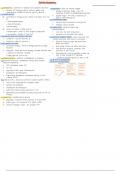
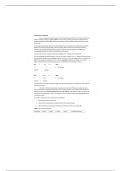
- metabolism - collection of anabolic and catabolic reactions - glycolysis - does not require oxygen
• harvest ATP energy, bring in nurients, repair and • energy investment stage - two ATP
maintenance, release of wastes, motility, growth molecules invested to phosphorylate glucose
- classifications
• payoff stage - ATP and 2 molecules of
• according to energy source utilized to produce ATP, can pyruvic acid made by SLP
be > intermediate step
-
- chemoorganotrophs • converts both molecules to acetyl-CoA
- chemolithotrophs • releases carbon dioxide
- phototrophs >
- kreb's cycle - series of redox and
• source of carbon utilized, can be decarboxylation
- heterotroph - obtain C from organic compounds • runs once for each acetyl-CoA
- autotrophs - obtains C from Co2 • produces ATP and NADH and FADH2
-oxidation reduction (redox) reactions >
- electron transport chain - redox reactions that
• oxidation - lose an electron, + transfer electrons from donor to acceptor
• reduction - gain an electron, - • electron carriers accept electrons from
> enzymatic reactions
- NADH and FADH2
• activation energy - minimun energy required to begin • pass along carriers via redox reactions
reaction • final electron acceptor combines with
• enzymes - lower activation energy, increase reaction rate electrons to form water
- made up of proteins, reusable • chemiosmosis - proton gradiant causes H+
- highly specific, active site ions to flow through ATP synthase
>
- phosphorylation - addition of phosphate to molecule - oxidative phosphorylation of ADP to ATP
38 ATP in prokaryotes
↳ substrate level (SLP) - phosphate comes from another => 34 ATP in eukaryotes
molecule (substrate)
• ADP, phosphate make ATP
• no ETC
• glycolysis, kreb's cycle, fermentation
• prokaryotic and eukaryotic
• high energy phosphate transferred directly to ADP,
creates an ATP
↳ oxidative (OP) - electrons carried via carriers (NADH, FADH2)
• ADP to ATP using electron transport chain
• aerobic and anaerobic
• prokaryotic and eukaryotic
• NADH and FADH2 donate electrons to ETC
• generates proton gradient, powers production of ATP via
ATPase
>
- respiration - breaking down glucose
• glycolysis - substrate level, produces ATP and NADH
• kreb's cycle - SLP, produces ATP, NADH, FADH2
• electron transport chain - OP, produce ATP
>
- metabolism - collection of anabolic and catabolic reactions - glycolysis - does not require oxygen
• harvest ATP energy, bring in nurients, repair and • energy investment stage - two ATP
maintenance, release of wastes, motility, growth molecules invested to phosphorylate glucose
- classifications
• payoff stage - ATP and 2 molecules of
• according to energy source utilized to produce ATP, can pyruvic acid made by SLP
be > intermediate step
-
- chemoorganotrophs • converts both molecules to acetyl-CoA
- chemolithotrophs • releases carbon dioxide
- phototrophs >
- kreb's cycle - series of redox and
• source of carbon utilized, can be decarboxylation
- heterotroph - obtain C from organic compounds • runs once for each acetyl-CoA
- autotrophs - obtains C from Co2 • produces ATP and NADH and FADH2
-oxidation reduction (redox) reactions >
- electron transport chain - redox reactions that
• oxidation - lose an electron, + transfer electrons from donor to acceptor
• reduction - gain an electron, - • electron carriers accept electrons from
> enzymatic reactions
- NADH and FADH2
• activation energy - minimun energy required to begin • pass along carriers via redox reactions
reaction • final electron acceptor combines with
• enzymes - lower activation energy, increase reaction rate electrons to form water
- made up of proteins, reusable • chemiosmosis - proton gradiant causes H+
- highly specific, active site ions to flow through ATP synthase
>
- phosphorylation - addition of phosphate to molecule - oxidative phosphorylation of ADP to ATP
38 ATP in prokaryotes
↳ substrate level (SLP) - phosphate comes from another => 34 ATP in eukaryotes
molecule (substrate)
• ADP, phosphate make ATP
• no ETC
• glycolysis, kreb's cycle, fermentation
• prokaryotic and eukaryotic
• high energy phosphate transferred directly to ADP,
creates an ATP
↳ oxidative (OP) - electrons carried via carriers (NADH, FADH2)
• ADP to ATP using electron transport chain
• aerobic and anaerobic
• prokaryotic and eukaryotic
• NADH and FADH2 donate electrons to ETC
• generates proton gradient, powers production of ATP via
ATPase
>
- respiration - breaking down glucose
• glycolysis - substrate level, produces ATP and NADH
• kreb's cycle - SLP, produces ATP, NADH, FADH2
• electron transport chain - OP, produce ATP