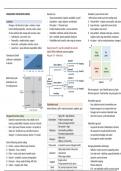
Genetics
>
- microbial genetics
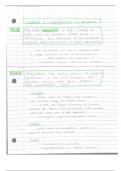
• genetics - study of organisms genetic material >
- genetic code
• genome - entire genetic makeup of cell, packed in • 20 common amino acids in all proteins
chromosome • mRNA carry codons
• gene - nucleotide sequence that codes for RNA or protein • open reading frames (ORF)
• phenotype - observable characteristics of organism - ORF codes for protein
• genotype - inherited set of genetic instructions >
- mutations
-
central dogma - flow of genetic info • can be netural, beneficial, harmful
• replication - DNA copy itself • mutagen causes - from physical or
chemical agent
• transcription - transcribed into RNA
• spontagenous - no mutagen
• translation - translated into proteins
• cells can fix some - proofreading,
>
- structure - double helix repair enzymes
• antiparallel runs 5'-3' • base substitutions
• hydrogen bonds between nucleotides hold together - can be silent, missense, nonsense
• A-T; 2 double bonds • frameshift
• C-G; 3 double bonds - premature stop, completely altered
• backbone; sugar and phosphate molecules protein
bacterial genome ↳ induced mutations - mutagens
• chromosomes - haploid • UV light
- single, circular chromosome • base analogues - mimic base pairs
- viruses have DNA or RNA, circular or linear - chemotherapeutics, aids, herpes
• plasmids - dna molecules that replicate independently of • chemicals (soot, smoke)
chromosome >
- genetic variation
• transposable elements - DNA seqeuence that moves from • plasmids - may encode for extra
one region of DNA molecule to another genes (antibiotic resistance)
>
- DNA replication - anabolic process, cell makes copies of genome • transposable - jumping genes
• semiconservatice - one strand from parental, one newly >
- recombination - horizontal gene transfer
synthesized
>
-
DNA replication in prokaryotes • conjugation
• primase, 2 DNA polymerase, topoisomerase - mating pilus, transfer from one cell
polymerase chain reaction (PCR) & to another
• DNA replication in test tube - diagnostic tests - most common way to transfer
>
- transcription antibiotic resistance
• RNA polymerase unwinds template strand • transduction
• travels down strand, builds strand - bacteriophage with donor DNA
• termination - injects in new cell
> epigenetics • transformation
• eukaryotic organisms modify DNA to change expression - uptake of free DNA
• does not change sequence
• methylation - silence gene
>
-
translation - mRNA translated into proteins
• ribosomes - protein factories
• mRNA indicated which protein to make
• rRNA combine with proteins that make up ribosomes
• tTRNA deliver amino acids to ribosomes
>
- microbial genetics
• genetics - study of organisms genetic material >
- genetic code
• genome - entire genetic makeup of cell, packed in • 20 common amino acids in all proteins
chromosome • mRNA carry codons
• gene - nucleotide sequence that codes for RNA or protein • open reading frames (ORF)
• phenotype - observable characteristics of organism - ORF codes for protein
• genotype - inherited set of genetic instructions >
- mutations
-
central dogma - flow of genetic info • can be netural, beneficial, harmful
• replication - DNA copy itself • mutagen causes - from physical or
chemical agent
• transcription - transcribed into RNA
• spontagenous - no mutagen
• translation - translated into proteins
• cells can fix some - proofreading,
>
- structure - double helix repair enzymes
• antiparallel runs 5'-3' • base substitutions
• hydrogen bonds between nucleotides hold together - can be silent, missense, nonsense
• A-T; 2 double bonds • frameshift
• C-G; 3 double bonds - premature stop, completely altered
• backbone; sugar and phosphate molecules protein
bacterial genome ↳ induced mutations - mutagens
• chromosomes - haploid • UV light
- single, circular chromosome • base analogues - mimic base pairs
- viruses have DNA or RNA, circular or linear - chemotherapeutics, aids, herpes
• plasmids - dna molecules that replicate independently of • chemicals (soot, smoke)
chromosome >
- genetic variation
• transposable elements - DNA seqeuence that moves from • plasmids - may encode for extra
one region of DNA molecule to another genes (antibiotic resistance)
>
- DNA replication - anabolic process, cell makes copies of genome • transposable - jumping genes
• semiconservatice - one strand from parental, one newly >
- recombination - horizontal gene transfer
synthesized
>
-
DNA replication in prokaryotes • conjugation
• primase, 2 DNA polymerase, topoisomerase - mating pilus, transfer from one cell
polymerase chain reaction (PCR) & to another
• DNA replication in test tube - diagnostic tests - most common way to transfer
>
- transcription antibiotic resistance
• RNA polymerase unwinds template strand • transduction
• travels down strand, builds strand - bacteriophage with donor DNA
• termination - injects in new cell
> epigenetics • transformation
• eukaryotic organisms modify DNA to change expression - uptake of free DNA
• does not change sequence
• methylation - silence gene
>
-
translation - mRNA translated into proteins
• ribosomes - protein factories
• mRNA indicated which protein to make
• rRNA combine with proteins that make up ribosomes
• tTRNA deliver amino acids to ribosomes